Rubio Signals U.S. Pivot on Iran: Sanctions Replace Strikes as Washington Tightens the Noose
 ΧΡΟΝΟΣ ΑΝΑΓΝΩΣΗΣ 7 '
Πηγή Φωτογραφίας: AP Photo//Rubio Signals U.S. Pivot on Iran: Sanctions Replace Strikes as Washington Tightens the Noose



Washington is recalibrating its strategy toward Iran.
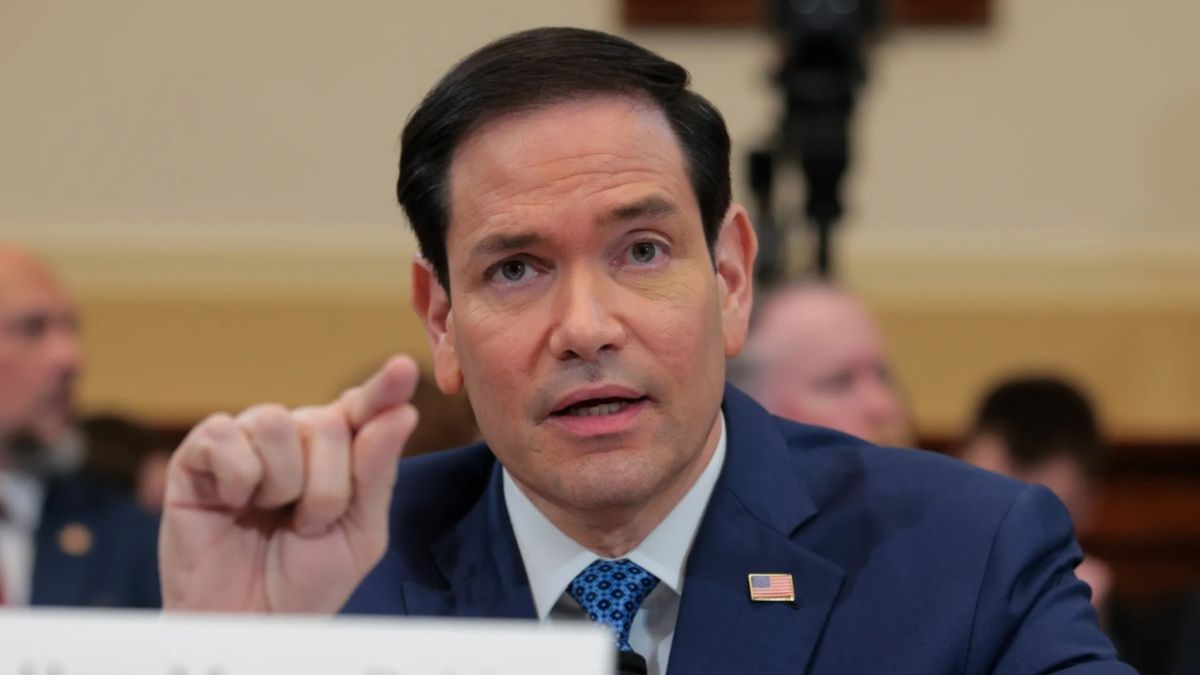
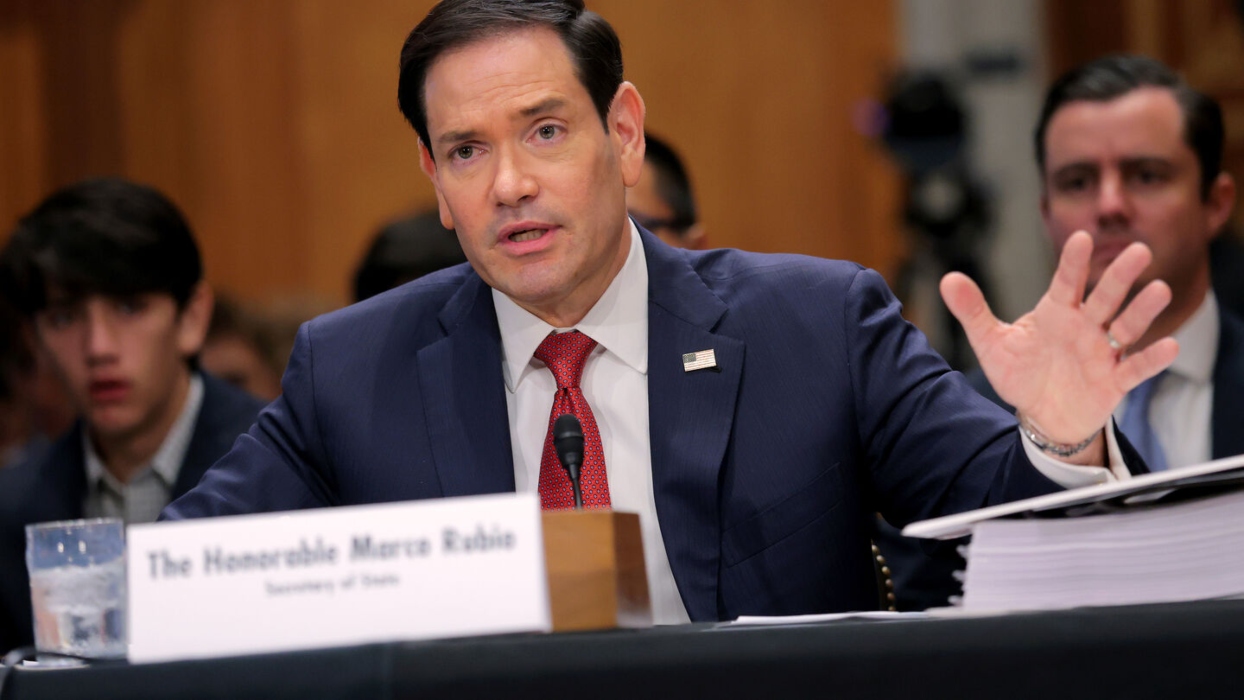
Secretary of State Marco Rubio has told foreign ministers from several allied countries that the United States is not expected, “for the time being,” to initiate a new round of major strikes against Iran, according to Axios.
Instead, the Trump administration is moving toward a strategy centered on maximum economic pressure: tougher sanctions, the continuing naval blockade, restrictions on Iran’s oil revenues and an effort to keep growing volumes of Gulf energy moving through the Strait of Hormuz.
The shift does not amount to a ceasefire or an abandonment of military options. U.S. officials have made clear that Washington could respond militarily if Tehran attacks first.
But after nearly six months of war, the center of gravity of the American campaign appears to be moving from the battlefield to Iran’s economy.
Treasury Secretary Scott Bessent has publicly reinforced that message, arguing that tougher economic pressure makes a renewed large-scale military campaign less likely.
From military pressure to an economic siege
The emerging strategy rests on several interconnected objectives.
Washington wants to maintain pressure on Iranian trade through the naval blockade, dramatically intensify sanctions, squeeze Tehran’s access to foreign currency and simultaneously increase the amount of non-Iranian oil moving through the Gulf.
The underlying calculation is straightforward: deprive Tehran of revenues while reducing its ability to use disruption in the Strait of Hormuz as leverage over global energy markets.
Bessent has described the combination of blockade and sanctions as a “one-two punch” and has promised what he called the toughest sanctions campaign yet against Iran.
That language points toward an important strategic change.
Rather than attempting to force Tehran into submission primarily through air power, Washington increasingly appears to believe that Iran can be weakened by restricting the financial resources available to its government and military apparatus.
Hormuz becomes the center of the strategy
The Strait of Hormuz remains central to the confrontation.
Control over the waterway has provided Tehran with one of its most powerful instruments of pressure because any sustained disruption immediately affects global oil and LNG markets.
The United States is therefore trying to break the connection between Iranian military leverage and global energy prices.
The objective is not simply to weaken Iran.
It is to demonstrate that Tehran can no longer determine whether Gulf energy reaches international markets.
That would represent a major strategic setback for Iran.
Iranian officials, however, reject Washington’s claim that the strategy is succeeding. Foreign Minister Abbas Araghchi has argued that the shift from military operations toward renewed sanctions demonstrates American frustration rather than Iranian weakness.
China is the biggest test
There is one major obstacle to Washington’s strategy: China.
Beijing has long been the principal destination for Iranian crude. Reuters reported, citing Kpler data for 2025, that China purchased more than 80% of Iran’s shipped oil.
That makes Chinese cooperation — or resistance — potentially decisive.
The Trump administration is threatening economic consequences for countries that continue providing Tehran with what Washington describes as a financial lifeline.
Bessent has directly urged Beijing to cooperate.
China, however, has rejected the American approach and continues to argue that sanctions and pressure will not resolve the confrontation.
That means the U.S.–Iran conflict risks developing into something larger: a confrontation between Washington and Beijing over who gets to determine the boundaries of global trade.
Tehran refuses to concede
Iran is publicly presenting the new American campaign as evidence that military pressure failed.
Araghchi has dismissed Washington’s threatened sanctions as another version of policies Iran has endured for decades.
“We have never been afraid,” he said, arguing that blockades and military pressure had failed to force Tehran into submission.
Iran nevertheless faces substantial economic pressure after months of conflict, infrastructure damage and international sanctions.
Washington is betting that cumulative economic damage will eventually force Tehran to reconsider its position.
Tehran is betting on the opposite: that it can withstand the pressure long enough for the political and economic costs of the war to become unacceptable inside the United States.
Trump wants an exit — without looking like he backed down
The political dimension is equally important.
The war is approaching the six-month mark, while the United States is moving toward crucial midterm elections.
That makes another prolonged military escalation increasingly costly for the White House.
The emerging strategy therefore offers Trump a potential middle path: avoid another major bombing campaign while continuing to claim that pressure on Iran is intensifying.
Economic warfare provides Washington with escalation without immediately committing additional American forces to large-scale combat.
It also leaves the military option available if Tehran launches a significant attack.
The sanctions campaign could redraw global trade lines
The greatest risk lies in secondary sanctions.
If Washington aggressively penalizes Chinese companies, refiners or financial institutions involved in Iranian trade, the Iran conflict could spill directly into the already fragile U.S.–China economic relationship.
China has spent years developing mechanisms that allow Iranian crude to reach independent refiners with limited exposure to the American financial system. Shipments have frequently been relabeled through third countries and settled through complex networks of intermediaries.
Breaking that system would require Washington to pressure not merely Iran but companies and institutions in other major economies.
That could make the sanctions campaign extraordinarily powerful.
It could also make it extraordinarily dangerous.
Washington is changing the battlefield
The Rubio message suggests that the Trump administration believes the next phase of the confrontation can be fought primarily through oil, shipping, sanctions and financial isolation rather than missiles.
The strategic objective remains the same: weaken Tehran sufficiently to force concessions over its nuclear program and regional posture.
What has changed is the preferred instrument.
For Iran, the challenge is now economic survival.
For Washington, the challenge is ensuring that its sanctions are actually enforceable without triggering a broader confrontation with China or destabilizing global energy markets.
And for Beijing, the question is becoming unavoidable: how far is China prepared to go to protect its economic relationship with Tehran when Washington threatens secondary sanctions?
That may ultimately determine whether America’s new strategy succeeds.
Sources: Axios; Reuters; Al-Monitor.
Διαβάστε όλες τις τελευταίες Ειδήσεις από την Ελλάδα και τον Κόσμο