€60,000 by Age 18: Mitsotakis Unveils a Savings Account for Every Child Inspired by Germany
 ΧΡΟΝΟΣ ΑΝΑΓΝΩΣΗΣ 7 '

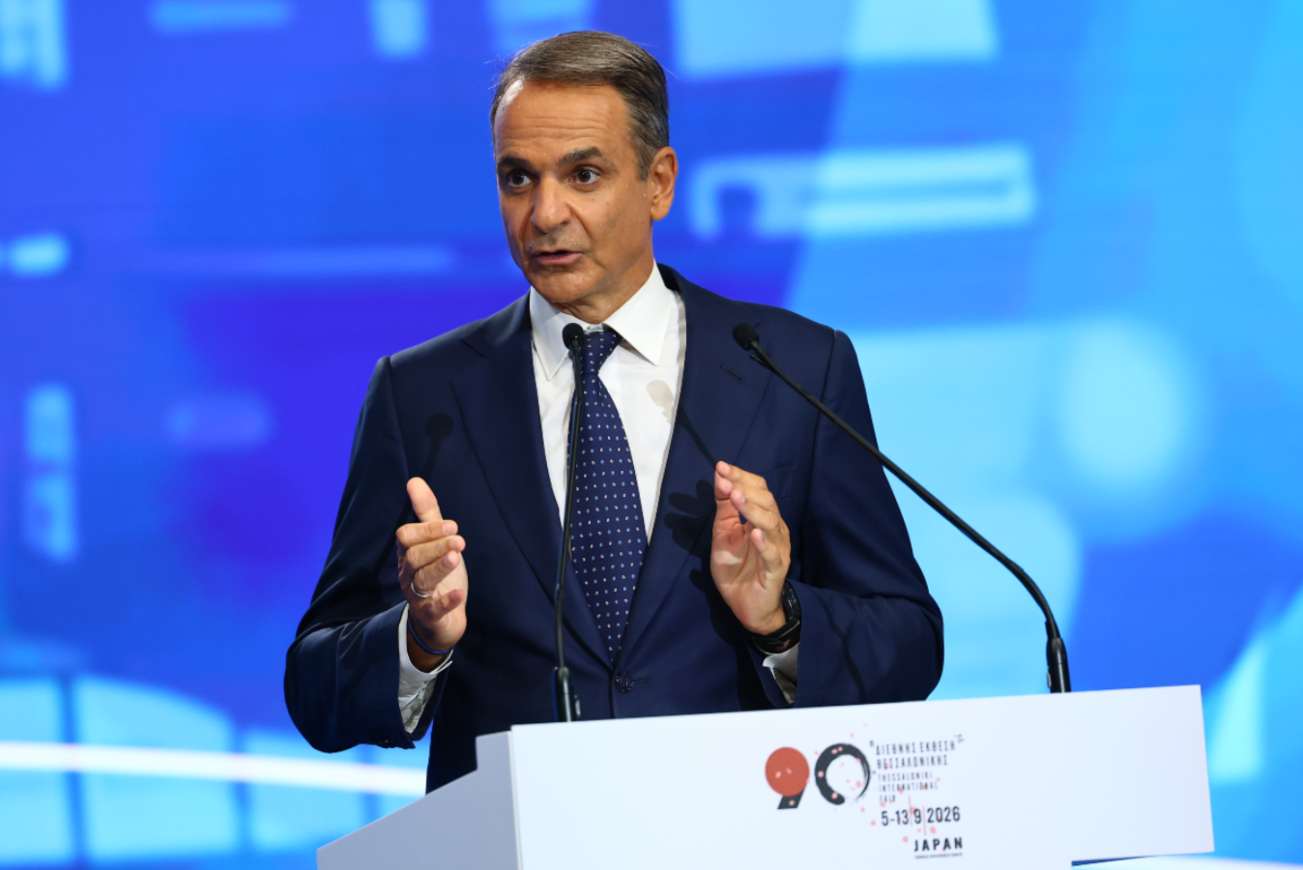
Πηγή Φωτογραφίας: eurokinissi//€60,000 by Age 18: Mitsotakis Unveils a Savings Account for Every Child Inspired by Germany



One of the most distinctive announcements at this year’s Thessaloniki International Fair was not another tax cut, benefit or short-term cash payment.
It was a policy designed for children who will enter adulthood in the 2040s.
Prime Minister Kyriakos Mitsotakis unveiled a new “Savings Account for the New Generation,” under which families and the state would jointly build up capital for children over the course of their childhood.
The political philosophy behind the proposal is significant. Instead of providing only immediate financial assistance to families, the state would help create an asset that grows over time and becomes available when the child reaches adulthood.
And one figure immediately stood out: more than €60,000 by the age of 18, under the savings and investment assumptions used in the prime minister’s example.
How the New Child Savings Account Would Work
Under the plan announced at TIF, parents would be able to open a dedicated account for their child from January 2027.
The government would match parental contributions, up to a maximum state contribution of €1,200 per year.
Mitsotakis summarized the mechanism in simple terms:
“One hundred euros from the parent? One hundred euros from the state.”
That means a family saving €100 per month would contribute €1,200 annually, while the government would add another €1,200.
The money would remain locked in the account until the child reaches adulthood.
Unlike an ordinary bank deposit, however, the objective is for the accumulated capital to be invested over the long term, allowing returns to compound over many years.
How €43,200 Could Grow Beyond €60,000
The arithmetic illustrates the ambition behind the policy.
If parents save €100 every month for 18 years, their total contributions would amount to €21,600.
If the state matches those contributions in full, it would add another €21,600.
That produces total contributions of €43,200 before investment returns.
The remaining difference between €43,200 and the figure of more than €60,000 presented by Mitsotakis would come from the investment performance of the accumulated capital over the 18-year period.
“We are creating a closed ‘Savings Account for the New Generation,’” Mitsotakis said, explaining that with parental savings of €100 per month a young person could have “more than €60,000 as a foundation for starting adult life” at the age of 18.
There is, however, an important distinction: €60,000 is not a guaranteed payout for every child.
It is an illustrative outcome based on regular contributions and assumed investment returns over a long period. The final amount would therefore depend on the detailed design of the scheme, actual contributions and investment performance.
From Welfare Payments to Capital Building
This is where the proposal becomes politically more interesting.
The Greek government is attempting to introduce a different concept into family policy: the state should not only help families cover present-day costs, but also participate in building an asset for their children.
That could give young adults an initial financial foundation for university studies, housing, professional training, entrepreneurship or other major expenses as they begin independent life.
The exact rules governing how the accumulated capital could eventually be used will need to be clarified when the final scheme is designed.
But the broader shift is already visible.
It represents a move from immediate social transfers toward long-term savings, investment and asset creation.
The German Frühstart-Rente Connection
The Greek proposal draws inspiration from the philosophy behind Germany’s Frühstart-Rente, although the two models should not be treated as identical.
The common principle is straightforward: by beginning investment at a young age, the state can use the power of long-term compounding to help create significantly more capital than would be possible through a one-off payment at adulthood.
The Greek version, however, places substantial emphasis on parental participation and is being designed around Greece’s own demographic and social-policy priorities.
It is therefore better understood as a Greek adaptation of the broader concept rather than a direct copy of the German system.
The Demographic Challenge Behind the Policy
Mitsotakis placed the new account within the government’s wider strategy to address Greece’s demographic problem.
The country is confronting a combination of low birth rates, an ageing population and increasing difficulties for younger generations trying to establish independent households.
Housing costs, education expenses and the capital required to start a business can make the transition into adulthood particularly difficult.
The new savings account attempts to approach that problem from the opposite direction.
Instead of waiting until someone is 18, 25 or 30 before trying to provide financial support, the state would begin helping to build their capital from childhood.
That makes the proposal not merely a family benefit, but potentially a long-term generational policy.

The Difficult Question: What About Families That Cannot Save €100 a Month?
There is, however, an important social-policy challenge embedded in the model.
The scheme is most powerful for households that can afford to save consistently.
A family capable of contributing €100 every month would be able to maximize the state match. A lower-income household that cannot spare the same amount would not accumulate an equivalent fund unless additional safeguards or enhanced support are introduced.
That raises an important question for the final design:
Could a policy intended to reduce inequality between generations inadvertently reproduce inequality between families?
Much will depend on whether the government introduces special provisions for low-income households and whether children can receive some baseline state contribution regardless of their parents’ capacity to save.
These details will determine whether the scheme is genuinely universal in practice rather than only in eligibility.
One of TIF’s Quietest — but Most Long-Term — Reforms
The child savings account can easily be overshadowed by the bigger immediate announcements on wages, pensions, taxes and social benefits.
Yet its horizon is considerably longer.
It does not promise a larger paycheck next month.
Instead, it attempts to create a pool of capital for the generation that will reach adulthood in Greece during the 2040s.
If successfully designed, it could represent an important change in Greek social policy: using public money not only to finance current consumption, but to help younger generations accumulate assets.
If access to the full benefit depends too heavily on parents already having sufficient disposable income, however, its redistributive impact will be much weaker.
That is the central test facing the proposal.
The political idea announced by Mitsotakis at TIF is nevertheless clear: the state should begin investing in a child’s financial future years before that child enters the labor market.
And if the final architecture delivers on that ambition, the “New Generation Savings Account” could prove to be one of the most consequential — if least immediately visible — policies announced at TIF 2026.
Source: pagenews.gr
Διαβάστε όλες τις τελευταίες Ειδήσεις από την Ελλάδα και τον Κόσμο