Europe’s Fruit Map Is Shifting: Greece Faces a New Battle Over Water, Climate and Competitiveness
 ΧΡΟΝΟΣ ΑΝΑΓΝΩΣΗΣ 9 '
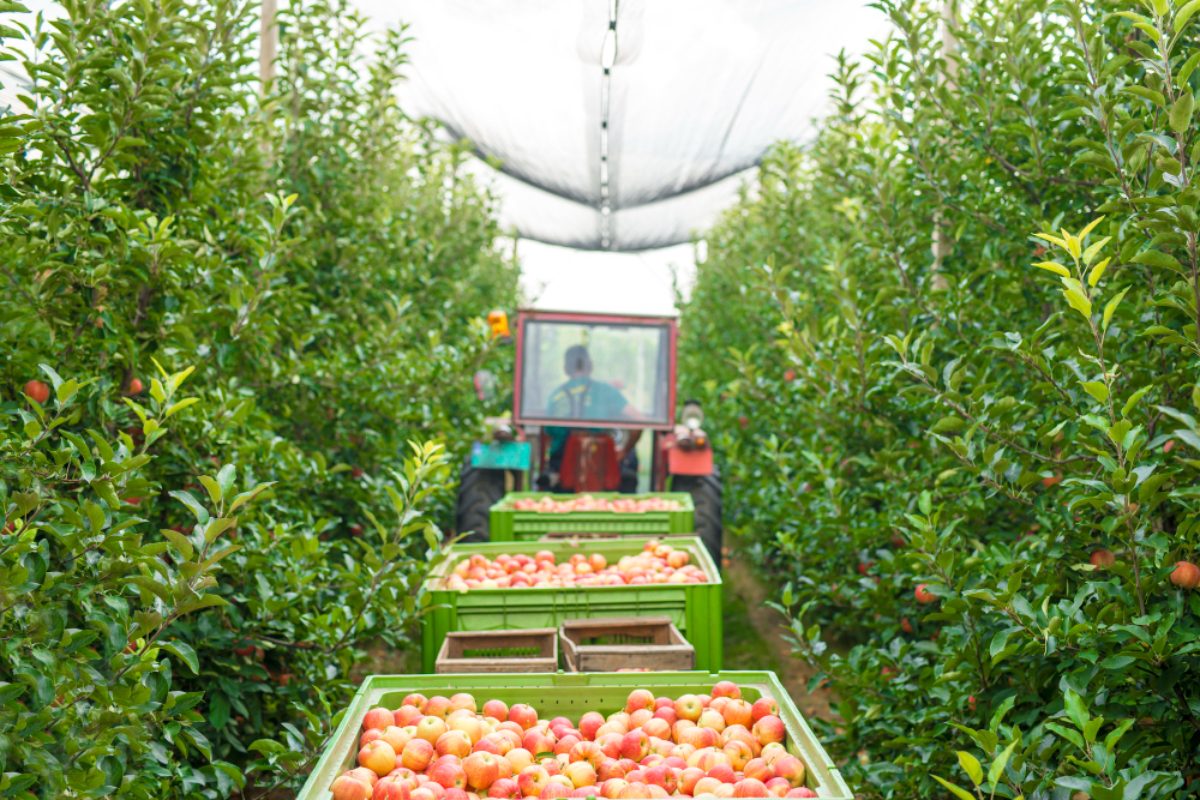
Πηγή Φωτογραφίας: Magnific/Europe’s Fruit Map Is Shifting: Greece Faces a New Battle Over Water Climate and Competitiveness



Europe’s fruit industry is entering a period of structural change.
The issue is not that Europe will suddenly stop producing fruit. The deeper challenge is that rising temperatures, water scarcity and increasingly volatile weather are changing the economics — and potentially the geography — of production.
Rabobank’s assessment points to a new divide across European agriculture: not simply between north and south, but between producers able to finance climate adaptation and those increasingly exposed to risks they cannot afford to mitigate.
For Greece, this is not a distant scenario. It is already becoming an agricultural-policy challenge.
Greece Is on the Climate Front Line
Greece occupies an important position in Mediterranean fruit production, particularly in two categories that are highly exposed to changing climate conditions.
The country accounts for roughly 10% of EU citrus production, behind Spain, with around 55%-60%, and Italy, at approximately 20%-25%.
Greece is also a major producer of stone fruit, particularly peaches and nectarines. Together with Spain and Italy, the three countries account for more than 90% of EU peach and nectarine production.
That concentration matters.
Climate pressure on Mediterranean agriculture is therefore not merely a southern European problem. It can become a European food-supply, pricing and competitiveness issue.
The Threat Is Not Just Lower Output — It Is Volatility
One of Rabobank’s most important conclusions is that climate change does not necessarily imply a permanent collapse in Europe’s overall fruit supply.
It does, however, make production less predictable.
Yields become more volatile. Quality can fluctuate. Harvest calendars can shift. A single heatwave, drought, frost or hail event can have a disproportionately large impact on an entire season.
For growers, therefore, the emerging risk is not simply producing less.
It is losing the ability to predict how much they will produce, when they will harvest it and at what quality.
That uncertainty travels through the entire value chain — from farmers and processors to exporters, supermarkets and ultimately consumers.
Stone Fruit Faces a Double Climate Challenge
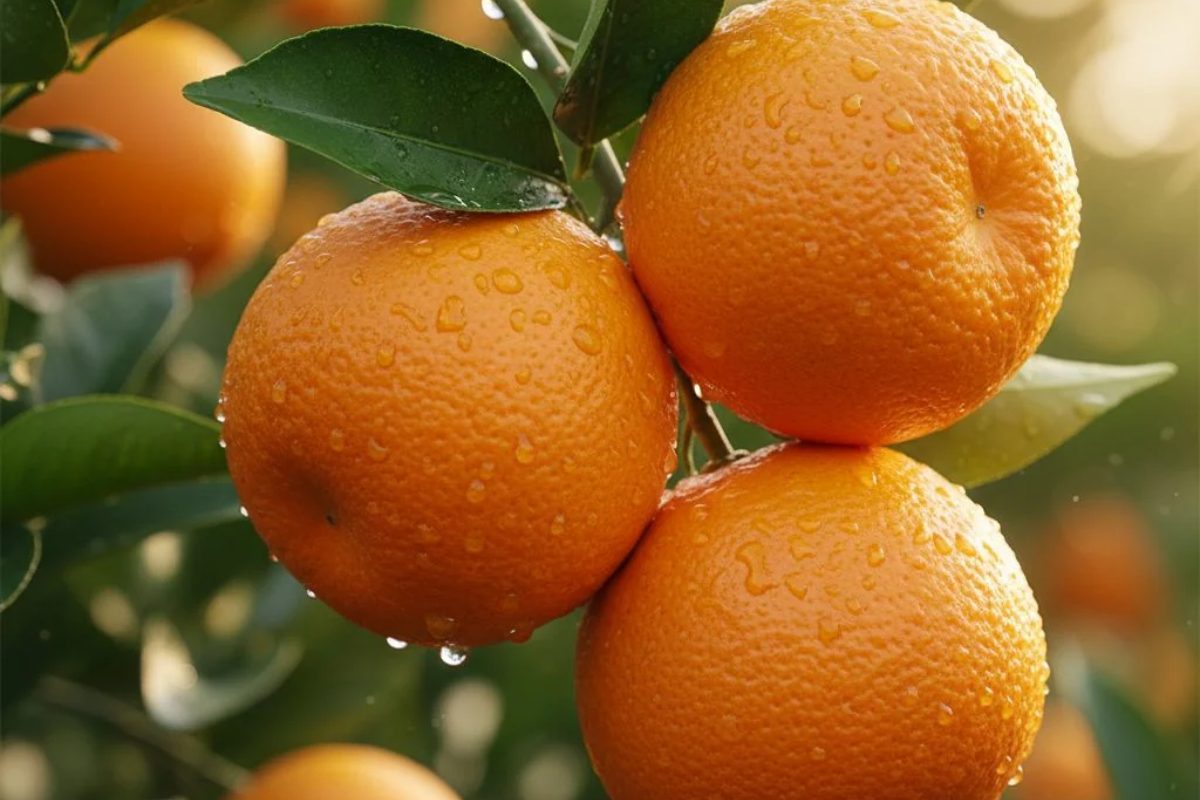
Peaches and nectarines illustrate the problem particularly clearly.
Warmer summers increase heat stress, while milder winters can affect the chilling conditions fruit trees require during dormancy.
The combination can interfere with flowering, fruit setting, yields and quality.
For Greece, the implications extend well beyond individual farms.
Stone-fruit production supports processing, logistics, exports and employment across important agricultural regions. A sustained increase in climate volatility can therefore become a regional economic issue.
Citrus: Water Becomes the Strategic Asset
For citrus production, the battle increasingly comes down to water.
Higher temperatures increase irrigation requirements at precisely the time when drought and pressure on water resources make supply less reliable.
The economic consequence is straightforward: irrigation becomes more expensive and access to secure water sources becomes more valuable.
A producer with reliable irrigation infrastructure no longer merely has a technical advantage.
That producer has a competitive advantage.
Water is gradually becoming to Mediterranean agriculture what energy is to industry: a strategic input capable of determining where production remains economically viable.
Europe’s Agricultural Geography Could Move North
Rabobank sees the possibility of a gradual shift in the climatic suitability of fruit-growing regions.
Parts of central and eastern Europe could eventually experience conditions more closely resembling those historically associated with established fruit-producing regions farther south.
At the same time, some Mediterranean areas could move away from the climatic conditions that traditionally made them highly productive.
This does not mean orchards will simply migrate from Greece, Spain and Italy to northern Europe.
Agriculture does not move that easily.
But it does mean that the geography of comparative advantage can change.
Why Fruit Production Cannot Simply “Move North”
Climate is only one part of a successful agricultural ecosystem.
Commercial fruit production also requires irrigation systems, specialised knowledge, labour, nurseries, packing facilities, cold storage, logistics, processing capacity and access to established markets.
Orchards themselves are long-term investments.
New varieties need to be selected. Trees must be planted. Production takes time to reach commercial scale.
Northern and central European regions may gain climatic opportunities, but transforming those opportunities into competitive agricultural clusters requires capital and infrastructure.
This is why the climate transition is unlikely to produce a simple north-versus-south replacement.
Instead, it could trigger a much more complex investment race.
The Real Divide Will Be Capital
This may be the most important agricultural-policy implication.
Larger and better-capitalised producers can invest in drip irrigation, soil-moisture sensors, digital decision-making systems, hail nets, frost protection, water storage and climate-resilient varieties.
They can also diversify production geographically or across different crops.
Smaller farms have fewer options.
A major climate shock can destroy not only one year’s income but also the capital required to finance adaptation for the next.
Climate change could therefore accelerate another structural trend in European agriculture: the widening gap between farms that can invest in resilience and those that cannot.
Greece’s Next Agricultural Policy Is a Water Policy
For Greece, the implications go far beyond emergency compensation after extreme weather.
The strategic priority increasingly becomes prevention.
Modern irrigation networks, water storage, reduction of network losses, precision irrigation, soil monitoring and better management of available water resources are no longer peripheral environmental policies.
They are productive infrastructure.
The question for Greek agriculture is increasingly not simply how much support farmers receive after a drought.
It is how much damage can be prevented before the drought arrives.
From Compensation to Resilience
For decades, agricultural policy across much of southern Europe has frequently followed a reactive pattern.
A climate event occurs.
Production is damaged.
Farmers seek compensation.
A climate environment characterised by more frequent shocks makes that model increasingly expensive and insufficient.
The alternative is to shift public resources toward adaptation before losses occur.
That means combining insurance and compensation mechanisms with investment in irrigation, protective infrastructure, technology and more resilient production systems.
In economic terms, the objective changes from financing losses to financing resilience.
A New Challenge for the CAP
The shift also raises a broader question for European agricultural policy.
If climate adaptation increasingly requires significant upfront capital, support mechanisms will have to ensure that the transition does not become affordable only for large agricultural businesses.
Otherwise, climate policy itself could accelerate consolidation.
Future Common Agricultural Policy instruments may therefore face a difficult balancing act: financing modernisation while keeping smaller and family-owned farms economically capable of participating in it.
The climate transition is not only about technology.
It is also about who can afford that technology.
Greece’s Mediterranean Advantage Is No Longer Guaranteed
Greece still possesses important advantages: agricultural know-how, established varieties, export relationships, Mediterranean growing conditions and decades of experience in fruit production.
But climate change means those advantages cannot simply be taken for granted.
If competing regions gain more favourable growing conditions while also offering better water infrastructure and easier access to investment capital, part of the competitive advantage historically enjoyed by southern Europe could gradually shift.
The strategic objective for Greece should therefore not be merely to preserve today’s production volumes.
It should be to preserve the country’s position on Europe’s agricultural map over the next decade and beyond.
Climate Resilience Becomes the New Competitive Edge
The emerging European fruit market will not be determined solely by labour costs, yields and product quality.
Increasingly, it will also depend on who has reliable water.
Who can invest.
Who can deploy technology.
Who can protect orchards from extreme weather.
And who has enough financial resilience to survive two or three difficult seasons in succession.
For Greece, this changes the nature of agricultural policy.
The climate crisis is no longer simply an environmental challenge imposed on farming from outside.
It is becoming an economic variable that determines productivity, investment, land values, export competitiveness and ultimately which regions remain major agricultural producers.
Climate change is not simply changing Europe’s weather. It is beginning to rewrite the economics — and potentially the map — of European agriculture.
For Greece, staying on that map will increasingly depend on three things: water, investment and resilience.
Source: Pagenews.gr
Διαβάστε όλες τις τελευταίες Ειδήσεις από την Ελλάδα και τον Κόσμο