Greece Posts Best Job-Creation Performance in 25 Years as Unemployment Falls Below 8%
 ΧΡΟΝΟΣ ΑΝΑΓΝΩΣΗΣ 8 '

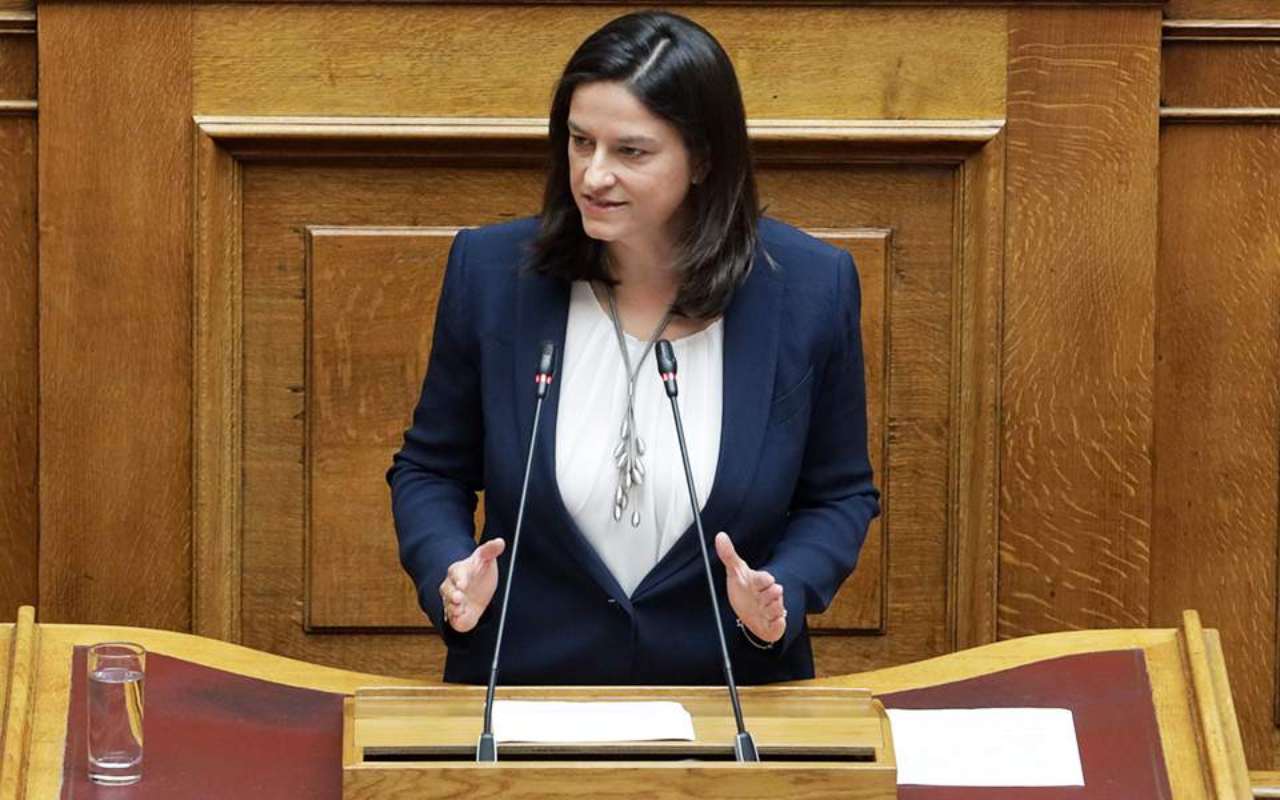
Πηγή Φωτογραφίας: eurokinissi//Greece Posts Best Job-Creation Performance in 25 Years as Unemployment Falls Below 8%



Greece’s labour market has delivered one of its strongest signals in more than two decades.
The balance between new hires and departures reached +323,136 jobs between January and July 2026, the strongest first-seven-month performance recorded since 2001, according to data from the ERGANI employment information system.
At the same time, unemployment fell below the psychologically important 8% threshold, reaching 7.9% in July 2026.
The combination points to a deeper structural shift in the Greek economy.
The debate is gradually moving away from the crisis-era question of how to tackle mass unemployment toward a more demanding challenge: how to improve wages, productivity, job quality and labour-force participation as unemployment continues to fall.
Kerameus: “The Best Performance of the Last 25 Years”
Labour and Social Security Minister Niki Kerameus highlighted both the scale and the breadth of the improvement.
“The July figures confirm the consistently positive trajectory of the labour market. During the first seven months of 2026, we recorded the best performance of the last 25 years in the balance of new jobs, with 323,136 additional positions, while unemployment has fallen to 7.9%, from 17.9% in July 2019.”
She also pointed to improvements among groups traditionally facing greater barriers to employment.
“Of particular importance is the fact that this progress now reaches more and more of our fellow citizens: more women and young people are entering the labour market, while the share of full-time employment has increased significantly.”
Her stated objective now reflects the next phase of labour policy.
“Our goal remains a labour market with more and better jobs, more opportunities for everyone and even lower unemployment. We continue with policies that strengthen employment and create stable prospects for workers and businesses.”
From 17.9% to 7.9% in Seven Years
The comparison with 2019 captures the scale of the change.
Overall unemployment has fallen by 10 percentage points, from 17.9% in July 2019 to 7.9% in July 2026.
The improvement is also visible across individual categories.
Male unemployment has dropped to 5.9%, from 14.5% in 2019.
Female unemployment has fallen to 10.4%, from 22.2%.
Youth unemployment has declined to 16.8%, compared with 37.6% seven years earlier.
The youth figure is particularly important.
For more than a decade, extremely high youth unemployment was one of Greece’s deepest structural economic problems, contributing to the departure of tens of thousands of highly educated young workers during the crisis years.
A fall of more than 20 percentage points substantially changes the picture, even if Greece still has work to do before youth unemployment ceases to be a significant policy challenge.
The Next Question Is Not Only “How Many Jobs?”
This is where the latest figures become more economically interesting.
As the pool of unemployed workers shrinks, Greece is entering a different phase of labour-market development.
The questions increasingly become:
How productive are the new jobs?
What salaries do they offer?
How many are full-time?
Can businesses find workers with the skills they require?
And can employment growth translate into stronger real household incomes?
A modern economy cannot sustain long-term growth simply by adding more workers indefinitely.
At some point, productivity, skills, investment and value added per worker become decisive.
That is increasingly Greece’s next labour-market challenge.
Digital Work Card: Declared Overtime Jumps 36.8%
Another figure released by the Labour Ministry may prove almost as significant as the headline job-creation number.
More than 5.7 million overtime hours were recorded in sectors covered by Greece’s Digital Work Card during the first seven months of 2026.
That represents approximately 1.54 million more declared overtime hours than in the same period of 2025 — an increase of 36.8%.
The sector breakdown is striking:
Wholesale trade recorded an increase of 212.8%, equivalent to 594,913 additional overtime hours.
Administrative and support services linked to tourism rose 172.8%, or 47,991 hours.
Food service recorded a 67.2% increase, adding 323,049 declared overtime hours.
Industry was up 15.4%, representing another 267,916 hours.
More Overtime — Or More Overtime Finally Being Recorded?
There is an important distinction.
A 36.8% increase in registered overtime does not necessarily mean Greek employees suddenly worked 36.8% more overtime.
A significant part of the increase may instead represent working hours that previously occurred but were not fully declared and are now being captured digitally.
That is precisely the economic purpose of the Digital Work Card.
If working time moves from undeclared or under-declared activity into the formal economy, several things happen simultaneously.
Workers gain greater visibility over the hours they actually perform.
Employers face stronger compliance requirements.
And the state potentially gains a broader tax and social-security contribution base.
Seen this way, the 36.8% increase is not merely an indicator of greater labour intensity.
It may also be an indicator of greater transparency in the labour market.
Greece Is Approaching a Different Problem: Worker Shortages
Success in reducing unemployment creates a new set of problems.
Businesses in tourism, hospitality, construction, technology and parts of manufacturing are already reporting difficulties filling positions.
As unemployment continues to decline, labour shortages can intensify.
The policy challenge then becomes less about creating a vacancy and more about finding the right worker for it.
This is the skills mismatch problem.
A business may have an open position.
A worker may be looking for employment.
But the worker may lack the necessary skills, live in another part of the country, or find the wage insufficient to justify taking the job.
That pushes labour policy toward retraining, vocational education, improved links between education and employers, greater participation by women and young people — and, ultimately, stronger compensation.
Women Could Be One of the Biggest Sources of Future Growth
The sharp reduction in female unemployment deserves particular attention.
Female unemployment has declined from 22.2% to 10.4%, but it remains substantially above the male rate.
That gap is not only a social-policy issue.
It represents untapped economic capacity.
Higher female labour-force participation can help offset demographic pressures, worker shortages and the economic consequences of Greece’s ageing population.
Policies involving childcare, flexible employment, training and incentives for returning to work could therefore become increasingly important as unemployment moves closer to European norms.
The Labour Market Is Becoming an Economic Competitiveness Issue
There is also a wider macroeconomic dimension.
When unemployment was close to 18%, labour policy was primarily a social emergency.
At 7.9%, it increasingly becomes an issue of economic competitiveness.
Businesses need skilled employees.
Workers need wages that reflect productivity and living costs.
The economy needs enough people in employment to finance pensions and social insurance in an ageing society.
And Greece needs to attract — or bring back — some of the talent that left during the financial crisis.
This means employment policy can no longer be separated from investment, education, immigration, demographics and productivity.
The Next Chapter: Better Jobs, Not Just More Jobs
The 323,136 net new jobs recorded in the first seven months of 2026 represent a major quantitative milestone.
So does unemployment falling below 8%.
But perhaps the most important message from the numbers is that Greece’s labour-policy problem is changing.
During the crisis, the objective was overwhelmingly clear: create jobs.
The next stage is more difficult.
Create more jobs — but also make them better.
Better wages.
Higher productivity.
Greater full-time employment.
Better matching between skills and vacancies.
And accurate recording and payment of every hour worked.
If 323,136 jobs are the quantitative record of 2026, job quality will be the qualitative test for Niki Kerameus and Greece’s labour market in the years ahead.
Source: pagenews.gr
Διαβάστε όλες τις τελευταίες Ειδήσεις από την Ελλάδα και τον Κόσμο