El Alamein Summit: Greece, Egypt and Cyprus Build a New Strategic Axis in the Eastern Mediterranean
 ΧΡΟΝΟΣ ΑΝΑΓΝΩΣΗΣ 9 '
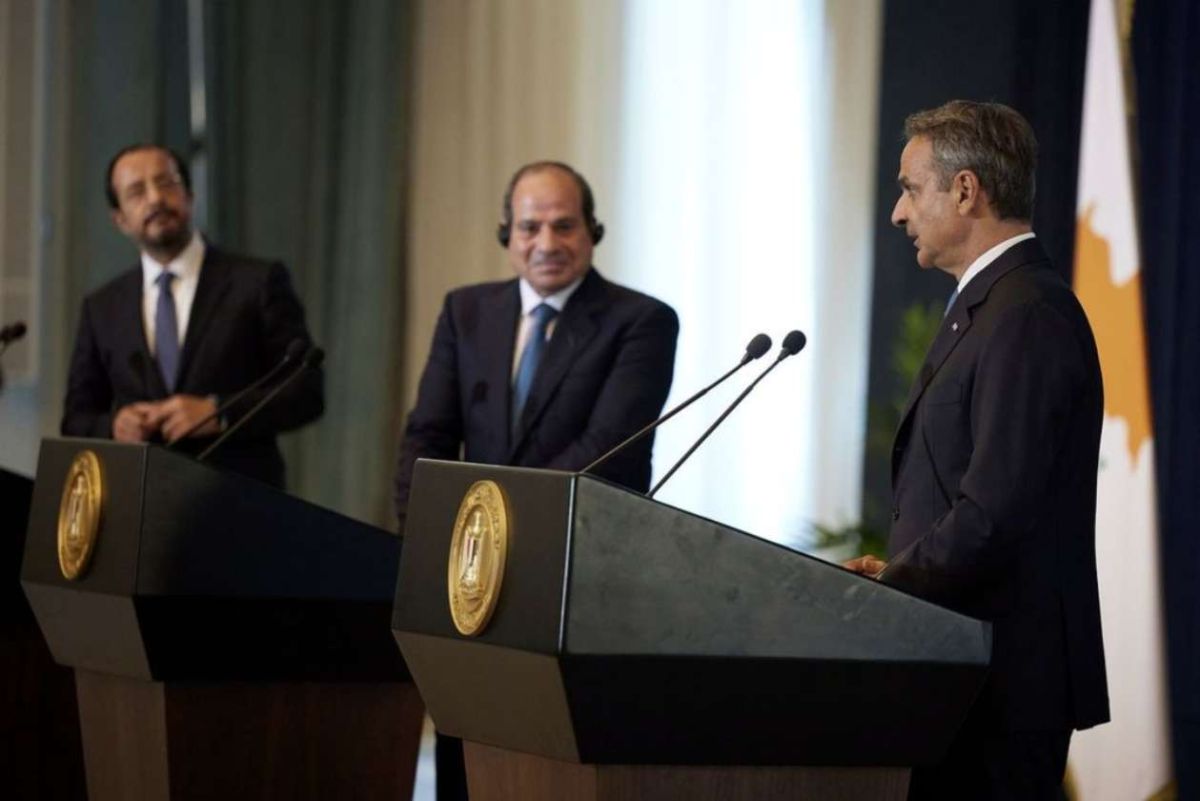
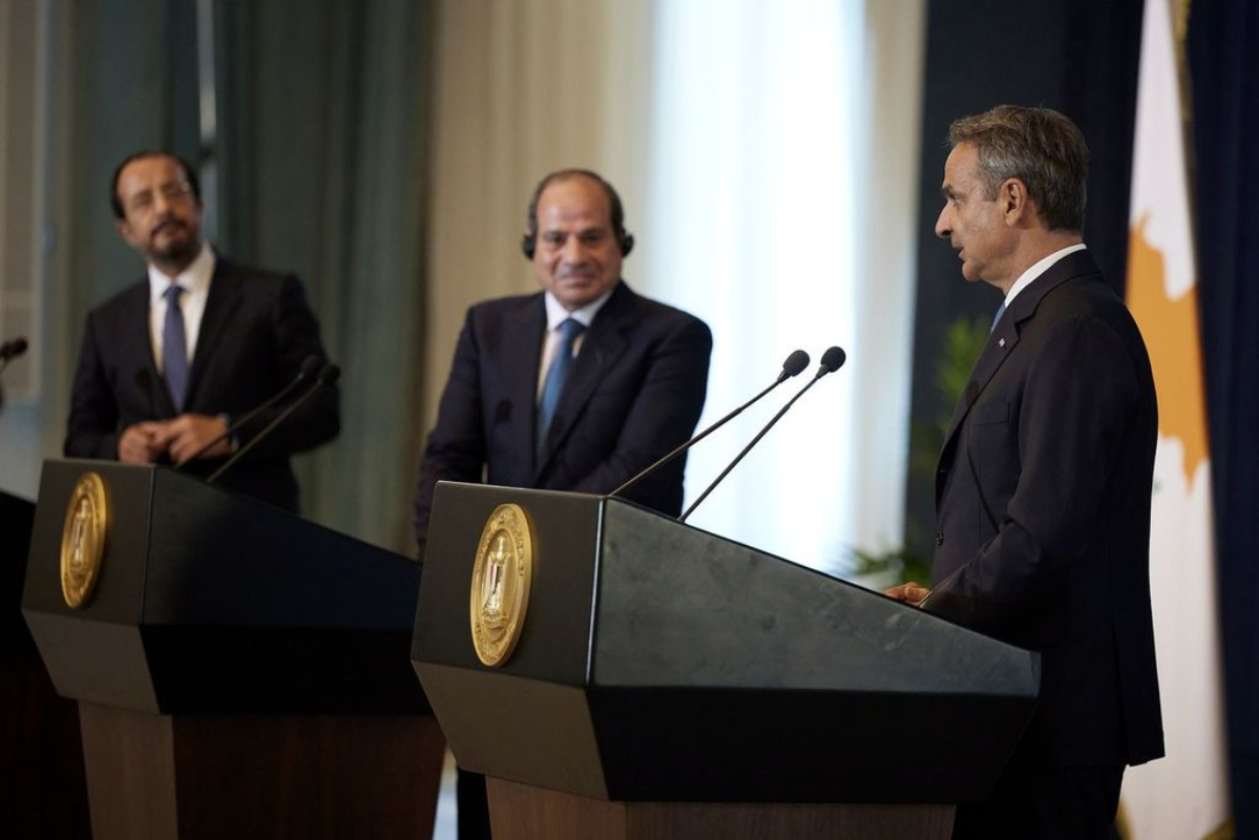
Πηγή Φωτογραφίας: Greek Prime Minister Office--Papamitsos//El Alamein Summit: Greece, Egypt and Cyprus Build a New Strategic Axis in the Eastern Mediterranean



The meeting in El Alamein is more than another diplomatic photo opportunity for Greece, Egypt and Cyprus.
Its timing gives the talks between Greek Prime Minister Kyriakos Mitsotakis, Egyptian President Abdel Fattah el-Sisi and Cypriot President Nikos Christodoulides considerably greater geopolitical weight.
The Eastern Mediterranean is undergoing another strategic realignment. Turkey is expanding its regional relationships, Greece is simultaneously deepening its partnerships with Israel and the Arab world, while energy infrastructure is once again becoming an instrument of foreign policy and geopolitical influence.
Against this backdrop, the three leaders have reaffirmed the strategic importance of their trilateral framework, placing energy, regional developments and deeper political coordination at the center of their talks.
Why the Timing Matters
The summit comes at a particularly sensitive moment.
Greece is strengthening its defense and security cooperation with Israel while maintaining close strategic ties with Egypt. Cairo, meanwhile, has restored significant channels of communication with Ankara and remains a pivotal actor in the Gaza crisis.
This creates a complex diplomatic geometry.
Athens is not asking Cairo to choose between Greece and Turkey.
Egypt is not asking Greece to choose between Cairo and Israel.
Instead, Greece and Egypt are attempting to insulate their strategic partnership from the overlapping and sometimes competing relationships emerging across the region.
That is increasingly how power works in the new Middle East and Eastern Mediterranean: not through rigid blocs, but through multiple partnerships operating simultaneously.
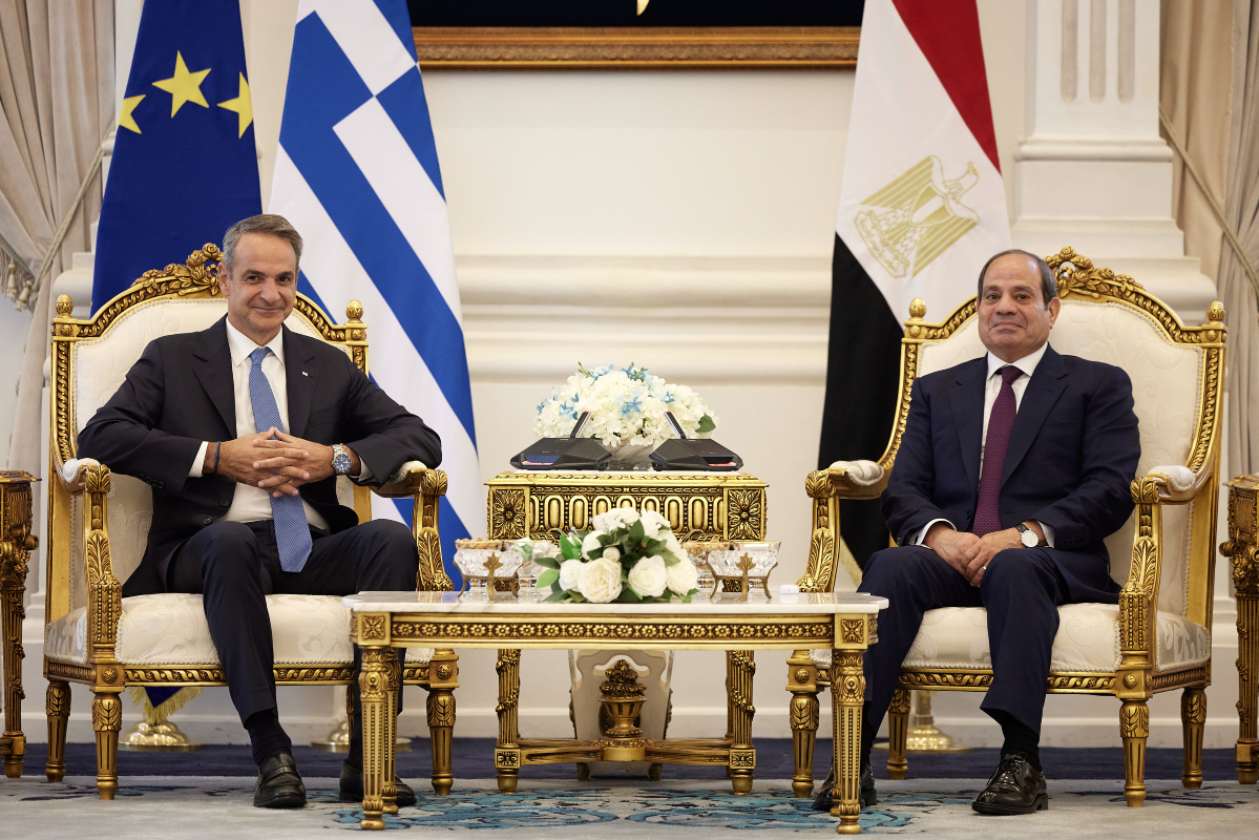
GREGY: When an Electricity Cable Becomes Geopolitics
At the heart of the Greek-Egyptian agenda is the planned GREGY electricity interconnector.
The project is designed to transport electricity generated in Egypt to Greece and, through the European grid, deeper into the EU market.
Its importance goes far beyond energy.
For Egypt, it offers a potential gateway into the European electricity market.
For Europe, it could provide an additional route for diversifying energy supplies.
And for Greece, it strengthens the country’s ambition to become an energy bridge connecting North Africa, the Eastern Mediterranean and continental Europe.
If implemented at scale, GREGY would create something far more durable than a political declaration: physical strategic interdependence between Egypt, Greece and Europe.
That is precisely why electricity cables have become part of the region’s geopolitical competition.
Maritime Zones: The Quiet but Critical Dimension
There is another issue of particular strategic importance for Athens: maritime jurisdiction.
Greece and Egypt signed a partial Exclusive Economic Zone delimitation agreement in 2020, establishing an important legal and geopolitical framework in the Eastern Mediterranean.
The wider maritime picture, however, remains unfinished.
The region continues to be shaped by competing claims and sharply different interpretations of maritime jurisdiction.
For Athens, maintaining close coordination with Cairo therefore has strategic value well beyond bilateral relations.
It reinforces Greece’s broader position that maritime disputes should be addressed through international law and negotiated agreements rather than unilateral claims or coercion.
At the same time, the current talks should not automatically be interpreted as evidence that a new delimitation agreement is imminent.
The significance lies in keeping this strategic channel active.
Cyprus Adds Natural Gas to the Equation
Christodoulides’ presence introduces another major energy component.
Cyprus and Egypt have increasingly focused their cooperation on natural gas and the potential development and export of Eastern Mediterranean resources through Egyptian infrastructure.
This means the trilateral relationship is gradually developing two complementary energy corridors: Egypt–Greece through electricity and Cyprus–Egypt through natural gas.
Europe sits at the end of both equations.
That potentially transforms the trilateral framework from a diplomatic mechanism into a wider energy architecture connecting the EU with the Eastern Mediterranean and North Africa.
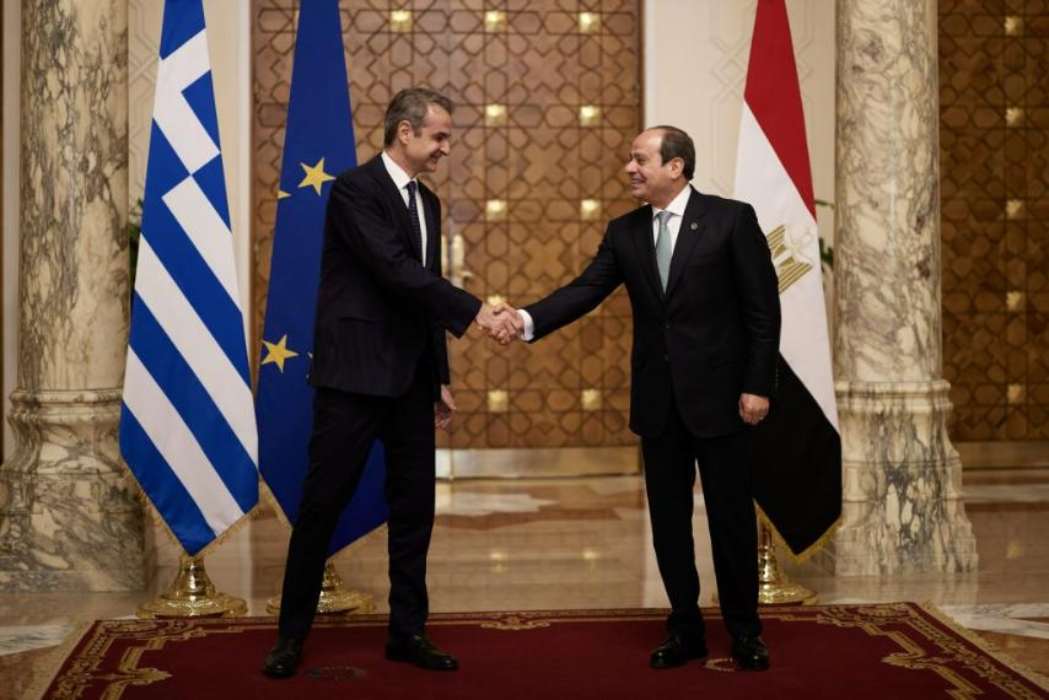
Gaza Makes Egypt Indispensable
The summit also takes place against the backdrop of continuing instability across the Middle East.
Egypt occupies a unique position in the Gaza equation because of geography, its diplomatic channels and its ability to communicate with multiple parties.
For Greece, this creates another delicate balancing act.
Athens wants to preserve and deepen its strategic partnership with Israel while simultaneously strengthening its relationships with Egypt and the wider Arab world.
Those objectives are not necessarily contradictory.
In fact, Greece’s ability to maintain credible channels with both sides could increase its diplomatic value in a region where relationships are becoming increasingly transactional and multidimensional.
For Cyprus, too, close coordination with Egypt has become an important element of its regional diplomacy.
Migration Is Becoming Part of the Security Architecture
Migration adds another dimension to the relationship.
Egypt’s role in limiting irregular migration toward Europe has become increasingly important to both Brussels and Mediterranean EU member states.
For Athens and Nicosia, cooperation with Cairo therefore extends beyond traditional foreign policy.
Migration management, border security, energy, economic cooperation and regional stability are increasingly being treated as interconnected elements of the same strategic relationship.
This is part of a broader shift in European policy toward North Africa: preventing crises and irregular flows before they reach the EU’s external borders.
The Sinai Monastery: A Sensitive Bilateral Issue
The status of Saint Catherine’s Monastery in Sinai also remains an important issue in Greek-Egyptian relations.
Athens has been closely following legal developments surrounding the monastery and its property status, given its exceptional religious, historical and cultural significance.
For Greece, the challenge is to secure the monastery’s long-term position while protecting the broader strategic relationship with Cairo.
That requires careful diplomacy rather than allowing a sensitive bilateral dispute to overwhelm a much wider partnership.
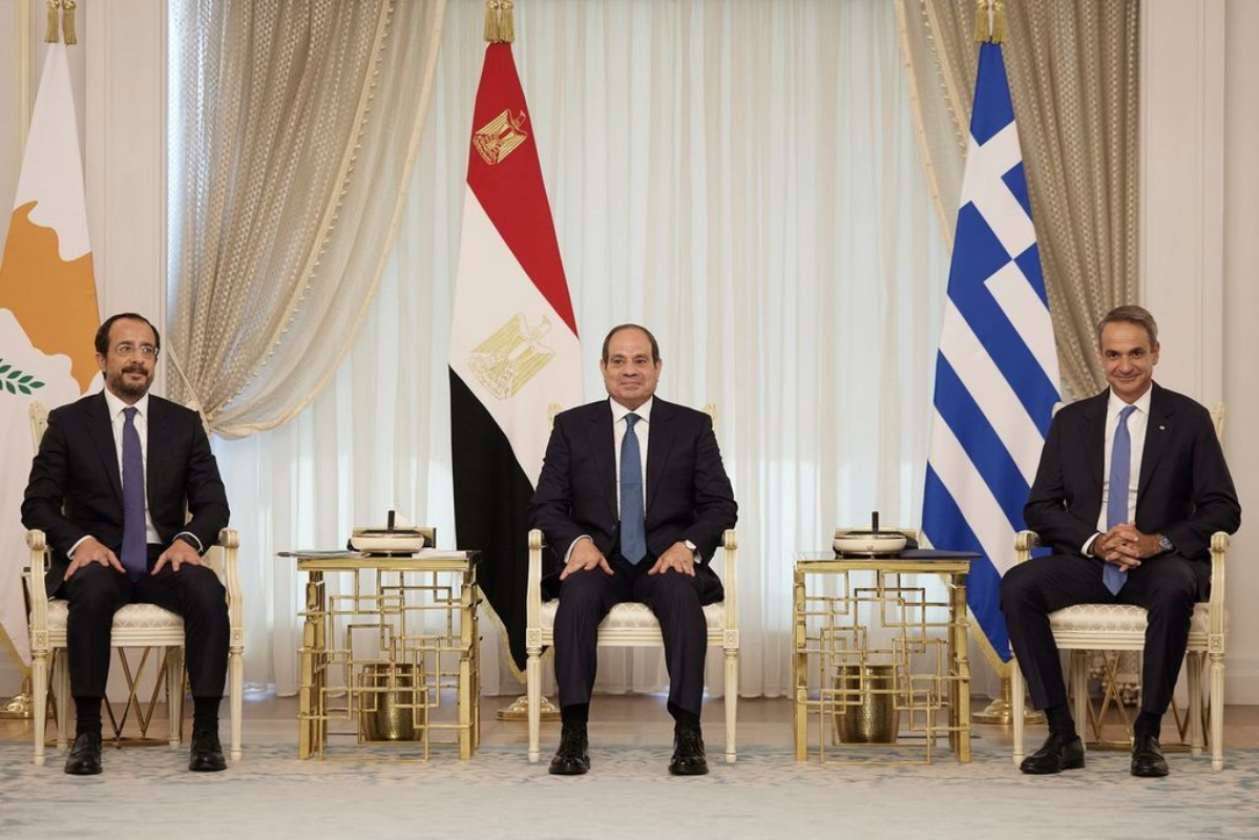
Egypt Plays on Several Boards — And That Makes It More Valuable
Perhaps the most important feature of Egypt’s regional position is that Cairo does not belong exclusively to any single geopolitical camp.
It cooperates closely with Greece and Cyprus.
It has rebuilt ties with Turkey.
It remains indispensable to diplomacy surrounding Gaza.
It maintains deep relationships with the Gulf states.
And it is one of Europe’s most important partners in North Africa.
That does not diminish Egypt’s value to Greece.
It increases it.
In today’s Mediterranean, geopolitical influence increasingly belongs to countries capable of maintaining the largest number of functional relationships across competing power centers.
Cairo is one of those capitals.
Athens increasingly wants to be another.
A Message to Ankara — But Not an Anti-Turkey Alliance
It would be tempting to interpret the El Alamein summit simply as another geopolitical message to Turkey.
That would be too simplistic.
Greece, Cyprus and Egypt certainly share an interest in preserving a strong framework for coordination in the Eastern Mediterranean.
But Cairo itself has significantly improved relations with Ankara, while Greece maintains partnerships with several countries that also have strong ties with Turkey.
The real message is therefore more sophisticated.
Greece, Cyprus and Egypt are not abandoning their strategic architecture simply because other alliances and partnerships across the region are changing.
Their trilateral framework is designed to survive those changes.
That makes it potentially more durable than an alliance constructed solely in opposition to another country.
Who Will Connect Africa, the Middle East and Europe?
This is ultimately the strategic significance of El Alamein.
Competition in the Eastern Mediterranean is no longer simply about warships, military agreements, natural gas fields or competing EEZ claims.
It is increasingly about electricity cables, gas infrastructure, ports, trade corridors, migration routes and access to the European market.
This is where GREGY assumes importance far beyond the economics of a single infrastructure project.
If completed, it could create a direct electricity bridge from North Africa through Greece into Europe.
Egypt would gain an additional European outlet. The EU would gain another source of energy diversification. Greece would reinforce its position as a geopolitical and energy gateway on Europe’s southeastern frontier.
The El Alamein summit should therefore be read beyond the leaders’ statements and ceremonial images.
It represents an attempt by Athens, Cairo and Nicosia to turn more than a decade of political cooperation into permanent strategic infrastructure.
And in the Eastern Mediterranean now taking shape, the countries with the greatest influence may not necessarily be those controlling the most territory.
They may be the ones controlling — or connecting — the most important corridors of energy, trade and diplomacy.
Source: pagenews.gr
Διαβάστε όλες τις τελευταίες Ειδήσεις από την Ελλάδα και τον Κόσμο