Marinakis on 12 Nautical Miles: “Greece’s Unilateral Right — We Will Not Renounce It”
 ΧΡΟΝΟΣ ΑΝΑΓΝΩΣΗΣ 6 '
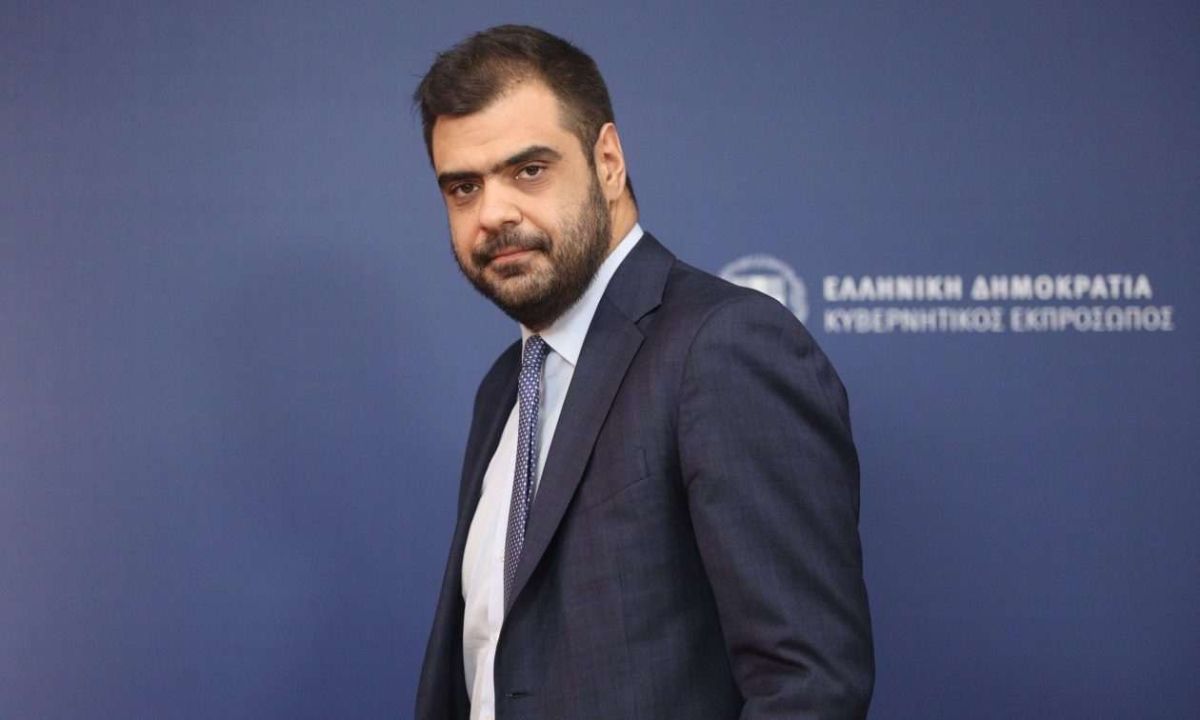
Πηγή Φωτογραφίας: eurokinissi//Marinakis on 12 Nautical Miles: “Greece’s Unilateral Right — We Will Not Renounce It”



Greece will not renounce its right to extend its territorial waters to 12 nautical miles, government spokesperson Pavlos Marinakis said, sending a clear message to Ankara at a sensitive moment in Greek-Turkish relations.
Responding to a question during the regular press briefing, Marinakis stressed that extending Greece’s territorial waters constitutes a unilateral right that Athens will exercise when it judges the circumstances appropriate.
“Let me make it clear once again: this is a unilateral right. It will be exercised in the manner and at the time that the country determines appropriate,” Marinakis said.
He added:
“We have never even contemplated saying — nor has anyone ever said — that we would renounce this right.”
The significance of the words “unilateral right”
Marinakis’ formulation carries particular geopolitical weight.
Athens is reiterating that the extension of territorial waters is not an issue to be negotiated with Turkey.
Under the UN Convention on the Law of the Sea, coastal states have the right to establish the breadth of their territorial sea up to 12 nautical miles.
Greece has already exercised that right in the Ionian Sea, where in 2021 it extended its territorial waters from six to 12 nautical miles.
The situation in the Aegean remains significantly more sensitive, however, because of the Turkish parliament’s 1995 casus belli resolution, which authorises the government to take all necessary measures — including military ones — should Greece extend its territorial waters beyond six nautical miles in the Aegean.
Against that background, Athens’ renewed emphasis on the 12-mile right carries an unmistakable strategic message.
Marinakis: “Politics is ultimately about actions, not words”
The government spokesperson also sought to draw a distinction between the Mitsotakis government and previous Greek administrations, pointing to Athens’ formal diplomatic démarche to Turkey.
“What is the difference between the Mitsotakis government and all previous governments? For the first time, Greece formally recorded, in an official démarche to Turkey, its unilateral right to exercise this right,” Marinakis said.
He added:
“Because, at the end of the day, politics is about actions, not words.”
The reference is significant.
Athens is seeking to place longstanding Greek positions firmly on the diplomatic record while deliberately avoiding any advance commitment on when or where a further extension might take place.
A consistent line from the Greek government
Marinakis’ statement reinforces the position recently articulated by Foreign Minister George Gerapetritis: extending territorial waters to 12 nautical miles is a sovereign Greek right and is not subject to bilateral negotiation with Turkey.
Athens is therefore sending a two-track message.
Greece remains committed to dialogue with Turkey and does not seek escalation. At the same time, it draws a clear distinction between dialogue and the exercise of sovereign rights.
In other words, whether and when Athens proceeds with an extension is not a decision requiring Ankara’s consent.
Kastellorizo: “The door is closed to revisionist ambitions”
The geopolitical message was reinforced by Marinakis’ reference to Prime Minister Kyriakos Mitsotakis’ visit to Kastellorizo.
The government spokesperson described the island as “an emblematic place” from which Greece could articulate its vision for peace while drawing firm boundaries against revisionism.
The objective, he said, was:
“A future of peace, with the door firmly closed to all revisionist ambitions, while keeping the path open to mutual respect and international legality.”
The choice of Kastellorizo carries obvious symbolism.
The island complex has long been at the centre of Greek-Turkish disagreements over maritime zones in the Eastern Mediterranean and remains one of the most geopolitically sensitive points in the bilateral relationship.
Athens keeps control of the timing
The crucial element in Marinakis’ statement is not an announcement that Greece is about to extend its territorial waters to 12 nautical miles.
No such announcement was made.
Rather, Athens is explicitly rejecting any interpretation under which the threat of a reaction by another country could nullify a sovereign Greek right.
The wording — “in the manner and at the time that the country determines appropriate” — deliberately leaves the timing open.
It is a strategy designed to preserve freedom of action: Athens is not committing itself to when it will move, but neither is it recognising Ankara as having a veto over that decision.
The 12-mile question returns to the centre of Greek-Turkish relations
Against the backdrop of renewed tensions over maritime zones, marine spatial planning and competing claims in the Aegean and Eastern Mediterranean, the issue of the 12 nautical miles is again moving closer to the centre of Greek-Turkish relations.
The government is attempting to maintain two positions simultaneously: open channels of communication with Turkey and firm adherence to sovereign rights derived from international law.
Marinakis’ message encapsulates that strategy:
Greece is not announcing when its next move on the 12 nautical miles will come — but it is making clear that the decision will be Greece’s alone.
Source: pagenews.gr
Διαβάστε όλες τις τελευταίες Ειδήσεις από την Ελλάδα και τον Κόσμο