Papastavrou: ‘We Will Not Ask Turkey for Permission’ – The Plan for Cheaper Power and Energy Security
 ΧΡΟΝΟΣ ΑΝΑΓΝΩΣΗΣ 11 '
Πηγή Φωτογραφίας: eurokinissi//Papastavrou: ‘We Will Not Ask Turkey for Permission’ – The Plan for Cheaper Power and Energy Security



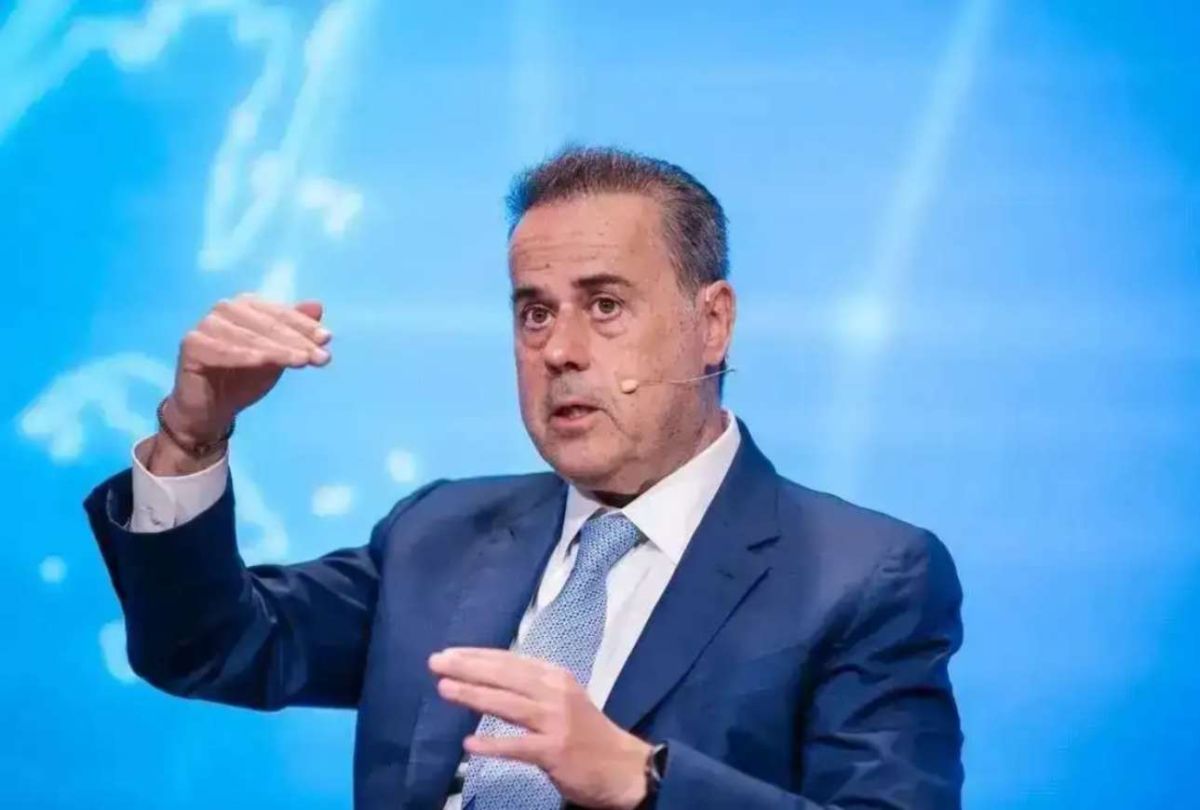
Stavros Papastavrou delivered a two-track message — one directed abroad and another focused squarely on Greek households and businesses.
On the geopolitical front, the Energy Minister drew a clear line over Turkey, sovereign rights and energy interconnections.
At home, he outlined the government’s strategy for reducing electricity costs by increasing domestic energy production, storage capacity, interconnections and self-consumption.
The broader objective is clear: Greece wants to reduce its exposure both to geopolitical pressure and to violent swings in international energy markets.
“We threaten no one — but we accept no threats”
Commenting on Prime Minister Kyriakos Mitsotakis’ visit to Kastellorizo, Papastavrou endorsed the message delivered by the Greek premier.
“Greece threatens no one, but neither does it accept threats or instructions from anyone, and it is ready to defend its sovereign rights.”
Papastavrou stressed that Greece’s willingness to engage in dialogue with Turkey should not be interpreted as weakness.
“Dialogue cannot be interpreted as any form of weakness.”
Greece, he said, respects international law and the Law of the Sea and seeks good relations with its neighbours.
But that does not mean accepting threats or allowing another country to dictate how Greece exercises its rights.
The cable — and a clear message to Ankara
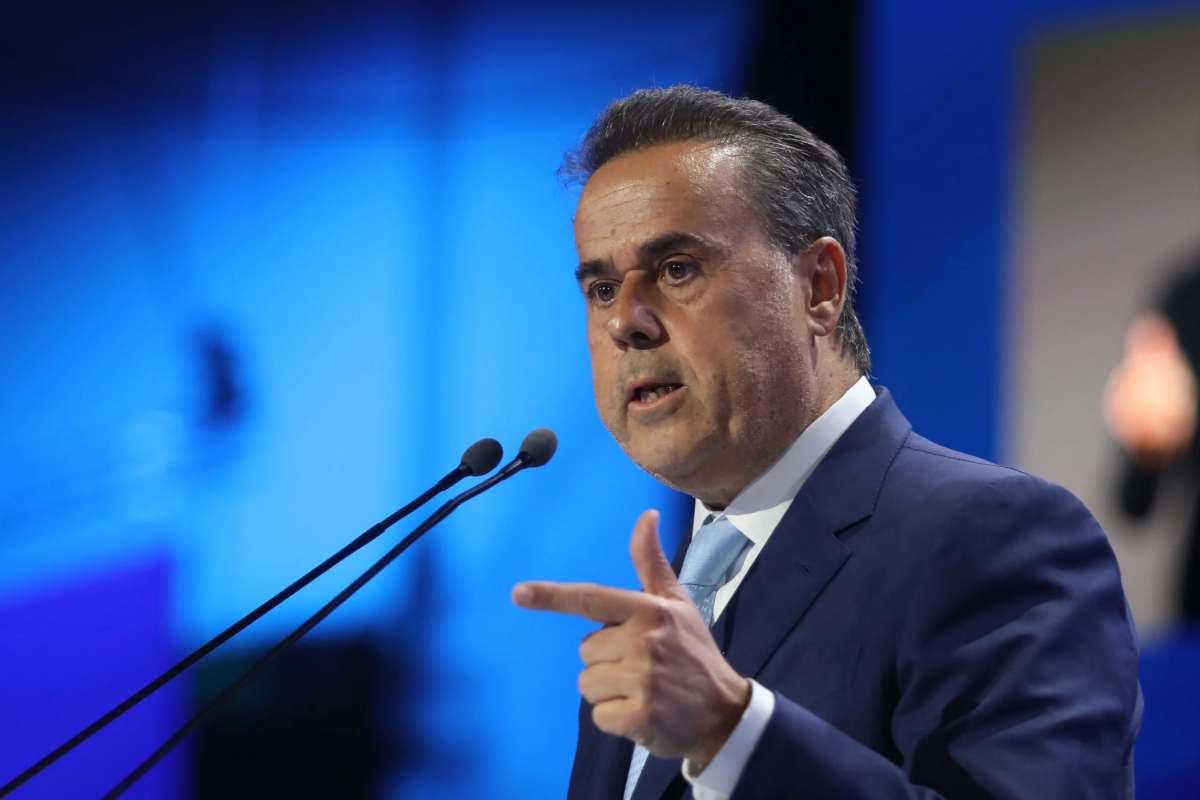
Papastavrou was even more categorical when the discussion turned to Greece’s electricity interconnection project and the involvement of a major French company.
Asked whether Greece — or the French side — would seek permission from Ankara before proceeding, he rejected the idea outright.
“Neither us, nor the French, nor anyone else. Nobody is going to ask permission for Greece to exercise its sovereign rights.”
And he added:
“Nobody is going to seek permission to exercise something for which international law provides no requirement whatsoever for Turkey’s consent.”
The statement is politically and geopolitically significant.
Athens wants to make clear that the involvement of a French company in the project is not intended to create an intermediary between Greece and Turkey.
Rather, the government presents it as a vote of confidence in the project, Greece and the Independent Power Transmission Operator, IPTO.
A “vote of confidence” in the project
Papastavrou highlighted the French company’s experience in major international electricity interconnection projects.
Its involvement, he argued, demonstrates confidence in both the project and the Greek side.
“It is coming in with a vote of confidence in the project, a vote of confidence in the Greek government and a vote of confidence in IPTO.”
According to the minister, the development also puts a more concrete implementation timetable in motion.
The real battle: Greece must need less natural gas
From geopolitics, the discussion shifted to the issue affecting every household: electricity bills.
Papastavrou acknowledged that successive international crises have demonstrated just how vulnerable European economies remain to natural gas prices.
“Whether it was Russia’s invasion of Ukraine or the crisis in the Middle East, we see how sensitive every country is to increases in the price of natural gas.”
Short-term government subsidies can soften the impact.
But Papastavrou argued that subsidies cannot constitute the permanent answer.
“The real solution is structural measures so that you rely less and less on subsidies.”
The core of that strategy is simple:
Greece must reduce the amount of natural gas it needs.
More than 50% from sun and wind
The minister said Greece has already made substantial progress in renewable electricity production.
“At the moment, we produce more than 50% from the sun and the wind.”
He pointed to days in August when renewables accounted for more than 70%–80% of the electricity mix and wholesale prices were around 30% lower.
For Papastavrou, that demonstrates that expanding renewable penetration is not simply climate policy.
It is also price policy.
The greater Greece’s ability to produce electricity domestically from solar and wind resources, the less exposed it becomes to international gas-market shocks.
Storage is the next major gap
Papastavrou acknowledged that Greece has fallen behind in energy storage.
That is now one of the key weaknesses of the electricity system.
Greece can produce large volumes of cheap solar power during the middle of the day.
But without sufficient batteries and other forms of storage, part of that low-cost energy cannot be preserved for evening demand.
The next stage of the energy transition therefore requires two developments simultaneously:
more renewables and much more storage.
Only then can cheap renewable production become available when consumers actually need it.
Island interconnections: Less oil, lower system costs
Island interconnections form another core part of the strategy.
Papastavrou explained the logic in practical terms: a resident of Rhodes should ultimately be able to access electricity at the same price as a consumer on the mainland.
Maintaining isolated island systems requires expensive oil-fired generation.
The cost of supporting that system, Papastavrou said, reaches around €1.2 billion.
Interconnections are therefore not merely major infrastructure projects.
They are a structural mechanism for reducing the overall cost of the electricity system.
€5 billion for energy efficiency
Papastavrou also pointed to a substantial pool of funding for the next wave of energy-efficiency programmes.
Through instruments including the Social Climate Fund, decarbonisation funds and other European resources, around €5 billion is expected to be available for energy-saving measures.
These programmes will target both households and businesses.
The objective is not only to make energy cheaper.
It is also to reduce how much energy consumers need in the first place.
Self-consumption: Even solar panels on a balcony
One of the most consumer-focused elements of the plan concerns self-consumption.
Papastavrou said the government is moving to simplify the existing framework so it becomes easier for households and small businesses to generate electricity for their own use.
“We are making it easier for every citizen and every small business so that all of us can benefit from the sun our country has.”
The changes are intended to simplify both administrative and technical procedures.
The minister even used the example of installing a small solar panel system on a balcony.
The underlying principle is what he described as “energy democracy”:
citizens should not be only consumers of electricity.
They should increasingly be able to produce it themselves.
Small businesses are part of the plan
The self-consumption strategy also targets small companies.
Bakeries, pastry shops and other energy-intensive small businesses could use self-generation and storage to reduce a portion of their operating costs.
That becomes particularly important at a time when energy prices are again being pushed higher by geopolitical conflict.
For many small companies, energy is no longer a marginal expense.
It is a competitiveness issue.
More intervention if the crisis escalates
Papastavrou made clear, however, that structural reform does not mean the government will rule out additional short-term support.
If the international energy crisis continues to escalate and prices remain exceptionally high, further intervention remains on the table.
“This does not mean that, if necessary, if this escalation continues, we will not stand by society.”
He said the Energy Ministry remains in constant contact with Finance Minister Kyriakos Pierrakakis and is monitoring developments closely.
“Depending on whether we see escalation or de-escalation, we will stand by society.”
The message is that Athens wants to preserve fiscal space for additional support if the international shock becomes more severe.
The government keeps a fiscal buffer
The wording is politically significant.
The government is leaving the door open to new measures if energy prices remain at elevated levels.
Papastavrou stressed the importance of maintaining sufficient fiscal room so the state is able to intervene when households and businesses need protection.
That suggests the government does not want to exhaust its available resources before the scale and duration of the new energy shock become clearer.
The three-year energy strategy
Papastavrou effectively described a three-year energy programme built around several pillars:
- more renewable generation;
- significantly more storage;
- further island interconnections;
- energy-efficiency investment;
- wider self-consumption;
- action against electricity theft and market distortions.
No single measure, he argued, can transform the system by itself.
The result will come from combining them.
The strategic objective is to make Greece progressively less sensitive to what happens to gas prices in Russia, the Middle East or any future geopolitical crisis.
“National progress must become personal progress”
The minister also acknowledged that the government is entering a politically more demanding period.
“The government has to move even faster now, because it is already in its eighth year.”
He framed the central domestic challenge in particularly direct terms:
“This overall progress must also translate into the personal progress of every citizen.”
That may ultimately be the decisive political test of Greece’s energy transition.
Large investments, new cables, renewable capacity and energy infrastructure must eventually translate into something households can see directly:
lower and more predictable energy bills.
Majority government — and Samaras
Papastavrou reiterated that New Democracy continues to target a parliamentary majority at the next election.
“If we respond to citizens’ expectations, I sincerely believe we have realistic chances of achieving a majority.”
Asked about former prime minister Antonis Samaras and speculation surrounding his political plans, Papastavrou avoided confrontation.
He stressed that he respects Samaras and recalled their previous cooperation during a difficult period for the country.
“He honoured me with his trust. I had responsibility for the negotiations with the Troika.”
He ended with a politically loaded message:
“I hope that, in the end, the centre-right will move forward united.”
From Turkey to the electricity bill
Papastavrou’s interview ultimately brought together two areas of policy that are often treated separately.
One is geopolitics.
The other is everyday household economics.
Electricity interconnections, renewables, storage and self-consumption are no longer being presented simply as elements of green policy.
They are increasingly being framed as instruments of:
energy security,
reduced dependence on natural gas,
protection from geopolitical shocks,
and lower costs for households and businesses.
That is becoming the core political argument behind Greece’s energy strategy:
less vulnerability to external shocks, more energy produced at home — and no sovereign right subject to another country’s approval.
Source: pagenews.gr
Διαβάστε όλες τις τελευταίες Ειδήσεις από την Ελλάδα και τον Κόσμο