Double Vote of Confidence for Greece: Moody’s Scope Upgrade Outlook—Mitsotakis Says Economy “Moves Forward”
 ΧΡΟΝΟΣ ΑΝΑΓΝΩΣΗΣ 7 '
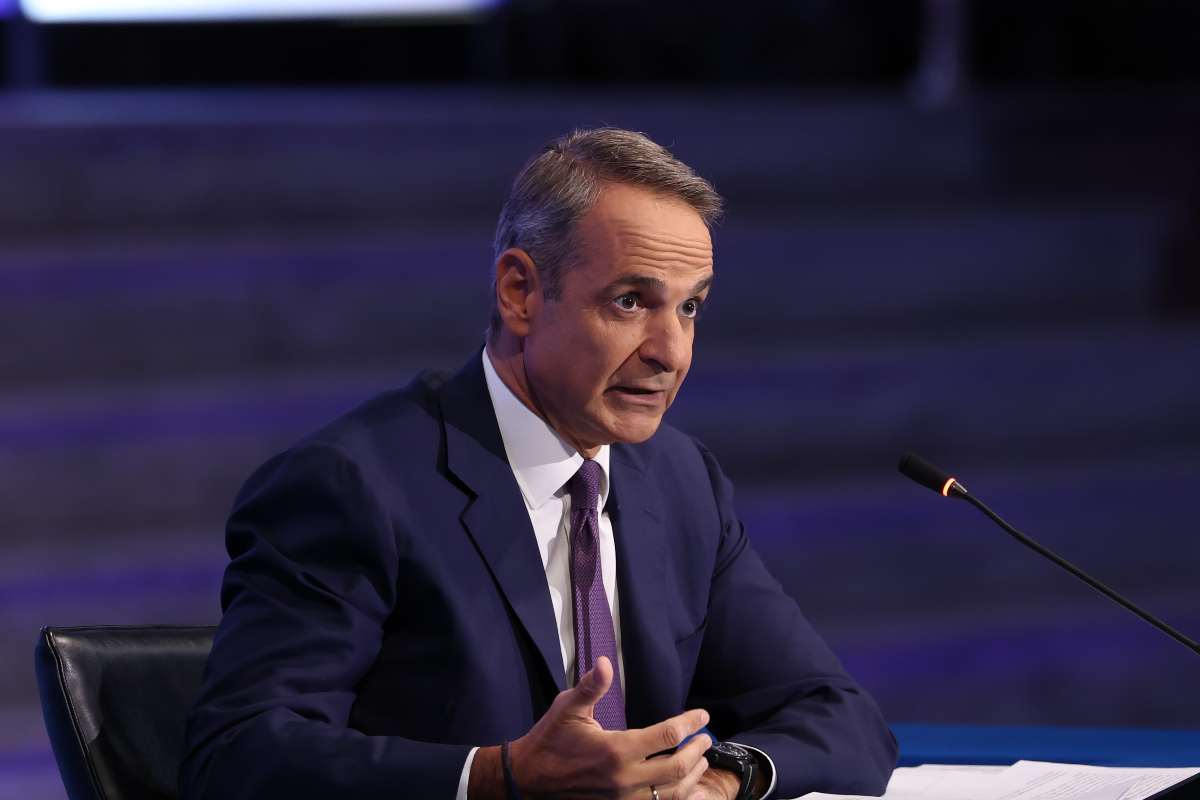
Πηγή Φωτογραφίας: eurokinissi//Double Vote of Confidence for Greece: Moody’s and Scope Upgrade Outlook — Mitsotakis Says Economy “Moves Forward”



Greece received a double vote of confidence from international rating agencies within 24 hours, with Prime Minister Kyriakos Mitsotakis presenting the developments as further evidence of the country’s economic progress.
Moody’s upgraded the outlook for the Greek economy, while Scope raised Greece’s sovereign credit rating to BBB with a stable outlook.
The timing is particularly significant. The upgrades come amid heightened global uncertainty, pressure across international bond markets and concerns over borrowing costs, inflation and public finances.
For Athens, the message is that Greece is strengthening its credit profile at a moment when the international environment is becoming more challenging.
Mitsotakis: “The Soundness of Our Economic Policy Is Being Confirmed”
In a social media post, Mitsotakis directly linked the two rating decisions to the government’s economic strategy.
“The new double upgrade of the outlook for the Greek economy by Moody’s and, at the same time, of the country’s credit rating by Scope, within the space of 24 hours, confirms the soundness of the economic policy being pursued, together with the steady and continuous progress of our economy,” he said.
The government views the rating agencies’ decisions as external validation of progress in public finances, structural reforms and Greece’s overall credit profile.
From “Junk” to Investment Grade
Mitsotakis placed particular emphasis on the distance Greece has travelled since the sovereign debt crisis.
“In an international environment of turbulence and uncertainty, Greece has now become, for the very same international rating agencies that only a few years ago described Greek bonds as ‘junk’, an example of resilience, growth, reforms and rapid public debt reduction,” the prime minister said.
The reference reflects one of the most dramatic changes in Greece’s economic story over the past decade.
For years, Greek sovereign debt remained below investment grade. The restoration of investment-grade status marked Greece’s return to a category of sovereign borrowers accessible to a broader universe of institutional investors.
Scope Takes Greece Another Step Higher
Scope’s decision to raise Greece’s sovereign rating to BBB is particularly important.
The rating agency has previously identified fiscal performance, declining public debt, improved access to capital markets and stronger financial-sector stability among the factors supporting Greece’s credit profile.
At the same time, rating agencies continue to point to vulnerabilities, including Greece’s still-high public debt burden, demographic pressures and structural challenges.
That distinction is important: a rating upgrade does not mean that the weaknesses of the Greek economy have disappeared. It means that, under the agency’s methodology, the balance between strengths and risks has improved.
Debt Reduction at the Heart of the Greek Story
Public debt remains central to the country’s economic narrative.
Greece still carries a high debt-to-GDP ratio by European standards. What has increasingly attracted the attention of investors and rating agencies, however, is the trajectory of that debt and the pace at which the ratio has been declining.
For a country whose international image was dominated for more than a decade by its sovereign debt crisis, that shift is economically and politically significant.
It also helps explain why fiscal discipline remains a central element of Athens’ economic strategy even as the government seeks additional room for tax relief and social support.
“An Island of Political and Economic Stability”
Mitsotakis also gave the upgrades an explicitly political interpretation.
“Yesterday’s upgrades confirm Greece’s image as an island of political and economic stability and constitute another piece in a national success story,” he said.
He added:
“Those who insist on dismissing or negating it are not being unfair to the government, but to the protagonists of this collective effort — the citizens themselves.”
The government is therefore connecting the country’s improved credit standing with a broader argument about political stability and economic governance.
What Does an Upgrade Mean for the Real Economy?
A better sovereign credit rating does not automatically translate into higher wages or lower supermarket prices.
Its effects work primarily through financial conditions.
An improved sovereign credit profile can strengthen investor confidence, support access to international capital markets and influence financing conditions for the state, banks and businesses.
That becomes particularly relevant when global borrowing costs are elevated.
For Greece, maintaining stronger credibility with investors can therefore provide a degree of protection against external financial turbulence — although domestic and global market conditions remain decisive for actual borrowing costs.
From Credit Ratings to Wages and Jobs
The government’s larger challenge is to translate improved macroeconomic credibility into gains that are visible in everyday life.
Mitsotakis made precisely that connection in his statement.
“This credibility and stability are the foundation for a better future, with fewer burdens for our children, so that wages and incomes can increase, more and better jobs can be created, and the state’s ability to support households and businesses when necessary can be strengthened,” he said.
That is the next stage of the economic argument.
Investment grade and stronger sovereign ratings are indicators of macroeconomic performance. For households, however, the relevant benchmarks remain wages, disposable income, housing costs, taxation, inflation and employment opportunities.
Greece’s Transformation in the Eyes of the Markets
The broader story is difficult to separate from Greece’s starting point.
The country spent years outside investment grade following the debt crisis and successive bailout programmes. Its return to investment-grade territory represented an important milestone in restoring normal access to international markets.
The latest rating actions indicate further improvement in how agencies assess Greece’s sovereign risk.
But they also raise the bar.
As Greece moves further away from the crisis-era narrative, investors will increasingly focus on whether the country can sustain primary surpluses, continue reducing debt, maintain growth and implement reforms without losing social and political support.
Mitsotakis: “Greece Is Moving Forward”
The prime minister closed his statement with the message the government wants to attach to the double upgrade:
“Greece is moving forward despite the stormy weather. With a plan, consistency, hope and results.”
That encapsulates Athens’ broader economic narrative: Greece is seeking to position itself as a source of relative stability at a time of greater global uncertainty.
The more demanding test now lies beyond the ratings themselves — whether stronger sovereign credibility and lower fiscal vulnerabilities can continue to translate into investment, productivity gains, higher real incomes and greater resilience for households and businesses.
Source: pagenews.gr
Διαβάστε όλες τις τελευταίες Ειδήσεις από την Ελλάδα και τον Κόσμο