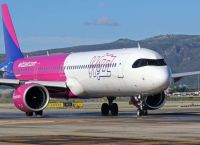
Who Is Targeting Europe’s Skies? 35 Flights on Alert as Bomb Hoaxes Raise Fears of Hybrid Warfare
 ΧΡΟΝΟΣ ΑΝΑΓΝΩΣΗΣ 9 '
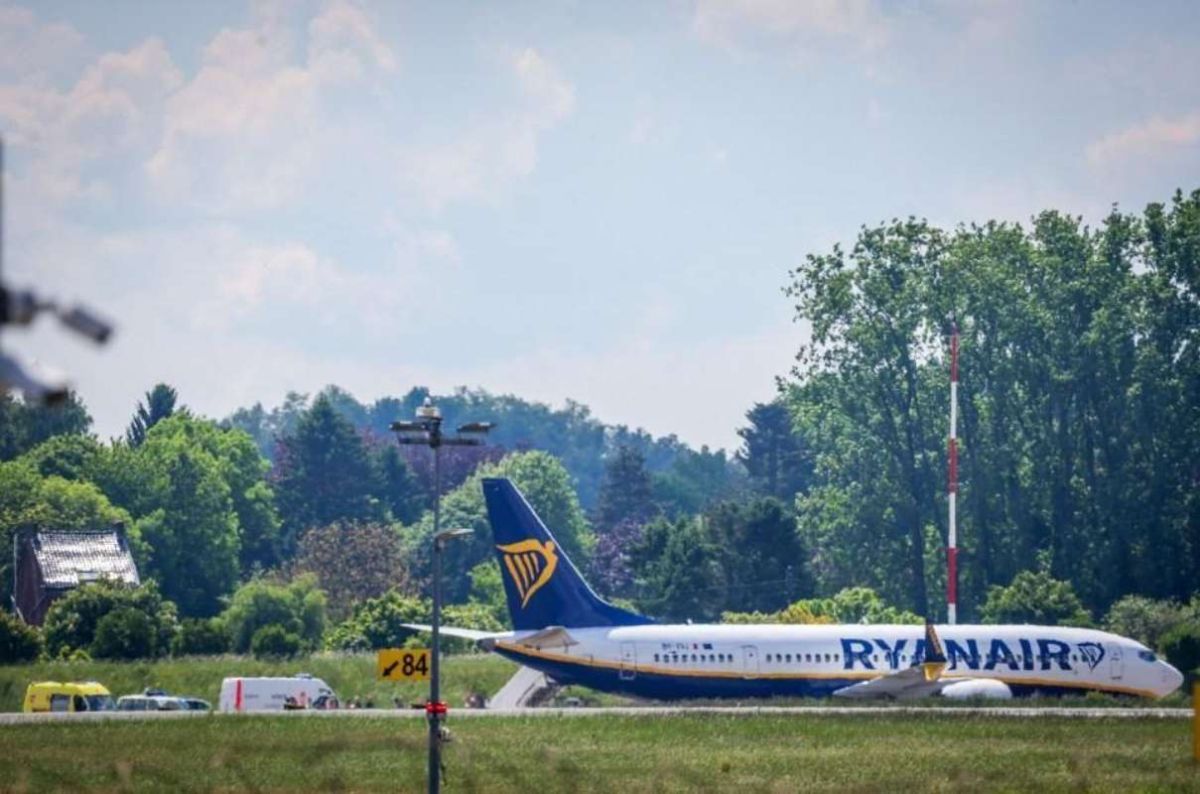
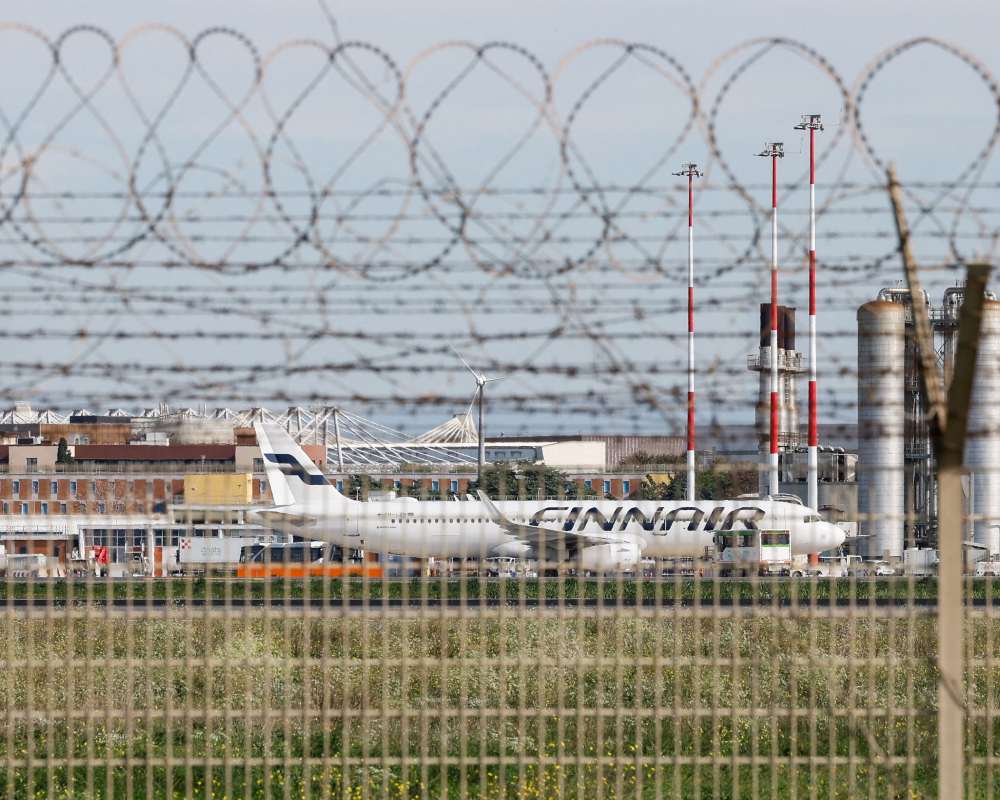
Πηγή Φωτογραφίας: A Finnair plane from Helsinki was escorted by the Italian air force to its scheduled landing at Fiumicino airport following bomb threats that forced airliners to make unplanned landings across Europe. Photograph: Remo Casilli/Reuters Credit: Gonzalo Fuentes / Reuters και Yoan Valat / EPA. redit: Stoyan Nenov / Reuters, Σόφια, 5 Νοεμβρίου 2026



How easily could Europe’s aviation network be disrupted without a single explosive device being planted?
That question is increasingly troubling European security officials as a wave of bomb threats targeting commercial flights forces emergency landings, military interceptions and extensive security operations across the continent.
According to the Guardian’s latest reporting on Friday, November 6, at least 35 aircraft have been searched or diverted following bomb threats this week, placing airlines, airports and national security agencies on heightened alert.
The geographical spread and timing of the incidents have raised concerns about a potentially coordinated campaign designed to disrupt European transportation infrastructure.
However, authorities have not established whether the threats originated from a single source, an organized network or unrelated individuals.
Nor has any government publicly confirmed the involvement of a foreign intelligence service.
Europe on High Alert: A Wave of Threats Across Multiple Countries
Thursday, November 5, marked one of the most disruptive days of the week, with multiple airlines forced to activate emergency security procedures.
Flights operated by Aer Lingus, Finnair, Ryanair, Wizz Air, LOT and Aegean Airlines were among those affected.
Incidents were reported across France, Italy, Bulgaria, the Czech Republic and Greece, highlighting the vulnerability of an aviation system that depends on uninterrupted cross-border coordination.
The central concern is not simply the number of threats but their operational consequences.
Even an unsubstantiated warning can require aircraft to divert, passengers to evacuate, airports to suspend operations and security forces to deploy specialized personnel.
When such incidents occur across several countries within a short period, the cumulative disruption can become substantial.
French Fighter Jets Scrambled After Aer Lingus Bomb Threat
One of the most serious incidents involved an Aer Lingus flight travelling from Dublin to Rome.
Following a bomb threat, the aircraft was diverted to the French military airbase at Évreux.
According to French media reports cited by the Guardian, the aircraft’s captain reportedly initially insisted on landing at a civilian airport rather than the military facility designated by French authorities.
The disagreement prompted the French military to scramble two fighter jets to intercept and escort the aircraft.
Évreux public prosecutor Rémi Coutin confirmed that the pilot and co-pilot would be questioned to establish precisely what happened.
He also indicated that charges could be considered if investigators determined that the crew had refused to cooperate with the authorities.
Aer Lingus strongly defended its personnel.
In a statement to the Guardian, the airline described the captain and crew as having acted “impeccably and thoroughly professional throughout” the incident.
The company emphasized that passenger safety remained its overriding priority.
“Safety and the care of our passengers is Aer Lingus’ top priority,” the airline stated, adding that the crew had maintained professional standards throughout exceptionally challenging circumstances.
The investigation illustrates how a security alert can create complex operational and legal questions even when no explosive device has been confirmed.
Brussels Activates European Aviation Security Coordination
The European Commission has activated its aviation security information-sharing mechanism in response to the growing number of incidents.
Speaking in Dublin on Thursday, European Commissioner for Sustainable Transport and Tourism Apostolos Tzitzikostas confirmed that Brussels was monitoring developments closely and maintaining contact with affected member states.
He also announced consultations with the European Union Aviation Safety Agency (EASA) to assess the implications for flight safety and aviation operations.
“Any threats against civilians are unacceptable. Ensuring the protection and safety of citizens remains our priority,” Tzitzikostas said.
The Greek commissioner nevertheless urged caution against drawing premature conclusions about the origin of the threats.
“It is too early to draw conclusions about whether the incidents are connected,” he stressed.
He also indicated that the available evidence was insufficient to determine whether the incidents constituted a cyberattack.
That distinction is significant.
Threats delivered through digital channels do not automatically constitute cyberattacks, while similarities in timing or methodology do not necessarily establish common authorship.
The Commission’s involvement strengthens cross-border coordination, but national authorities retain primary responsibility for investigating individual incidents and implementing security measures.
Greece Drawn Into the Crisis: Aegean Flights and Cruise Ship Targeted
Greece has also experienced security disruptions linked to the wave of threats.
On November 5, two Aegean Airlines flights received bomb warnings.
One involved flight A3552 from Thessaloniki to Milan Malpensa, while another concerned a service from Athens to Vienna.
According to the airline’s reported statements, the threats proved unfounded following the required security procedures.
The incidents followed a separate alert involving the cruise ship Crown Iris at the Greek island of Syros on November 3.
The Panama-flagged vessel, operated by Israel’s Mano Maritime, was carrying 940 passengers and 597 crew members when authorities received a warning alleging that an explosive device had been placed beneath the ship.
Greek coastguard personnel and specialized security teams responded, with divers and an explosives-detection dog participating in the operation.
No explosive device was discovered, and the vessel subsequently continued its journey toward Haifa.
The ship’s Israeli commercial connection introduces a potentially relevant geopolitical dimension, although investigators have not established any connection between the maritime incident and the aviation threats.
The incidents demonstrate that Greece’s aviation and maritime infrastructure is not insulated from the wider European security challenge.
Hybrid Warfare Without Explosives: The Security Scenario Under Examination
The wave of threats raises a broader strategic question: could false bomb warnings be used systematically to disrupt critical infrastructure at relatively little cost?
A single threatening message can trigger a chain of expensive responses.
Military aircraft may be scrambled, specialized police units deployed, passengers evacuated and airport operations interrupted.
Airlines can face additional fuel costs, crew scheduling problems, aircraft repositioning expenses and significant delays.
The resulting financial and operational burden can be far greater than the resources required to issue the original threat.
This imbalance is one reason security analysts examine such incidents through the framework of potential hybrid warfare.
Hybrid operations can involve combinations of cyber activity, disinformation, intimidation, sabotage and other forms of disruption designed to undermine confidence in institutions and essential services.
Yet the existence of operational disruption does not itself establish a hybrid warfare campaign.
No publicly confirmed evidence currently attributes this particular wave of bomb threats to Russia, Iran or any other state actor.
Determining responsibility requires technical evidence, investigative findings and credible intelligence rather than geopolitical assumptions.
Investigators Examine the Digital Trail
European authorities are examining whether the threatening messages share technical characteristics that could reveal common infrastructure or coordination.
In the Czech Republic, police reported that four threats involving flights bound for Prague were delivered through anonymous email accounts.
The cases were referred to the relevant national authorities responsible for counterterrorism, extremism and cybercrime investigations.
Italian reporting concerning earlier incidents also suggested that separate flight threats may have originated from a common anonymous message.
If confirmed, such findings could help investigators establish links between particular incidents.
However, shared communication methods would not necessarily demonstrate that every threat originated from the same individual or organization.
The European information-sharing mechanism could prove especially important in comparing technical evidence across national jurisdictions.
The Economic Cost of Aviation Disruption
Beyond the immediate security implications, the incidents expose the economic vulnerability of Europe’s aviation sector.
Every diversion can generate additional operational expenses, while delays may affect aircraft rotations, connecting flights and airport capacity.
The deployment of military aircraft and specialized emergency personnel also imposes costs on national governments.
Repeated threats could create further uncertainty for airlines and passengers, particularly if disruptions continue over an extended period.
There is also a broader issue of public confidence.
Commercial aviation depends on the perception that authorities can manage risks effectively while maintaining predictable and reliable operations.
A prolonged series of false alarms could place additional pressure on security systems without any physical attack taking place.

What Happens Next?
European investigators are now seeking to establish whether the incidents share identifiable patterns in their timing, targets, communications or technical origins.
EASA’s involvement adds an aviation safety dimension to the response, while the European Commission’s information-sharing mechanism provides a framework for closer cooperation among member states.
The immediate challenge is to preserve the effectiveness of security procedures without allowing repeated false alarms to overwhelm operational resources.
For European authorities, the central question remains unresolved: is the continent facing a series of unrelated bomb hoaxes, or an organized attempt to exploit its aviation security systems?
Until investigators establish the origin of the threats, European aviation will remain under heightened scrutiny, with airlines and national authorities balancing the need for rigorous security against the growing risk of widespread disruption.
Source: pagenews.gr
Διαβάστε όλες τις τελευταίες Ειδήσεις από την Ελλάδα και τον Κόσμο