US Bonds Turn Into a Wall Street Trap as the Fed Triggers a Treasury Sell-Off
 ΧΡΟΝΟΣ ΑΝΑΓΝΩΣΗΣ 14 '
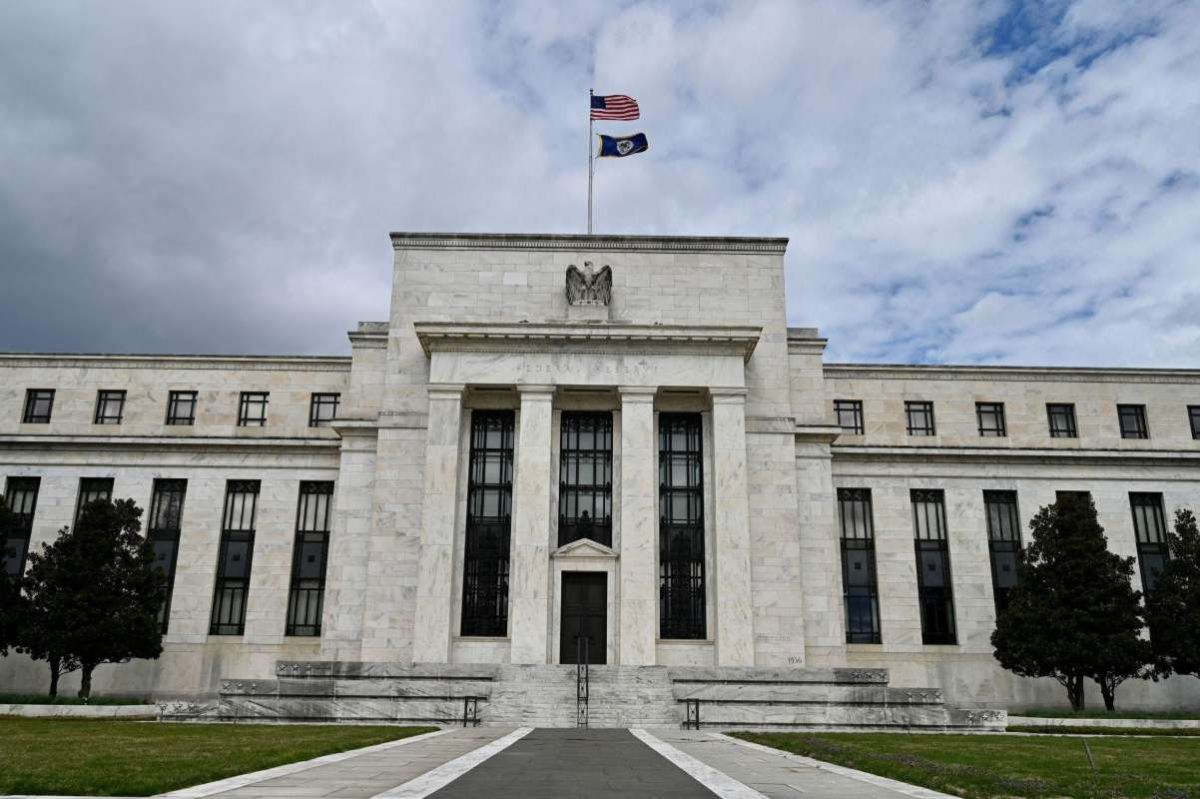
Πηγή Φωτογραφίας: US Bonds Turn Into a Wall Street Trap as the Fed Triggers a Treasury Sell-Off



A dramatic reversal in the US Treasury market has exposed one of the most dangerous assumptions in global investing: that government bonds will always provide protection when equity markets become unstable.
Investors who moved money out of technology stocks and into US government debt have found themselves caught in a fresh wave of losses, driven by persistent inflation and increasingly aggressive signals from the Federal Reserve.
The sell-off on Tuesday, November 10, 2026, sent Treasury yields sharply higher, forcing a rapid reassessment of expectations for US monetary policy.
The yield on the two-year Treasury note, which is particularly sensitive to changes in interest-rate expectations, closed at approximately 4.73%, recording its largest daily increase in 19 months.
Meanwhile, the benchmark 10-year Treasury yield briefly climbed above 5%, a psychologically important threshold for global financial markets.
The Bloomberg US Treasury index suffered its steepest daily decline since September.
The message from bond markets was unmistakable: the Federal Reserve may have considerably more work to do before inflation is brought under control.
The Fed Raises the Stakes: A Half-Point Rate Increase Is Back on the Table
The market reversal accelerated following comments from senior Federal Reserve officials suggesting that additional monetary tightening could be necessary.
Christopher Waller, a member of the Fed’s Board of Governors, signalled during remarks in London that he would support an interest-rate increase in December even if inflation showed some improvement.
Waller indicated that a quarter-percentage-point increase would remain appropriate under a more favourable inflation scenario.
However, he also raised the possibility of a 50-basis-point increase if underlying inflation continued to rise at approximately 0.3% per month or faster.
The remarks unsettled investors who had positioned their portfolios for a more gradual monetary-policy path.
A half-point increase would represent a significantly more aggressive move than the quarter-point adjustments around which many market expectations had been built.
For bond investors, the implications were immediate.
Higher expected policy rates translate into higher Treasury yields, reducing the market value of existing fixed-rate securities.
Inflation Refuses to Disappear
The latest US inflation figures reinforced concerns that price pressures remain deeply embedded in the economy.
The consumer price index increased by 0.4% in October, compared with a 0.6% rise in September.
Although the headline figure suggested some moderation, the underlying data were less reassuring.
Core consumer prices, which exclude volatile food and energy components, rose by 0.3% for the third consecutive month.
This persistence is particularly important for the Federal Reserve.
Central bankers are concerned not simply with temporary increases in energy or food prices, but with whether inflation is becoming entrenched across the broader economy.
If underlying price pressures remain elevated, the Fed has less room to ease monetary policy.
Instead, officials may need to maintain restrictive conditions or raise rates further, even if financial markets experience significant volatility.
For investors who had expected Treasury yields to decline, the inflation report challenged the central assumption behind their positions.
Fed Officials Reinforce the Hawkish Message
Waller was not alone in expressing concern about inflation.
Lorie Logan, president of the Federal Reserve Bank of Dallas, argued that at least two additional quarter-point rate increases could be required.
She also left open the possibility of faster tightening during the winter.
Her comments suggested that the central bank should remain focused on restoring price stability, even if doing so creates additional pressure on financial markets.
Meanwhile, Austan Goolsbee, president of the Federal Reserve Bank of Chicago, described October’s inflation figures as concerning.
Speaking to PBS NewsHour, Goolsbee acknowledged that the persistence of price pressures represented a significant challenge for monetary policymakers.
Taken together, the remarks strengthened expectations that the Fed’s tightening cycle may extend further than investors had previously anticipated.
Markets began pricing in a faster pace of interest-rate increases through the March 2027 policy meeting.
Why Safe-Haven Bonds Are Suddenly Losing Money
The Treasury sell-off illustrates a fundamental feature of fixed-income investing.
Bond prices fall when market yields rise.
Investors purchasing government bonds receive fixed contractual payments, but the market value of those securities changes as interest rates move.
When newly issued bonds offer higher yields, older securities paying lower rates become less attractive.
Their prices must decline to compensate.
The effect is particularly pronounced for longer-duration bonds, whose values are more sensitive to changes in interest rates.
This creates a crucial distinction between credit risk and interest-rate risk.
US Treasuries are widely regarded as among the world’s safest financial assets in terms of credit quality and market liquidity.
However, that does not mean their prices are immune to losses.
Investors who buy bonds and subsequently face sharply rising yields can suffer substantial mark-to-market declines.
The recent sell-off demonstrates how quickly a defensive investment strategy can become a source of additional portfolio risk.
The AI Stock Rotation That Backfired
The Treasury market had attracted renewed interest as investors grew increasingly concerned about valuations in the technology sector.
Companies associated with artificial intelligence have experienced intense investor enthusiasm, pushing valuations higher and raising questions about whether future earnings can justify current prices.
As volatility increased, some asset managers reduced their exposure to technology stocks and shifted funds into government bonds.
The strategy followed a familiar investment principle: Treasuries often perform well when investors become concerned about economic growth or financial instability.
But that relationship is not guaranteed.
When inflation rather than recession is the dominant concern, both stocks and bonds can decline simultaneously.
Higher interest rates reduce the present value of expected future corporate earnings, putting pressure on equity valuations.
At the same time, rising yields push down bond prices.
The result is a particularly difficult environment for diversified portfolios.
Investors attempting to escape equity-market volatility may discover that their defensive holdings are exposed to the same underlying interest-rate shock.
Bank of America: Investors Were Positioned for the Wrong Outcome
Market-positioning data suggest that many investors had increased their exposure to Treasuries before the sell-off.
According to a note from Bank of America strategists, asset managers continued building bullish positions in Treasury futures across different maturities during the previous week.
They also reduced some bearish positions in longer-duration government bonds.
These moves indicated expectations that Treasury prices could stabilise or recover.
However, the combination of hawkish Fed commentary and persistent inflation quickly undermined that outlook.
As yields rose, investors were forced to reconsider the assumptions behind their trades.
Ed Al-Hussainy, a portfolio manager at Columbia Threadneedle Investments, suggested that the two-year Treasury yield could move back towards levels reached in late September, when it approached 5%.
Such a move would imply additional downward pressure on the prices of short-dated government securities.
JPMorgan Survey Reveals a Sharp Rise in Investor Uncertainty
A weekly survey of Treasury clients conducted by JPMorgan shows that investors are increasingly reluctant to take strong directional positions.
During the week ending November 9, bullish positions declined by five percentage points.
Bearish positions fell by four percentage points.
At the same time, the proportion of investors adopting a neutral stance increased by nine percentage points.
Neutral positioning reached its highest level since August 17.
Both bullish and bearish positioning declined to their lowest levels over the same period.
The shift is significant because it does not indicate a simple transition from optimism to pessimism.
Instead, it suggests that investors are becoming less confident in their ability to predict the direction of bond markets.
With inflation data, Fed commentary and economic expectations changing rapidly, many participants appear unwilling to make large directional bets.
A $3 Million Loss Highlights the Cost of Failed Hedges
The turmoil has also affected sophisticated options strategies used by institutional investors.
According to trading activity reported by Bloomberg, a large sale of January call options linked to five-year Treasury futures was recorded ahead of the sell-off.
The transaction appeared to close a bullish hedge established in late October.
The estimated loss associated with the position was approximately $3 million.
The trade does not establish that all institutional investors are abandoning defensive Treasury strategies.
It does, however, illustrate how expensive such positions can become when market expectations change abruptly.
Options designed to protect portfolios against one type of market disruption may lose value when a different risk becomes dominant.
For some investors, the attempt to insure against falling stock prices has created additional losses in fixed-income markets.
SOFR Derivatives Point to Uncertainty Through 2027
Trading in derivatives linked to the Secured Overnight Financing Rate (SOFR) also reflects the uncertainty surrounding future Federal Reserve decisions.
Investors have been establishing complex options positions with expiries in December 2026, March 2027 and June 2027.
These include strategies designed to benefit from specific ranges of interest-rate outcomes, as well as positions exploiting differences between contract maturities.
Some transactions involve call spreads, butterflies and condors, which allow traders to express more targeted views than simple bets on rising or falling rates.
The complexity of these structures makes it difficult to identify a single market consensus.
Rather than pointing clearly towards rate cuts or additional increases, the activity suggests that traders are preparing for several possible policy paths.
The uncertainty now extends well beyond the Fed’s next meeting.
It is shaping expectations for much of the first half of 2027.
Wall Street Faces a Breakdown in Traditional Portfolio Protection
The latest Treasury sell-off exposes a broader challenge for institutional investors.
For decades, combining equities and government bonds has been one of the foundations of diversified portfolio construction.
When stocks declined because of recession fears, government bonds frequently gained value as investors anticipated lower interest rates.
That relationship helped reduce overall portfolio volatility.
But inflation-driven market shocks can produce the opposite outcome.
Central banks may need to raise interest rates even as equity markets weaken.
In such circumstances, both major asset classes can suffer losses at the same time.
This weakens the effectiveness of traditional diversification strategies.
Portfolio managers may respond by increasing cash holdings, reducing interest-rate sensitivity or seeking alternative hedges.
However, each approach carries its own costs and risks.
The challenge is particularly acute for pension funds, insurers and other long-term investors that hold substantial fixed-income portfolios.
Global Consequences: Europe Is Not Immune
The sharp increase in US Treasury yields has implications far beyond Wall Street.
American government bonds serve as a fundamental benchmark for borrowing costs throughout the global financial system.
When their yields rise rapidly, investors reassess the relative attractiveness of bonds issued by other governments and companies.
This can place upward pressure on financing costs internationally.
European bond markets are particularly sensitive to changes in US yields, although domestic monetary policy and fiscal conditions also play important roles.
For countries such as Greece, higher global borrowing costs can influence sovereign bond yields, corporate financing conditions and investor appetite for risk.
The impact is not automatic or uniform.
It depends on European Central Bank policy, economic fundamentals, debt sustainability and the broader international investment environment.
Nevertheless, sustained volatility in Treasuries can create difficult conditions for financial markets worldwide.
December Becomes the Fed’s Next Major Test
Attention is now turning to the Federal Reserve’s December policy meeting.
The central question is no longer simply whether interest rates will rise.
Investors are increasingly focused on how aggressively the Fed may need to tighten monetary policy.
A quarter-point increase would signal continued determination to address inflation.
A half-point increase would send a substantially stronger message about the central bank’s assessment of inflation risks.
Upcoming data on consumer prices, employment and economic activity will be crucial in shaping expectations.
Until greater clarity emerges, Treasury markets are likely to remain highly sensitive to economic releases and statements from Fed officials.
The risk for investors is that further upward revisions to interest-rate expectations could trigger another round of bond-market losses.
The Safe Haven That Became a Market Trap
The recent turmoil demonstrates that even the world’s most important government bond market cannot provide protection against every financial risk.
US Treasuries remain central to global finance and continue to offer significant liquidity and credit quality.
But their prices can fall sharply when interest-rate expectations change.
Investors who sought refuge from volatility in artificial intelligence stocks discovered that their portfolios remained vulnerable to a different source of instability.
The Federal Reserve did not need to deliver an immediate rate increase to trigger the sell-off. The prospect of more aggressive tightening, reinforced by persistent inflation, was enough to send yields sharply higher.
The next challenge for Wall Street will be determining whether markets can adjust to the possibility of higher interest rates without another destabilising wave of losses.
For now, the lesson is clear: when inflation dominates the investment landscape, even traditional safe havens can become costly traps.
Source: pagenews.gr
Διαβάστε όλες τις τελευταίες Ειδήσεις από την Ελλάδα και τον Κόσμο