Hormuz 2026: Why Greece Is Moving to the Front Line of Global Maritime Security
 ΧΡΟΝΟΣ ΑΝΑΓΝΩΣΗΣ 5 '
Πηγή Φωτογραφίας: eurokinissi//Hormuz 2026: Why Greece Is Moving to the Front Line of Global Maritime Security



From Strategy to Action: Greece’s Moment and the Dendias Doctrine in the Strait of Hormuz
Beyond the think-tank assessments, energy-security models and geopolitical simulations, one reality is becoming increasingly clear: Greece is no longer observing developments in the Gulf from a distance.
Athens is preparing to become an active participant in the forthcoming mine-clearing mission in the Strait of Hormuz, assuming a role that exceeds its geographical size and confirms its growing position as a maritime security provider stretching from the Eastern Mediterranean to the wider Indian Ocean region.
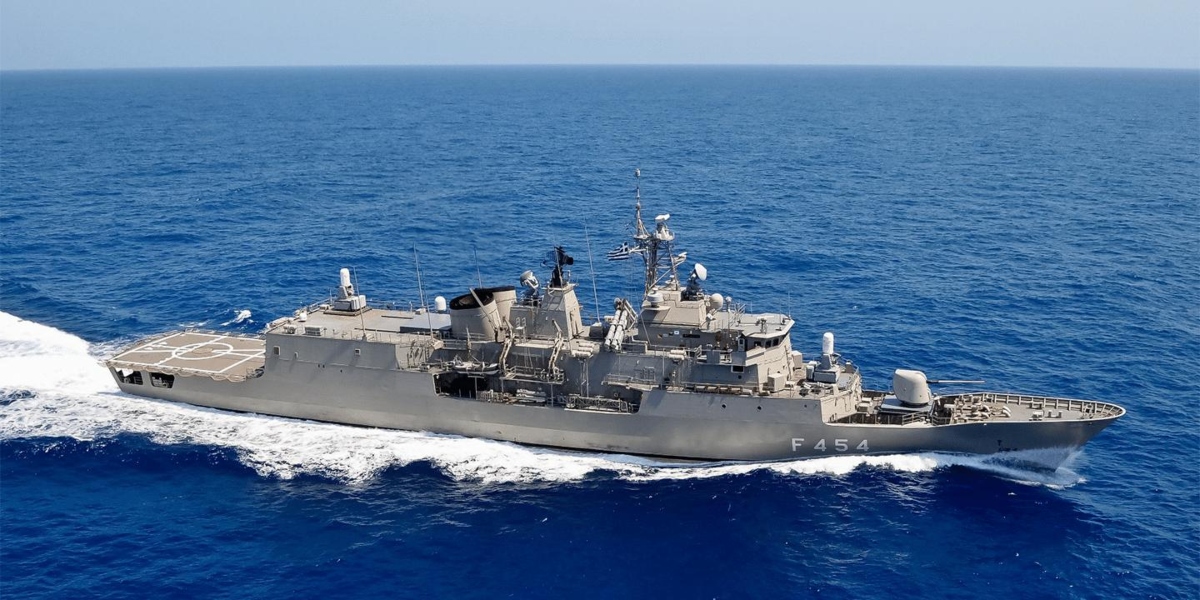
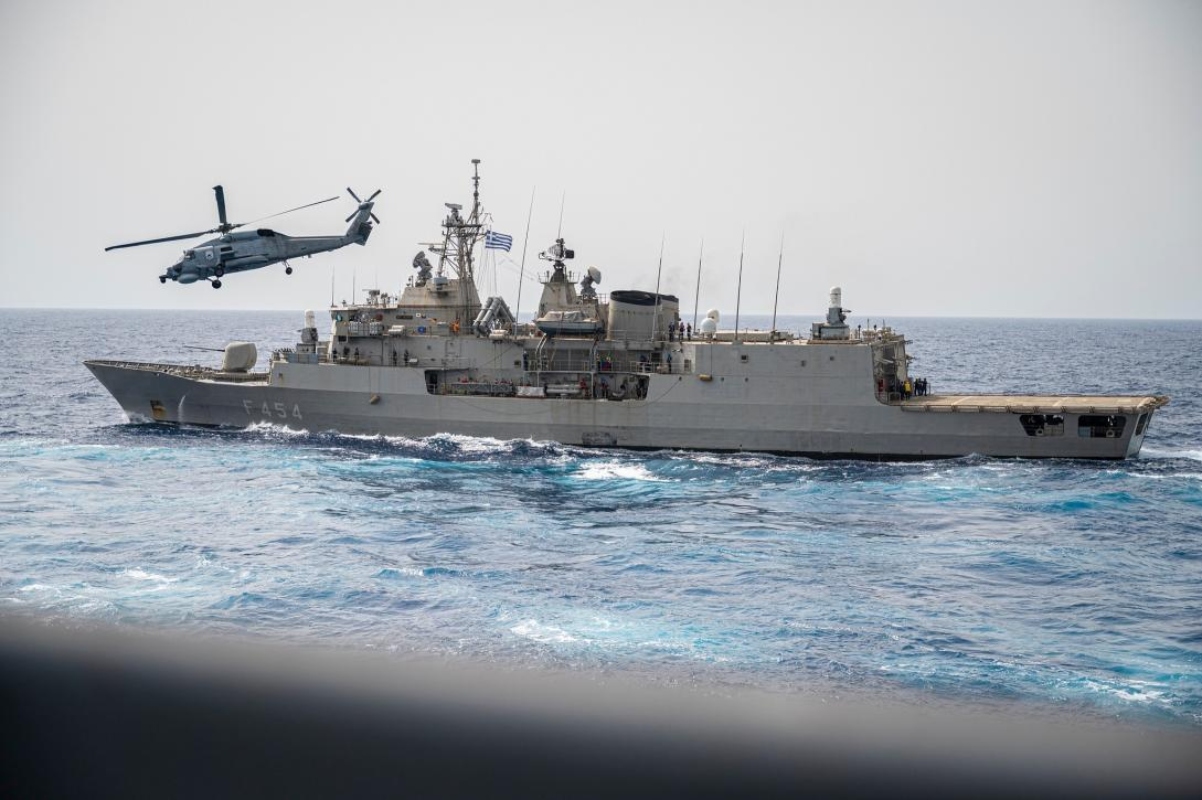
According to operational planning currently under discussion, Greece is expected to contribute both a MEKO-class frigate already deployed under the European Union’s Operation Aspides in the Red Sea and, at a later stage, the fleet replenishment vessel Prometheus, the largest support ship in the Hellenic Navy.
While Prometheus is expected to deploy during a second phase of the operation, the frigate will reportedly embark specialized mine-countermeasure personnel who will actively support mine-detection and clearance activities in one of the world’s most strategically sensitive waterways.
The mission’s duration and scope remain uncertain.
Military planners and diplomatic officials are currently assessing three distinct operational scenarios.
The first and most optimistic scenario assumes a six-month operation conducted under conditions of relative Iranian tolerance and continued political de-escalation following the emerging US-Iran understanding.
The second scenario, considered by many Western analysts to be the most realistic, foresees an operation extending up to twelve months. Under this framework, threats would not necessarily originate directly from Tehran but from autonomous or semi-autonomous actors operating across the region, including groups aligned with Iran that could continue disrupting maritime traffic and commercial shipping lanes.
The third and most dangerous scenario involves the collapse of the broader diplomatic framework between Washington and Tehran. Such an outcome could lead to renewed tensions, operational delays, expanded security risks and potentially the abandonment of the mine-clearance effort altogether.
At the center of these developments stands Greek Minister of National Defence Nikos Dendias.
Following high-level consultations in the United States, Dendias is expected to raise the issue of Hormuz security and maritime stabilization during NATO discussions in Brussels, where allies are increasingly debating how to secure one of the world’s most critical energy corridors in the months ahead.
The issue has already entered Euro-Atlantic strategic discussions, including the possibility of expanding the mandate of the EU’s Operation Aspides beyond the Red Sea and into the Persian Gulf to support mine-clearance and maritime security activities.
Behind the scenes, however, an even larger debate is unfolding.
Several NATO and EU member states appear to favor a structure resembling a modern “Coalition of the Willing” rather than a formal alliance operation. Under such a model, participating nations would coordinate closely with existing European missions while maintaining a distinct operational command framework.
At the heart of these discussions lies growing pressure from Washington for greater burden-sharing among European allies.
The United States has repeatedly signaled that Europe must assume a larger share of responsibility for safeguarding global trade routes, energy corridors and critical maritime infrastructure.
This debate is particularly relevant for Athens.
In recent weeks, Dendias publicly criticized the limited naval contributions of several European partners to Operation Aspides, arguing that the protection of international shipping cannot continue to depend on only a handful of nations.
The challenge becomes even more complex in the field of mine warfare.
Although France, Italy and Germany maintain relatively sizeable mine-countermeasure fleets on paper, many of these platforms face limitations when confronted with modern threats combining naval mines, unmanned surface vessels, underwater drones and hybrid warfare tactics.
As a result, the Strait of Hormuz mission is increasingly viewed as a critical test of Europe’s ability to function as an autonomous maritime-security actor in a rapidly changing strategic environment.
Within this context, Greece occupies a uniquely influential position.
The frigate Psara continues operations in the Red Sea, the operational headquarters of Operation Aspides is located in Larissa, and Greece currently holds the at-sea command of the European mission.
Should Hormuz become the next major theater of maritime security operations, Greece will not merely participate.
It will find itself at the center of decisions affecting the safety of a maritime corridor through which flows a substantial share of the world’s energy supply and commercial trade.
In strategic terms, Athens is no longer operating on the periphery of global maritime security.
It is increasingly becoming one of its indispensable stakeholders.
Source: pagenews.gr
Διαβάστε όλες τις τελευταίες Ειδήσεις από την Ελλάδα και τον Κόσμο