New Ankara Provocation:Turkey Raises the “Turkish Minority” Issue Western Thrace Again Amid School Closures
 ΧΡΟΝΟΣ ΑΝΑΓΝΩΣΗΣ 4 '
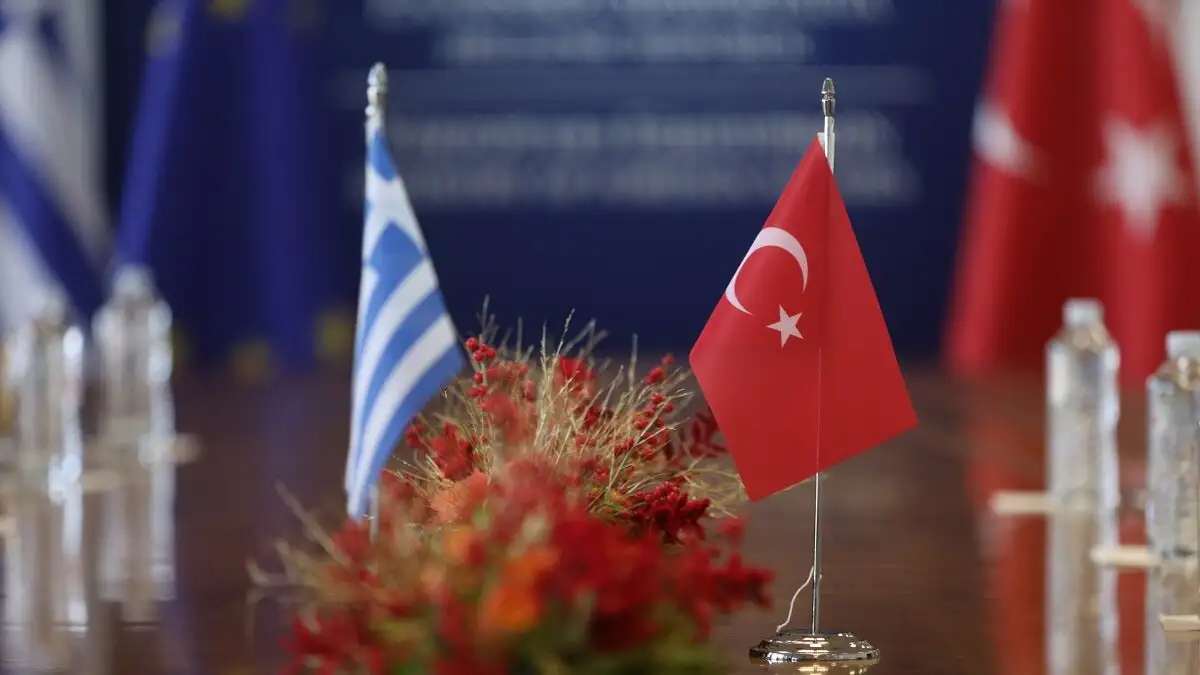
Πηγή Φωτογραφίας: AP Photo//New Ankara Provocation: Turkey Raises the “Turkish Minority” Issue in Western Thrace Again Amid School Closures



A new diplomatic dispute has emerged between Greece and Turkey after Ankara renewed its claims regarding the Muslim minority in Western Thrace, accusing Athens of violating the Treaty of Lausanne following the suspension of operations at eight minority primary schools due to a lack of students.
The Turkish Foreign Ministry described the decision as a “new obstacle” to the educational rights of what it refers to as the “Turkish Minority of Western Thrace”, arguing that the reduction in the number of minority schools represents a broader policy of weakening minority identity and rights.
The statement, issued by Turkish Foreign Ministry spokesperson Öncü Keçeli, called on Greece to reconsider its policies and claimed that Athens has failed to implement international recommendations concerning minority rights.
The Treaty of Lausanne Returns to the Center of the Dispute
The latest confrontation once again places the 1923 Treaty of Lausanne at the heart of Greek–Turkish tensions.
Ankara argues that the treaty guarantees the collective rights of the Turkish minority in Western Thrace, including educational and cultural rights. The Turkish government has repeatedly used the issue as part of its broader foreign policy toward Greece.
Athens rejects the term “Turkish minority”, emphasizing that the Treaty of Lausanne refers to a Muslim minority in Western Thrace rather than an ethnic Turkish community.
The Greek position is that the minority consists of different groups, including Turkish-speaking Muslims, Pomaks and Roma, and that the state’s obligations are based on protecting religious and civil rights rather than recognizing a separate ethnic identity.
This difference in interpretation has remained one of the most sensitive issues between the two countries for decades.
School Closures and the Demographic Factor
The immediate cause of the latest dispute was the Greek decision to suspend the operation of eight minority primary schools because of insufficient student numbers.
Greek authorities have argued that the decision is connected to demographic changes, population decline and reduced enrollment, factors affecting many schools across the country, particularly in rural areas.
According to Athens, the decisions are based on educational and administrative criteria and do not represent a restriction of minority rights.
Turkey, however, views the reduction of minority schools as part of a wider concern over the preservation of cultural and linguistic identity, arguing that education in the minority language is a fundamental component of those rights.
A New Chapter in the Greek–Turkish Rivalry
The dispute comes at a time when Greece and Turkey are attempting to maintain dialogue despite deep disagreements over several strategic issues, including the Aegean Sea, the Eastern Mediterranean, maritime zones and security concerns.
The Western Thrace issue remains particularly sensitive because it combines historical agreements, minority rights, national identity and regional influence.
For Ankara, the issue is connected to what it describes as the protection of Turkish cultural rights abroad. For Athens, the matter is linked to the implementation of the Treaty of Lausanne and the protection of a religious minority within Greece’s constitutional framework.
Minority Rights as a Tool of Geopolitical Influence
The renewed dispute highlights how minority issues continue to function as instruments of foreign policy in the region.
Turkey has repeatedly raised the situation of Western Thrace in international forums, while Greece has criticized Ankara over issues involving the Greek Orthodox community in Istanbul and the status of institutions linked to the Greek minority in Turkey.
The two countries have historically used minority questions as diplomatic leverage, especially during periods of heightened bilateral tension.
The latest confrontation over minority schools shows that, despite efforts to improve Greek–Turkish relations, historical disputes and competing interpretations of international agreements remain powerful drivers of regional politics.
The coming weeks will reveal whether the issue remains a diplomatic exchange or becomes another obstacle in the fragile process of Greek–Turkish rapprochement.
Source: pagenews.gr
Διαβάστε όλες τις τελευταίες Ειδήσεις από την Ελλάδα και τον Κόσμο