Non-State Universities: Green Light for Seven Branch Campuses – Who Was Approved and Who Was Left Out
 ΧΡΟΝΟΣ ΑΝΑΓΝΩΣΗΣ 9 '
Πηγή Φωτογραφίας: eurokinissi//Non-State Universities: Green Light for Seven Branch Campuses – Who Was Approved and Who Was Left Out



Seven licences and a new phase for Greek higher education
The reform allowing non-state, non-profit universities in Greece is entering a second and highly significant phase, following the approval of seven licences for the establishment and operation of branches of foreign universities.
The licences cover four new applications and three resubmitted applications, with the institutions expected to begin operating in the 2026–2027 academic year.
The decisions were taken following the approval of the Hellenic Authority for Higher Education and the National Organisation for the Certification of Qualifications and Vocational Guidance. For institutions based outside the European Union, the opinion of the Greek Foreign Ministry was also requested.
The granting of an institutional licence does not, however, mean that the universities may immediately enrol students in every proposed course. The accreditation of each individual academic programme by the Hellenic Authority for Higher Education must follow.
The seven universities that received approval
The approved parent institutions are:
- Georgetown University, in cooperation with the Public Power Corporation Group
- Iowa State University of Science and Technology, in cooperation with the American Farm School of Thessaloniki
- Roger Williams University, in cooperation with The American College of Greece – Deree
- European University Cyprus
- University of Derby, in cooperation with Mediterranean College
- University of Essex, in cooperation with Aegean College
- Université Sorbonne Paris Nord, in cooperation with the Institution d’Études Francophones – IdEF
Six of the seven approved branches are expected to operate in Athens, while Iowa State University will establish a presence in Thessaloniki.
The four new applications that passed the assessment
The approval of all four new applications carries particular political and academic significance.
Roger Williams University will cooperate with Deree, while the European University Cyprus will establish an independent presence in Greece. Georgetown University is joining forces with the Public Power Corporation, and Iowa State University will cooperate with the American Farm School in Thessaloniki.
These partnerships expand the non-state university model beyond the more traditional collaborations with private colleges. They introduce corporate and educational organisations with specialised experience in energy, agriculture, technology and applied research.
The Georgetown partnership with PPC could prove particularly important, provided that the programmes eventually accredited are linked to areas such as the energy transition, management, international affairs or emerging technologies.
Similarly, the presence of Iowa State in Thessaloniki could help create a new academic hub focused on agriculture, food production, innovation and applied sciences.
Derby, Essex and Sorbonne secured a second opportunity
Of the five applications resubmitted after being rejected during the previous licensing round, three were approved.
The University of Derby, the University of Essex and Université Sorbonne Paris Nord returned with revised applications and successfully passed the new assessment.
The development demonstrates that a rejection does not necessarily amount to permanent exclusion. Institutions may address deficiencies relating to infrastructure, staffing, administrative organisation or quality assurance and then submit a new application.
At the same time, the fact that only three of the five resubmitted applications were approved strengthens the government’s argument that the process is neither automatic nor merely procedural.
Who was rejected and why
Two applications were not approved:
- London Metropolitan University, in cooperation with City Unity College
- University of West London, in cooperation with BCA College
According to reports, the City Unity College application was rejected because of a previous cooperation arrangement that had not been properly certified.
The BCA application was reportedly rejected because its proposed facilities were housed in the same building as a college.
These explanations have been attributed to informed sources rather than to a detailed public statement by the authorities, meaning that caution is required until the full official reasoning is published.
The two rejections are nevertheless significant. They indicate that the assessment does not concern only the reputation of the parent university abroad.
Authorities also examine the entire Greek operating structure, including facilities, institutional independence, governance, academic staff, quality procedures and the actual relationship with the parent university.
The Sunderland application moves to 2027
The application submitted by the University of Sunderland, in cooperation with DEI College in Thessaloniki, is not part of the current evaluation cycle because it concerns the 2027–2028 academic year.
Its assessment process is expected to begin in February 2027.
It has therefore not been rejected or delayed within the present round. It follows a separate timetable based on its intended year of operation.
An institutional licence does not automatically accredit degree programmes
The next stage may prove even more important than the licensing process itself.
The Hellenic Authority for Higher Education will assess every academic programme separately, examining:
- academic content,
- learning outcomes,
- qualifications of teaching staff,
- links with the parent university,
- research and laboratory infrastructure,
- student support,
- internal quality-assurance procedures.
Only programmes that receive formal accreditation will be permitted to operate.
This distinction is crucial. The current decision concerns the licence of the legal and educational entity, not the automatic approval of every proposed faculty, course or degree.
Zacharaki: “There are no discounts and no exceptions”
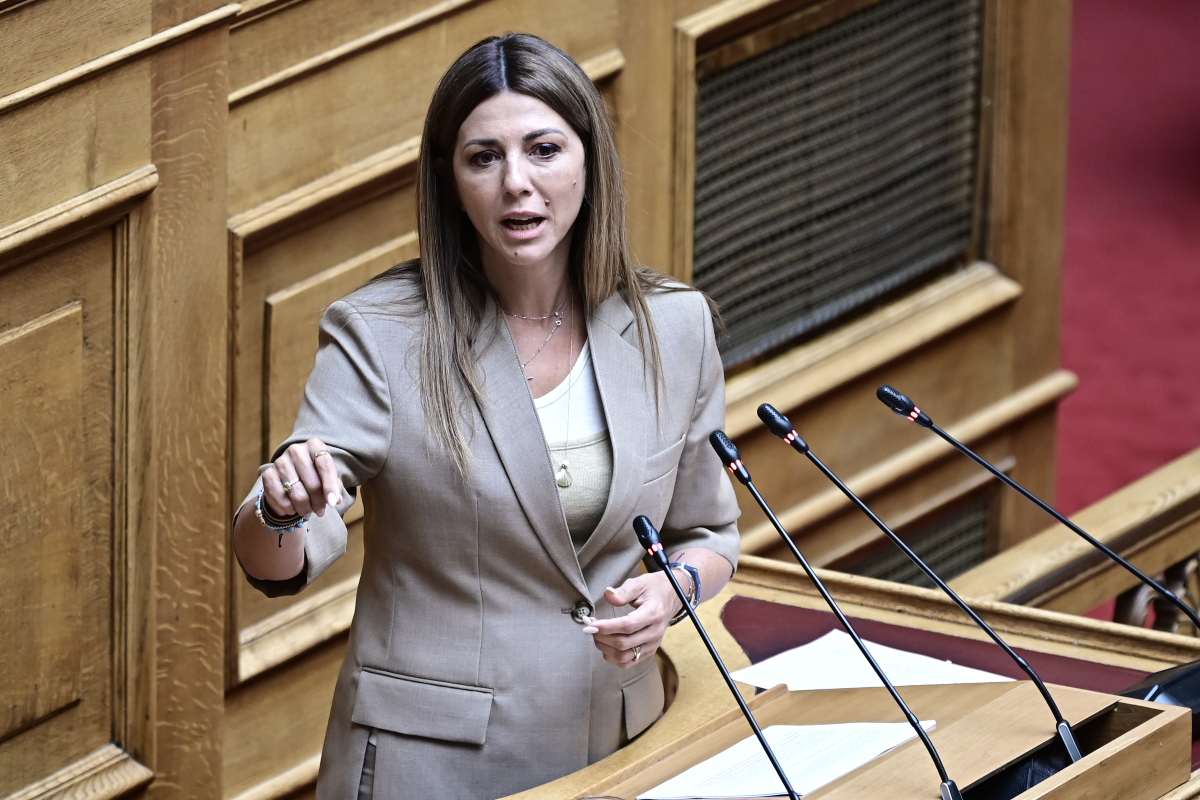
Education Minister Sofia Zacharaki described the second licensing round as proof that the reform is gaining continuity and institutional depth.
“Last year we took the first step. This year we are proving that this historic reform was not a single moment, but the compass for a new course in Greek higher education,” she said.
The minister emphasised strict assessment, high academic standards and respect for the institutional role of the Hellenic Authority for Higher Education.
She argued that both the approvals and the rejections demonstrate that “there are no discounts and no exceptions, but rules that apply to everyone.”
Zacharaki also sought to move the debate away from a confrontation between public and non-state universities, insisting that the government is simultaneously implementing the largest strengthening of public higher education in decades.
She referred to increased funding, investment in student welfare, new halls of residence, modern infrastructure, equipment, research and international cooperation.
According to the minister, the objective is for Greece to move from being an international exception to becoming a strong regional education hub capable of attracting major foreign universities.
Papaioannou: “The country’s academic map is changing”
Deputy Education Minister for Higher Education Nikos Papaioannou described the completion of the second licensing round as another milestone in a reform that, in his words, is leaving behind the ideological constraints of the past.
He argued that the coexistence of public universities and non-state, non-profit university entities can increase the competitiveness of Greek higher education, create new partnerships and attract investment in research and innovation.
The government is placing considerable political weight on the argument that Greece can move from being a country that exports students to becoming a regional academic and educational hub.
The aim is to attract not only foreign universities but also students from Southeastern Europe, the Eastern Mediterranean and the Middle East.
The opportunities and the difficult questions
The arrival of seven additional international institutions could strengthen competition, internationalisation and links between education and the labour market.
It could also reduce the number of Greek students leaving the country and create new positions for academics, researchers and administrative staff.
At the same time, however, several important questions remain:
Will the branches enjoy genuine academic autonomy, or will some operate primarily as upgraded colleges? Will they employ permanent teaching and research staff? Will they develop substantial research activity, or focus mainly on teaching? How will authorities guarantee that their degrees carry the same academic weight as those awarded by the parent institution?
The answers will not be provided by legislation or licensing decisions alone. They will be determined through daily operation, accreditation, inspections and the quality of the first graduates.
A new academic landscape begins to emerge
The seven licences represent a clear political milestone. The reform is now moving from legislative and ideological debate to practical implementation.
Its success, however, will not be measured simply by the number of international university names appearing in Athens and Thessaloniki.
It will be judged by whether the new branches provide genuinely university-level education, produce research, operate transparently and create healthy pressure for improvement across the entire higher education system.
Greece is taking another step towards a more open and internationally connected academic model. The next and more difficult challenge will be to prove that internationalisation can be combined with quality, strict supervision and the meaningful strengthening of public universities.
Source: pagenews.gr
Διαβάστε όλες τις τελευταίες Ειδήσεις από την Ελλάδα και τον Κόσμο