Markets ‘Vote’ Before the Ballot – DBRS Sees Limited Political Risk for Greece
 ΧΡΟΝΟΣ ΑΝΑΓΝΩΣΗΣ 8 '
Πηγή Φωτογραφίας: eurokinissi//Markets ‘Vote’ Before the Ballot – DBRS Sees Limited Political Risk for Greece



Can markets read an election before the ballots are cast?
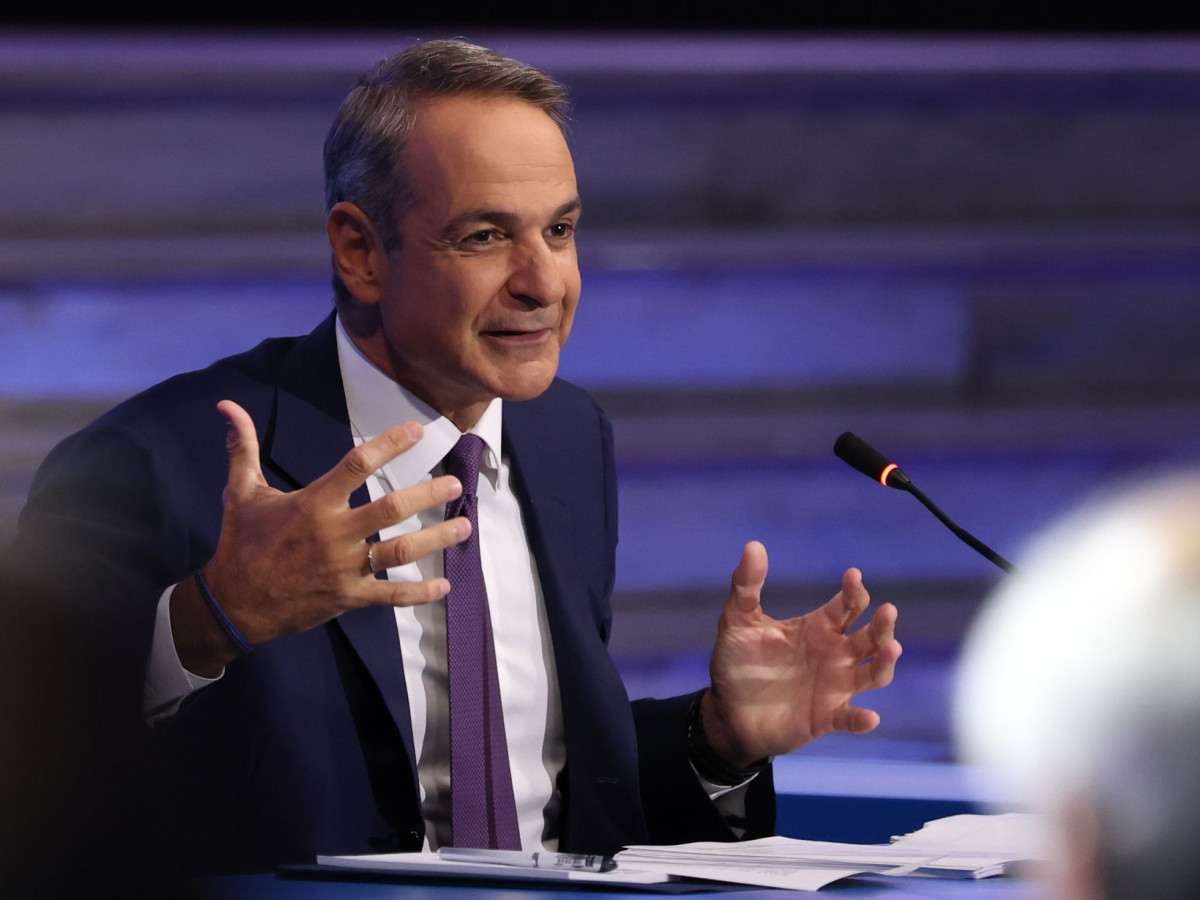
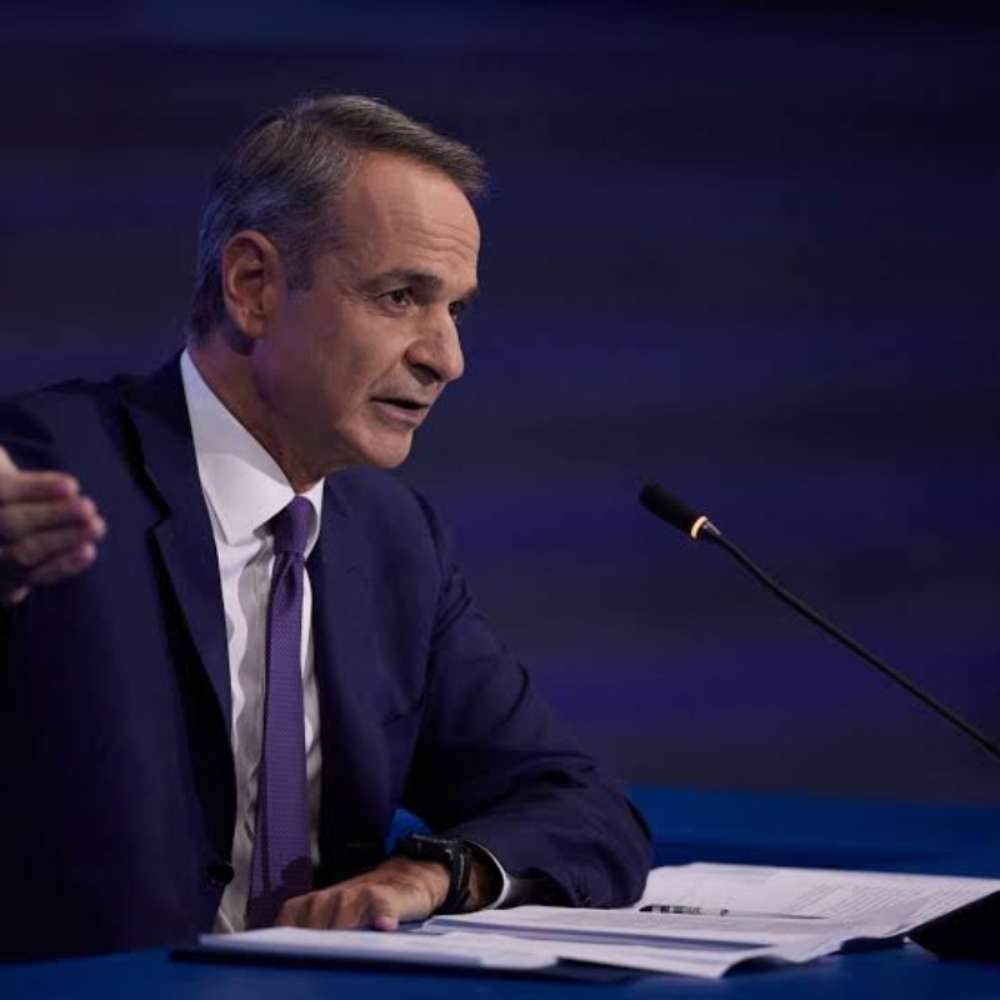
Kyriakos Mitsotakis himself raised the question after the Thessaloniki International Fair, pointing to the dramatic improvement in Greece’s borrowing costs and the country’s standing among international investors.
“A few years ago, who would have imagined that Greece would borrow more cheaply than four G7 countries?” the prime minister remarked, wondering whether markets may already be “pricing in the election result as well.”
The comment carries obvious political weight, but the real significance lies in the data behind it.
While opinion polls do not point to an easy parliamentary majority and leave open the possibility of a difficult post-election arithmetic, international rating agencies and investors appear far less concerned.
DBRS: Government formation may be difficult, but political risk remains limited
The clearest signal has come from Morningstar DBRS.
The agency kept Greece at BBB but upgraded the outlook from stable to positive, effectively opening the door to a possible future rating upgrade if fiscal performance and debt dynamics continue to improve.
Politically, however, one element of the report stands out even more.
DBRS acknowledges that current polling could lead to a difficult period of government formation after the next general election.
Even so, it sees political risk as limited, citing what it considers to be broad consensus among Greece’s main political parties on key policy issues.
That matters for markets.
Investors do not only assess who is likely to win an election. They also assess whether a change in the political balance could derail fiscal policy, reform momentum, relations with Europe or the country’s debt strategy.
So far, DBRS does not see that as the base-case risk.
The TIF message: Measures without abandoning fiscal discipline
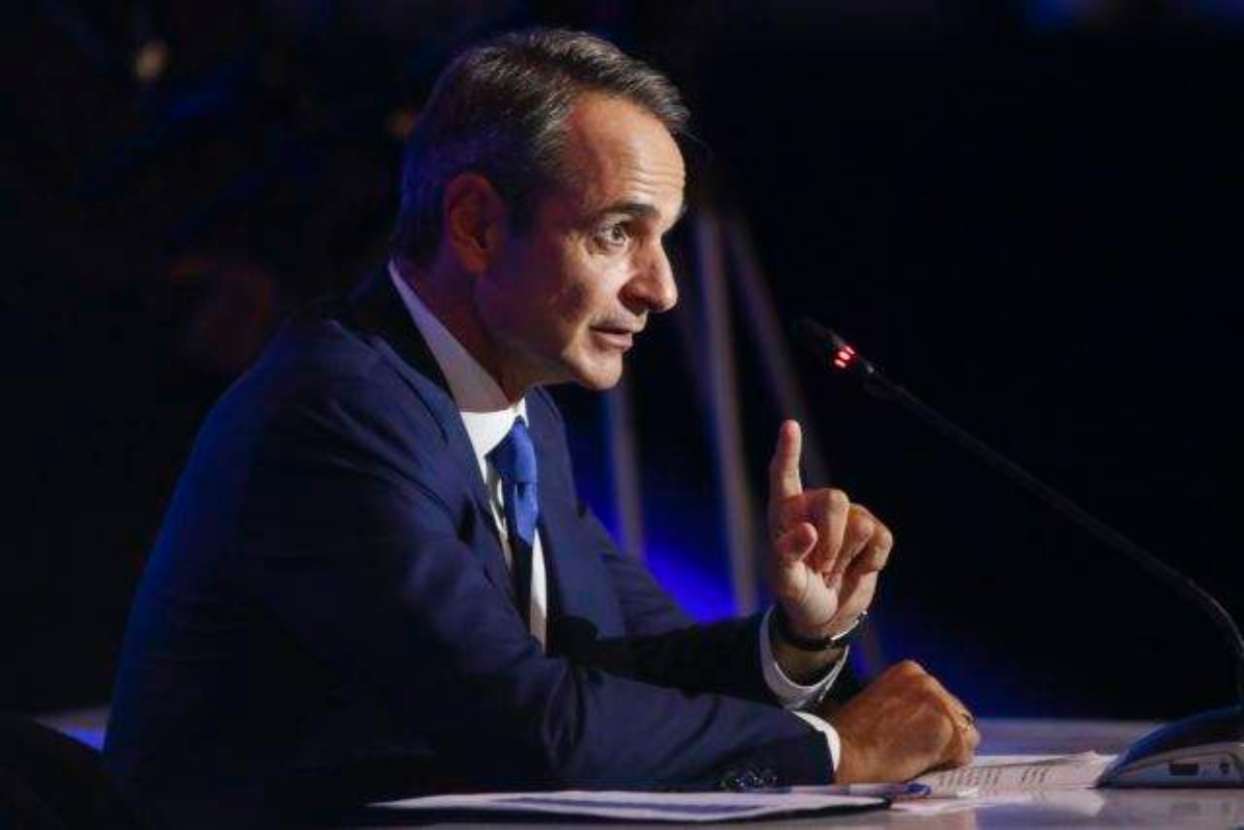
This also fits with the government’s attempt to present its Thessaloniki International Fair package as permanent but fully funded.
Mitsotakis avoided a pre-election spending spree that could have raised concerns in the bond market, despite Greece now moving closer to the final political stretch before the next national vote.
The key message to investors is that tax reductions and support measures are not expected to overturn the fiscal framework.
For markets, that distinction is crucial.
They tend to look beyond campaign rhetoric and focus instead on whether the numbers still add up.
Goldman Sachs lifts Athens target to 2,800 points
The same confidence can be seen in the Athens Stock Exchange.
Goldman Sachs has raised its target for the General Index to 2,800 points from 2,600 previously, after a powerful rally that pushed the Greek market to multi-year highs.
The timing is important.
Euronext Athens is moving closer to its return to developed-market status, and Goldman still sees room for the Greek investment story to extend further.
That shift is not merely symbolic.
A developed-market classification could broaden the pool of international capital able, or in some cases required, to invest in Greek equities.
HSBC: Funds are already overweight Greece
HSBC’s latest positioning data are equally telling.
Greece ranks among the markets where international investors hold some of the strongest overweight positions relative to longer-term averages.
Within Europe, Greece stands out as one of the most heavily overweight markets.
Put simply, funds are not just watching Greece.
They are already allocating more capital to Greek equities than a neutral benchmark position would imply.
And this is happening as the election debate is already intensifying.
Greek banks continue to attract upgrades
The banking sector remains one of the strongest parts of the Greek market story.
Deutsche Bank argues that, despite the powerful share-price momentum of recent quarters, the market has still not fully priced in the improvement in fundamentals and the sector’s earnings outlook.
Its new price targets are:
- Alpha Bank: €5.10 from €4.80
- Piraeus: €11.30 from €10.15
- Eurobank: €5.45 from €5.00
- National Bank of Greece: €18.55 from €17.10
Morgan Stanley is also raising its targets for Greek banks, pointing to Greece as one of the strongest loan-growth stories in Europe.
Its revised targets stand at €5.50 for Alpha Bank, €12.30 for Piraeus, €5.40 for Eurobank and €19.30 for National Bank of Greece.
Alpha Bank has also moved into Morgan Stanley’s European top picks.
The ECB returns to the equation
There is, however, an external factor that could test the positive story: interest rates.
Economists increasingly expect the European Central Bank to raise rates by 25 basis points, taking the deposit rate to 2.5%.
The bigger question is not the next move itself, but what Christine Lagarde signals about the path into 2027.
Markets are pricing a more aggressive tightening cycle than many economists expect, as energy prices and geopolitical tensions put inflation back at the centre of the debate.
For Greek banks, higher rates can still support net interest income, provided that tighter policy does not materially weaken loan growth or asset quality.
COSMOTE exits the stage – Telekom puts its “T” on Greece
The changing investment landscape is also visible in one of the country’s most recognisable corporate rebrandings.
COSMOTE TELEKOM is transitioning to the unified Telekom brand, in one of the biggest commercial identity changes seen in the Greek telecom market in recent years.
The new identity is being rolled out across products, services, digital channels and retail stores.
COSMOTE 5G becomes Telekom 5G, COSMOTE Fiber becomes Telekom Fiber, stores adopt the Telekom name and the group aligns more closely with Deutsche Telekom’s broader European branding.
The change is not only cosmetic.
It reflects an even tighter integration of the Greek operation into one of Europe’s largest telecom groups.
Real investment continues alongside market optimism
The investment story is not limited to equities and bank upgrades.
AKTOR Renewables is moving ahead with two major pumped-storage projects in Western Macedonia, with a combined licensed maximum injection capacity of 1,044 MW and absorption capacity of 1,050 MW.
The total investment is estimated at around €1.2 billion once licensing, development and construction are completed.
That is the other half of the Greek story.
Positive research notes from investment banks matter only if they are eventually matched by real investment, infrastructure and productive capital.
Markets are not issuing a blank cheque
There is, however, one important distinction.
The fact that DBRS currently sees limited political risk and international funds remain overweight Greece does not mean that markets have definitively “voted” for one specific electoral outcome.
Markets price probabilities.
And right now, they appear to be pricing continuity in fiscal discipline, further debt reduction, banking stability and a broadly pro-European economic direction, regardless of how difficult the government-formation process may eventually prove.
That is why Mitsotakis’ remark is politically interesting.
“Could markets already be pricing in the election result?”
The ballot box cannot answer that question yet.
But bonds, rating agencies, banks and global funds are sending one message clearly: political uncertainty is increasingly being discussed inside Greece — but it is not yet being priced as a major Greek economic risk.
Source: pagenews.gr
Διαβάστε όλες τις τελευταίες Ειδήσεις από την Ελλάδα και τον Κόσμο