Athens Is Becoming a Mini “City” – Hedge Funds, €60bn Investment Target and Telekom’s Big Bet
 ΧΡΟΝΟΣ ΑΝΑΓΝΩΣΗΣ 7 '
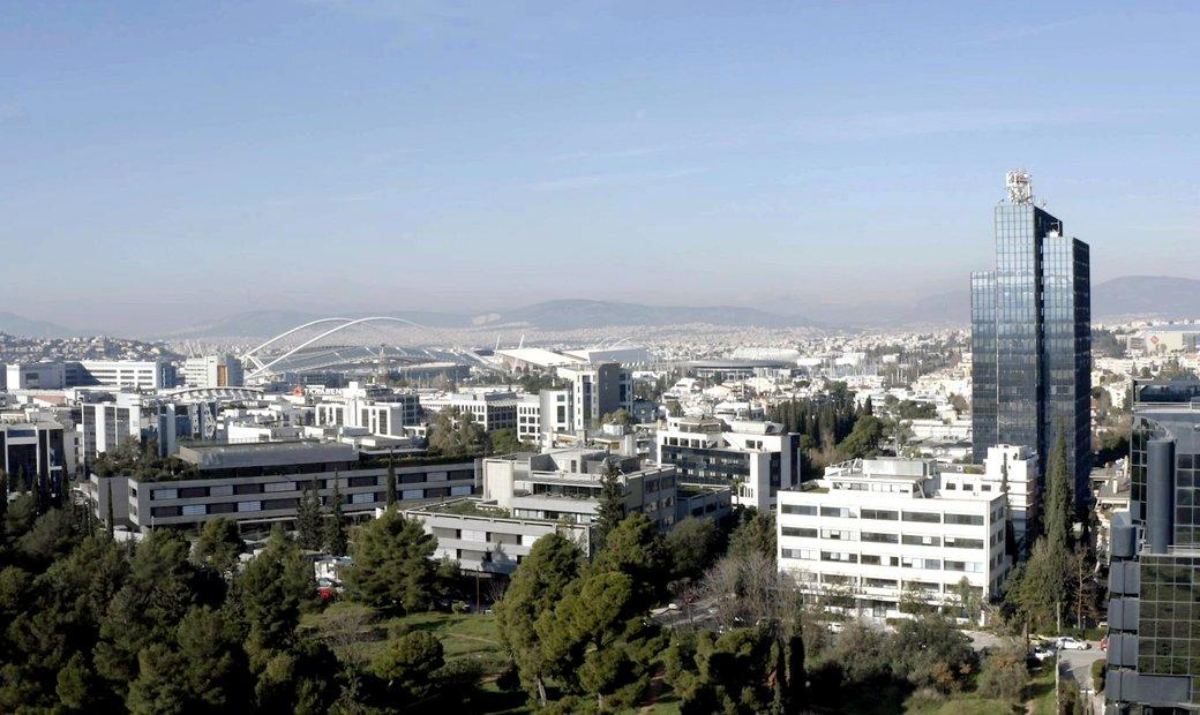
Πηγή Φωτογραφίας: Screenshot/Athens Is Becoming a Mini “City” – Hedge Funds, €60bn Investment Target and Telekom’s Big Bet


A decade ago, the idea that Athens could compete for executives and investment activity traditionally associated with the City of London would have sounded almost implausible.
Today, the picture is changing.
Some of the biggest names in global asset management are either establishing a presence in Athens or examining the possibility, while multinational groups are expanding their investment footprint in Greece and the government is setting a much more ambitious target for the end of the decade: annual investment in the Greek economy exceeding €60 billion by 2030.
Athens is certainly not about to become another London.
But the convergence of international hedge funds, institutional capital, technology investment and deeper integration with European capital markets is beginning to raise a different question: could Athens emerge as a small but significant European hub for international capital?
Millennium puts Athens on the hedge fund map
One of the strongest signals comes from Millennium Management.
The global investment firm, which manages more than $97 billion in assets, is preparing to establish its first office in Athens, with discussions taking place over the structure of its local presence and the executives who could relocate to Greece.
A senior Millennium portfolio manager is expected to move from London to Athens, according to the Financial Times, while the ultimate scale of the operation will depend on the requirements of its trading activities.
The significance extends beyond a single office.
Millennium is one of the best-known names in the global multi-strategy hedge fund industry. Its decision to establish a foothold in Athens therefore sends a signal to a sector in which the relocation of senior investment professionals can often trigger further moves.

Rokos, Millennium — and potentially Verition
Millennium is not alone.
Athens had already attracted attention following billionaire hedge fund manager Chris Rokos’ decision to move his tax residence from Britain to Greece and establish a presence in the Greek capital.
Verition Fund Management is also examining the possibility of opening an Athens office. Discussions remain at an early stage and no final decision has been announced.
Together, Millennium, Rokos and Verition are associated with more than $130 billion in assets under management.
That does not mean $130 billion is moving to Greece.
It means something more subtle but strategically important: managers controlling capital on this scale are beginning to consider Athens as a viable location for investment professionals and business operations.
Why Athens — and why now?
The timing is not accidental.
Greece is seeking to capitalize on changes in Britain’s tax environment and attract high-income financial professionals looking for alternative European bases.
At the same time, Athens is attempting to combine tax incentives with political and fiscal stability, quality of life and easier access to the European Union.
The objective is increasingly clear: Greece does not merely want foreign money invested in Greek assets. It also wants the people who manage international capital to operate from Greece.
That would represent a much more significant structural change.
Pierrakakis: From €46bn to more than €60bn
The second part of the story concerns Greece’s broader investment strategy.
Speaking at the Hellenic Capital Market Commission’s Annual Symposium 2026, Minister of National Economy and Finance Kyriakos Pierrakakis set a clear target: annual investment should rise from around €46 billion today to more than €60 billion by 2030.
The objective is for investment to reach approximately 20% of GDP, compared with around 11% in 2019, bringing Greece closer to the EU average.
“The capital market is an absolutely existential instrument for achieving this objective,” Pierrakakis said.
The distinction is important: the €60 billion figure is not a new €60 billion government investment package. It is the targeted annual level of total investment in the Greek economy by the end of the decade.

Political stability enters the investment equation
Pierrakakis also directly linked the ability to attract capital with political stability.
“Political stability is a fundamental prerequisite for attracting capital. Without such a prospect, investor confidence is undermined,” he said.
A similar message emerged from Prime Minister Kyriakos Mitsotakis’ meeting with Telekom CEO Tim Höttges, where the government highlighted fiscal and political stability as key components of Greece’s investment proposition.
For investors making decisions with five-, ten- or twenty-year horizons, that issue matters.
Capital does not evaluate only tax rates and expected returns. It also prices political risk, regulatory predictability and the durability of economic policy.
Telekom: €600m a year for Greece’s digital infrastructure
The third major signal comes from Telekom.
During the Mitsotakis-Höttges meeting, the group presented the progress of its strategic investment plan in Greece, amounting to approximately €600 million annually, with a large part directed toward fiber-optic networks and 5G infrastructure.
Artificial intelligence was also on the agenda, alongside the broader question of Europe’s technological sovereignty and its ability to compete globally.
The official figure is €600 million per year. Therefore, rather than presenting €3 billion by 2030 as a formally announced commitment, the more precise formulation is that Telekom is currently investing at an annual pace of around €600 million.
From crisis capital to international capital
None of these developments alone turns Athens into the City of London.
Together, however, they tell a very different story about Greece.
Global hedge fund managers are looking at Athens. European financial integration is deepening. Major technology and telecom groups continue to invest. Greece’s capital markets are seeking a bigger role in financing growth.
The next challenge is no longer simply attracting another famous investor.
It is creating a cluster.
Portfolio managers, family offices, fintech companies, lawyers, consultants and financial specialists need to follow. And, crucially, more of the international capital associated with those networks needs eventually to reach Greek companies and productive investment.
If that happens, Athens will not have become London.
But it may have achieved something that seemed highly unlikely during the sovereign debt crisis: a distinct place of its own on Europe’s map of international capital.
Source: Pagenews.gr
Διαβάστε όλες τις τελευταίες Ειδήσεις από την Ελλάδα και τον Κόσμο