Hatzivassiliou: ‘Kastellorizo Is the Heart of Greece’ — Clear Message to Ankara
 ΧΡΟΝΟΣ ΑΝΑΓΝΩΣΗΣ 6 '

Πηγή Φωτογραφίας: eurokinissi//Hatzivassiliou: ‘Kastellorizo Is the Heart of Greece’ — Clear Message to Ankara



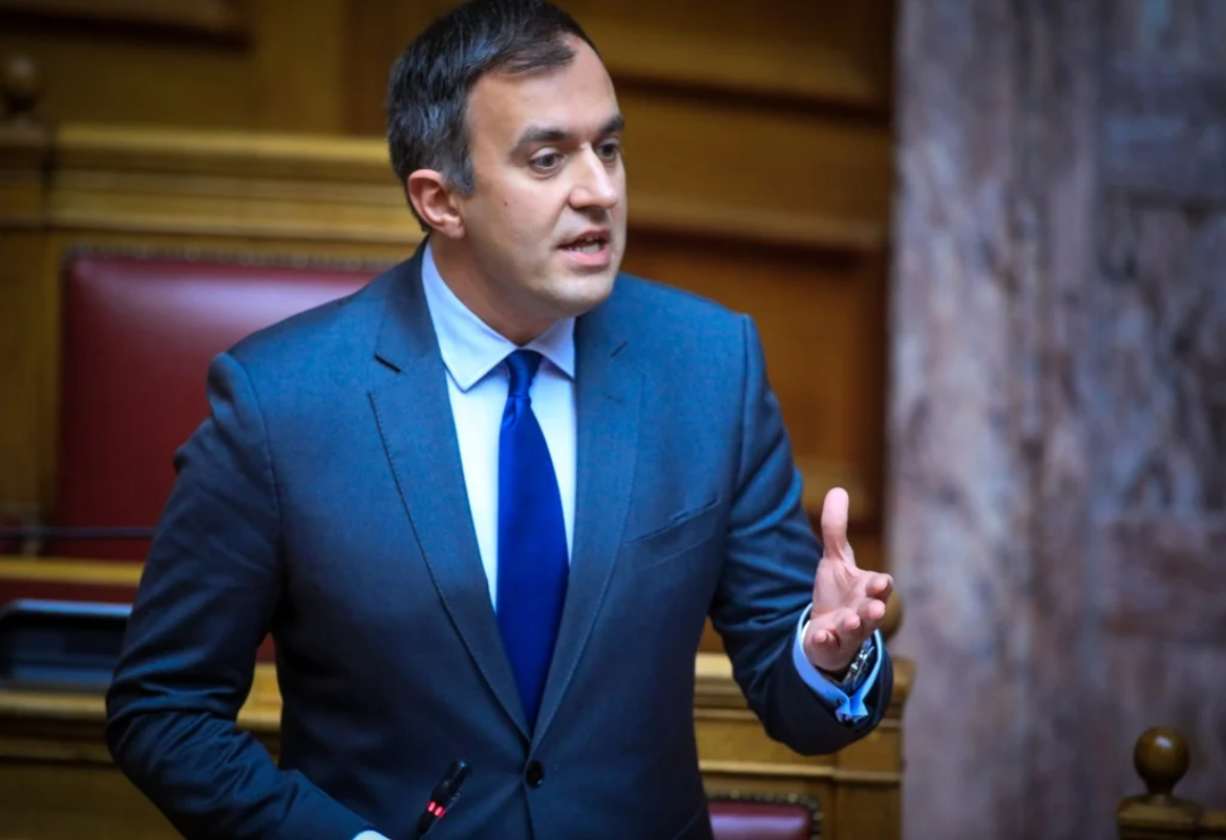
Deputy Foreign Minister Tasos Hatzivassiliou delivered a clear political and national message to Ankara on Saturday, following Prime Minister Kyriakos Mitsotakis’ visit to Kastellorizo.
Speaking to SKAI, Hatzivassiliou used a deliberately symbolic formulation to underline the island’s place in Greece’s geopolitical and national map.
“Kastellorizo does not lie far away. It lies within Greek territory and is the heart of Greece,” he said.
The statement goes beyond the obvious issue of Greek sovereignty over the island.
It is also a direct response to the long-standing Turkish narrative that seeks to portray Kastellorizo as a geographical exception in the Aegean and Eastern Mediterranean, particularly when the debate turns to maritime zones, exclusive economic zones and energy-related claims.
“We will not ask anyone for permission”
Hatzivassiliou described the prime minister’s visit as one of “high symbolism”, stressing that every Greek official and every Greek citizen is free to visit any part of the country without external approval or restrictions.
“The Prime Minister, every Greek official and every Greek citizen can visit any part of Greek territory whenever they wish and whenever they decide,” he said.
He added:
“The Prime Minister’s presence in Kastellorizo once again confirms the government’s determination to defend every part of the homeland, wherever it may be.”
The visit carries additional symbolic weight because it coincides with the anniversary of the island’s liberation.
Turkey’s attempt to “encircle” Kastellorizo
The deputy foreign minister directly linked Mitsotakis’ presence on the island with recent Turkish activity in the Eastern Mediterranean.
According to Hatzivassiliou, Ankara is attempting to “encircle” Kastellorizo through the so-called national marine parks it presented in recent weeks.
“Kastellorizo is not on the wrong side of geography, as some in the neighbouring country often claim. On the contrary, it is the heart of Greece,” he said.
The remark strikes at the core of Turkey’s broader argument that Kastellorizo’s geographical position should limit the maritime rights generated by the island.
Athens has consistently rejected that interpretation, maintaining that Greek islands enjoy maritime rights under international law and the law of the sea.
“Calm waters” and Athens’ two-track strategy
Hatzivassiliou also addressed the policy of so-called “calm waters” in Greek-Turkish relations.
He argued that Greece achieved two strategic gains during this period.
The first was the establishment of a structured dialogue with Turkey on three levels:
- political dialogue,
- Confidence-Building Measures,
- and a positive agenda.
The second, he said, was that Athens used the time available to strengthen the Armed Forces and reinforce Greece’s overall position in the regional balance of power.
“Greece is a strong country which has acquired a significant geopolitical, diplomatic and defence footprint,” he said.
The statement reflects the government’s central strategic line: dialogue with Turkey without concessions on sovereignty, combined with a sustained strengthening of deterrence.
Rejecting claims of a “party-political” visit
The deputy foreign minister also dismissed claims that Mitsotakis’ visit was linked to domestic political or electoral calculations.
“We are not going to ask anyone, nor will we seek anyone’s permission, in order to travel anywhere in our own country,” he said.
The comment is politically significant because the government is seeking to frame Mitsotakis’ presence in Kastellorizo as a message of national sovereignty rather than a communications exercise.
A message to the right of New Democracy as well
Hatzivassiliou’s intervention also had a clear domestic political dimension.
Responding to criticism from parties positioned to the right of New Democracy, he said the government’s foreign policy exposes those who invest in nationalist rhetoric without delivering measurable results.
“The government’s foreign policy politically corners the merchants of patriotism,” he said.
The government is therefore attempting to argue that patriotism should be measured through international alliances, stronger defence capabilities and concrete diplomatic outcomes — not merely through confrontational rhetoric.
From Christodoulides and Sisi to Macron and Kastellorizo
Hatzivassiliou also pointed to the sequence of the prime minister’s recent international engagements.
Within a short period, Kyriakos Mitsotakis held meetings with Cypriot President Nikos Christodoulides, Egyptian President Abdel Fattah el-Sisi and French President Emmanuel Macron before travelling to Kastellorizo.
The government presents this sequence as evidence of a foreign policy with both regional and European reach.
Cyprus, Egypt and France are, after all, three key pillars of Greece’s strategic positioning in the Eastern Mediterranean.
Kastellorizo as a political and geopolitical signal
Mitsotakis’ visit cannot be viewed in isolation from the wider state of Greek-Turkish relations.
Kastellorizo has long been at the centre of the dispute between Athens and Ankara over maritime zones in the Eastern Mediterranean.
For Turkey, the island represents a key point in its attempt to limit Greece’s maritime reach in the region.
For Greece, it is an indisputable part of national territory, with full rights stemming from international law.
That is why the timing of the prime minister’s visit carries a double message.
To Ankara, the message is that Greece does not accept geographical or political “grey zones”.
Domestically, the message is that the government intends to retain ownership of the national security and deterrence agenda, both against the opposition and against parties further to the right.
Hatzivassiliou summarised the government’s line in unusually direct terms:
“We are sending a message of international law, but also a message of determination that we will not accept games at the expense of the national interest. We are implementing a foreign policy that produces results, not hollow slogans.”
Source: pagenews.gr
Διαβάστε όλες τις τελευταίες Ειδήσεις από την Ελλάδα και τον Κόσμο