Kastellorizo: Mitsotakis Sends a Message From 2 km Away — Turkish Media React
 ΧΡΟΝΟΣ ΑΝΑΓΝΩΣΗΣ 7 '
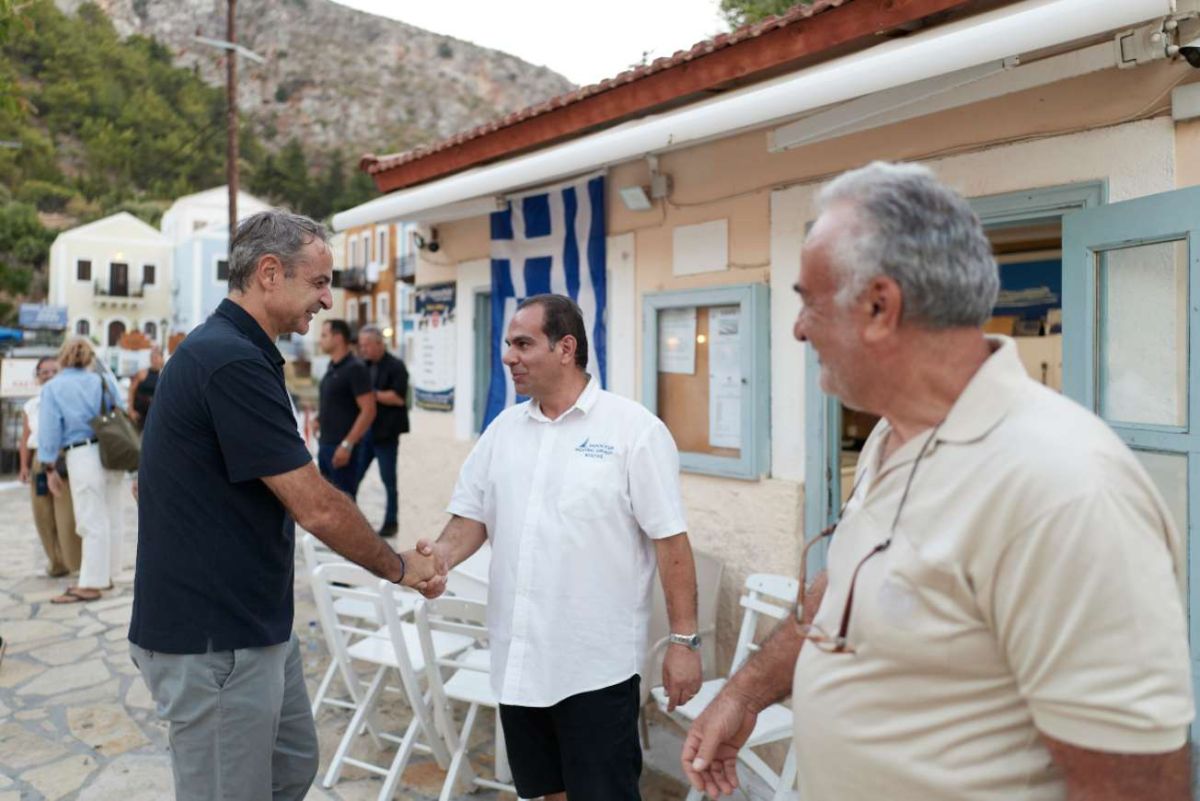
Πηγή Φωτογραφίας: Greek Prime Minister Office--Papamitsos//Kastellorizo: Mitsotakis Sends a Message From 2 km Away — Turkish Media React



This is no ordinary prime ministerial visit to a remote Greek island.
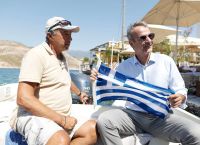
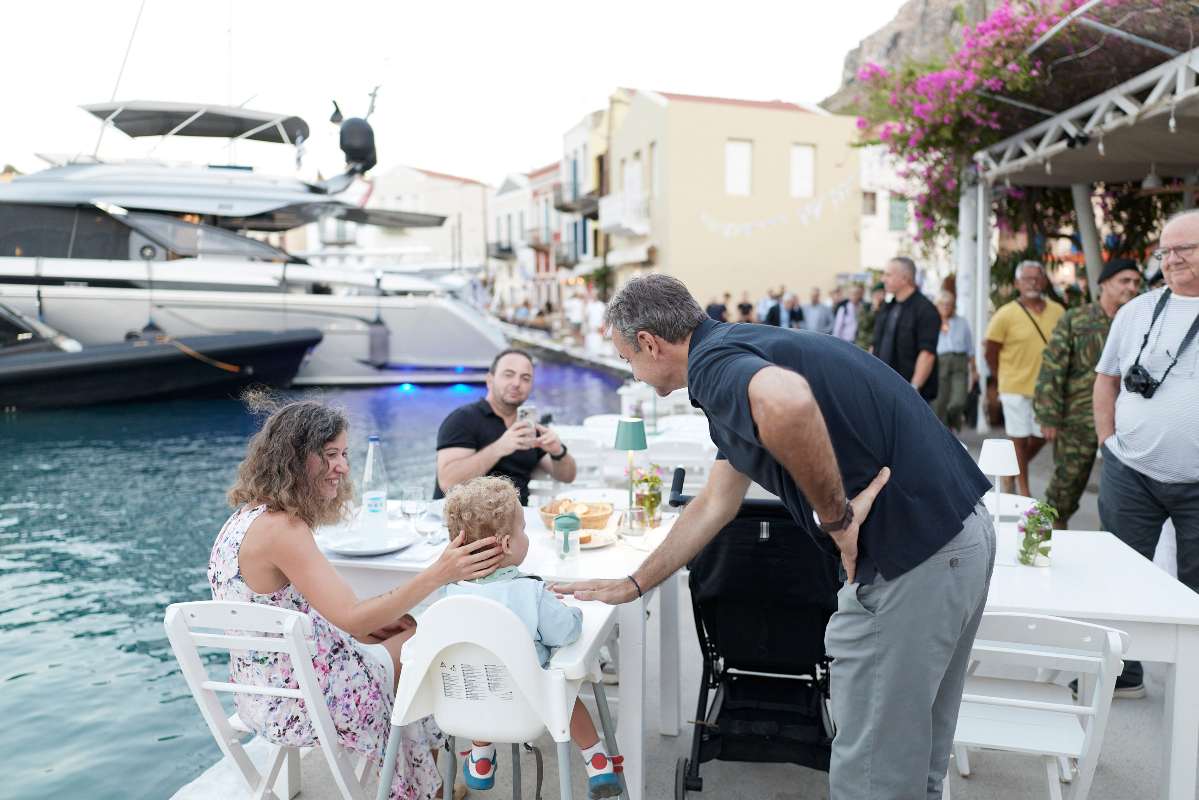
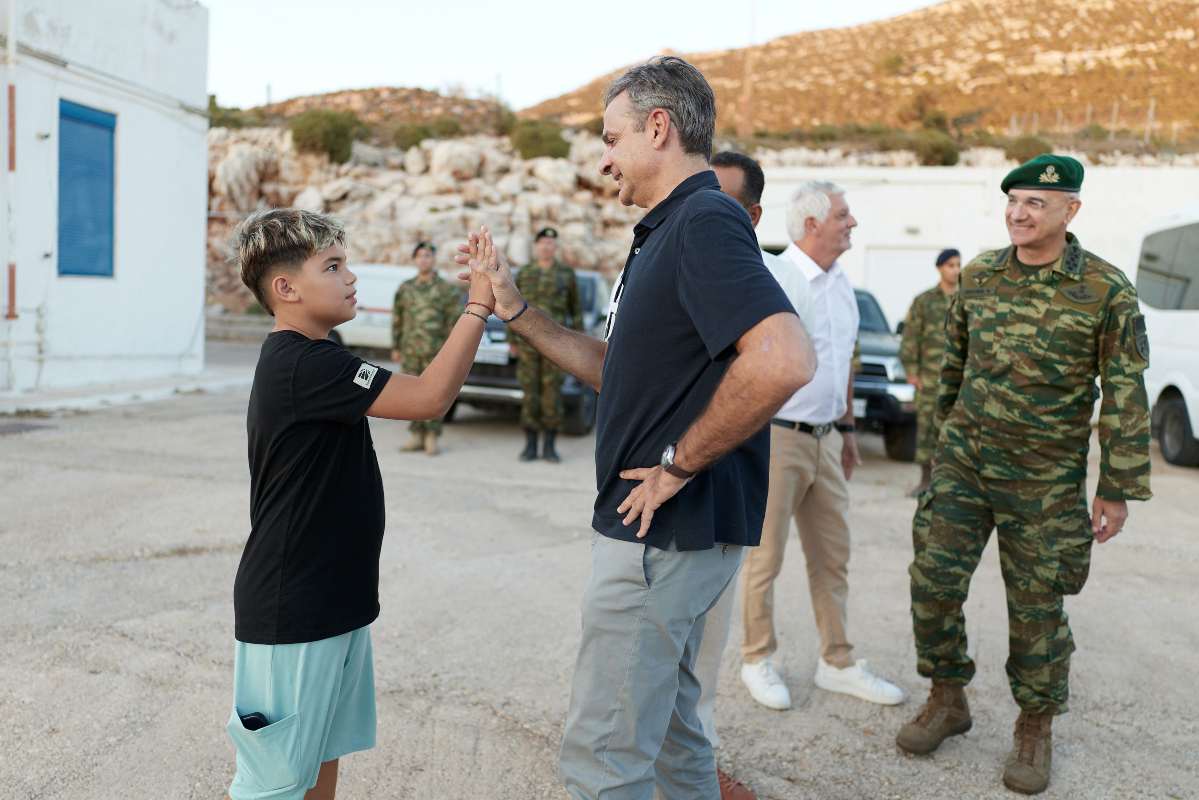
Kyriakos Mitsotakis is visiting Kastellorizo, Greece’s easternmost inhabited frontier, for events marking the island’s 83rd anniversary of liberation. Yet the timing and, above all, the geography give the trip a significance extending far beyond its official agenda.
Kastellorizo sits at the heart of the long-running Greek-Turkish dispute over maritime zones in the Eastern Mediterranean. With the Turkish coast only a few kilometers away, Mitsotakis’ presence is inevitably being interpreted in Ankara as a geopolitical message.
Turkish media: “Perhaps he will hear us better from there”
Part of the Turkish press reacted sharply even before the prime minister’s official program was fully under way.
Turkish newspaper Nefes portrayed the visit as provocative, writing:
“He will visit Kastellorizo — perhaps he will hear us better from there.”
The wording was hardly accidental.
It echoed recent remarks by Turkish President Recep Tayyip Erdoğan, who had invoked the geographical proximity between the Turkish coastal town of Kaş and Kastellorizo to send his own message to Athens.
“If we simply raised our voice from our mainland, from Kaş, Greece would hear us, wouldn’t it?”
Mitsotakis’ presence directly across the water now turns that same geography into a political symbol.
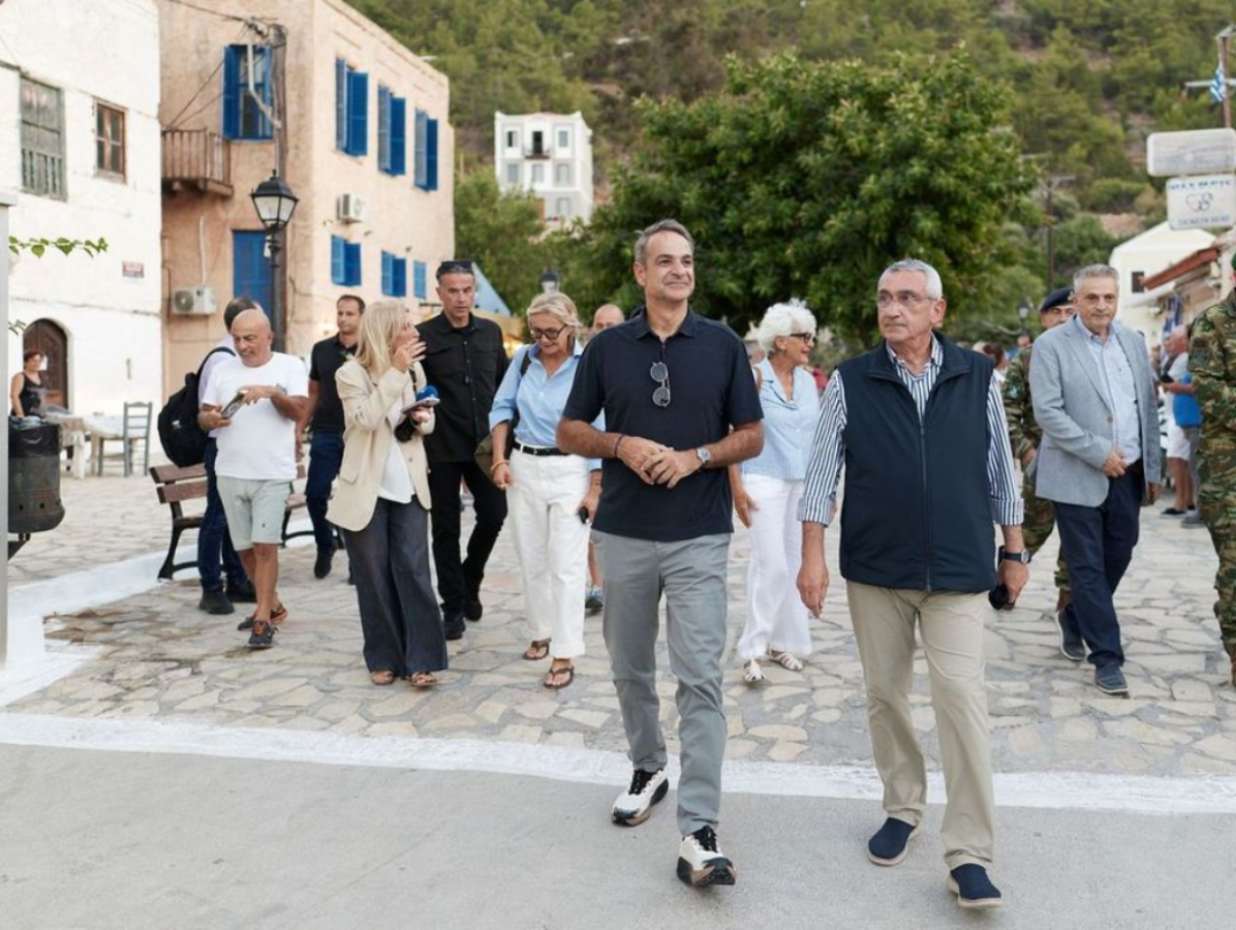
“A message to Turkey from two kilometers away”
Other Turkish outlets have used similarly pointed language.
Some presented the trip as a direct message to Ankara “from two kilometers away,” while Turkish television commentary linked it to Greece’s expanding defense capabilities and the wider deterioration in bilateral rhetoric.
The underlying dispute, however, is much larger than the visit itself.
Why Kastellorizo matters so much
Kastellorizo occupies an outsized position in the strategic map of the Eastern Mediterranean.
Athens maintains that Greek islands generate rights to maritime zones under international law, including the UN Convention on the Law of the Sea. Turkey disputes the extent of the maritime effect that islands such as Kastellorizo should have in delimitation.
This disagreement has major consequences for competing interpretations of continental shelf and Exclusive Economic Zone boundaries.
That is why a tiny island can carry enormous geopolitical weight.
The dispute is not simply about geography. It is about which legal and strategic map will ultimately shape the Eastern Mediterranean.
Maritime parks and the TÜBİTAK MARMARA add to tensions
Mitsotakis’ visit also comes after a new round of friction in the region.
Turkey has promoted its own maritime-park initiative in the Eastern Mediterranean, while Athens views elements of Ankara’s mapping as another attempt to advance Turkish maritime claims at the expense of Greek positions.
At the same time, Turkish NAVTEX notices concerning research activity by the TÜBİTAK MARMARA south of Kastellorizo have triggered Greek counter-notices challenging Turkish jurisdiction.
The result is a familiar pattern: technical notices, research vessels and maps rapidly acquire strategic significance because each side sees them through the broader maritime dispute.
The power cable is becoming geopolitical
A second front is increasingly important: the Great Sea Interconnector linking Greece, Cyprus and ultimately Israel.
The project is designed to end Cyprus’ electricity isolation from the continental European grid, but its planned route has also become entangled in competing Greek and Turkish claims in the Eastern Mediterranean.
Athens’ position is that no third-country permission is required for legitimate cable-laying activity in areas where Turkey does not possess jurisdiction.
Health Minister Adonis Georgiadis summed up that position particularly bluntly in a recent interview:
“Greece does not allow its policy to be determined by others.”
And even more explicitly:
“The cable will be laid. Greece is much stronger than it was eight years ago.”
The message reflects a broader Greek argument: dialogue with Ankara can continue, but it cannot amount to granting Turkey a veto over Greek or European projects.
From “calm waters” to a new stress test
Athens has not formally abandoned its strategy of maintaining dialogue with Turkey.
Greece continues to argue that continental shelf and EEZ delimitation constitute the central bilateral dispute that could ultimately be settled on the basis of international law.
At the same time, the Mitsotakis government rejects negotiations over Greek sovereignty and insists that improved bilateral relations cannot restrict Greece’s defense policy or the exercise of its sovereign rights.
That creates the emerging Greek formula toward Ankara: dialogue without concessions on sovereignty, and “calm waters” without strategic self-restraint.
“The cable will be laid”
The rhetoric surrounding the interconnector illustrates that approach.
Georgiadis recently said:
“The fact that Turkey says something does not mean that it is valid. The answer is no.”
He then delivered an even clearer message:
“The cable will be laid. Greece is much stronger than it was eight years ago — militarily and diplomatically. We will pursue our policy.”
And:
“We do not negotiate our sovereign rights. It is as simple as that.”
Those statements are not themselves part of Mitsotakis’ Kastellorizo visit, but they capture the broader government position against which the trip is being interpreted.
A small island at the center of a much bigger contest
Kastellorizo is tiny on the map, but enormous in the geopolitical equation.
That is precisely why Mitsotakis does not need an inflammatory speech for his visit to send a message.
The image of a Greek prime minister standing at the country’s eastern frontier, directly opposite Turkey, at a moment when maritime zones, NAVTEX notices, energy infrastructure and defense policy are again generating friction, carries its own symbolism.
Athens wants to demonstrate that de-escalation does not mean abstaining from the exercise of sovereignty and sovereign rights.
For Ankara, meanwhile, Kastellorizo remains one of the most sensitive pieces of the Eastern Mediterranean puzzle.
The real contest therefore extends far beyond a prime ministerial trip.
It concerns the rules, borders, infrastructure and balance of power that will shape the Eastern Mediterranean for decades to come.
Source: pagenews.gr
Διαβάστε όλες τις τελευταίες Ειδήσεις από την Ελλάδα και τον Κόσμο