Kalafatis: Greece Targets Exports at 60% of GDP — €3.1bn in Investments and €150m for AI
 ΧΡΟΝΟΣ ΑΝΑΓΝΩΣΗΣ 7 '
Πηγή Φωτογραφίας: Kalafatis: Greece Targets Exports at 60% of GDP — €3.1bn in Investments and €150m for AI



Greece is entering what the government describes as a new phase of economic openness, with exports, industrial production and innovation positioned at the heart of the country’s growth strategy.
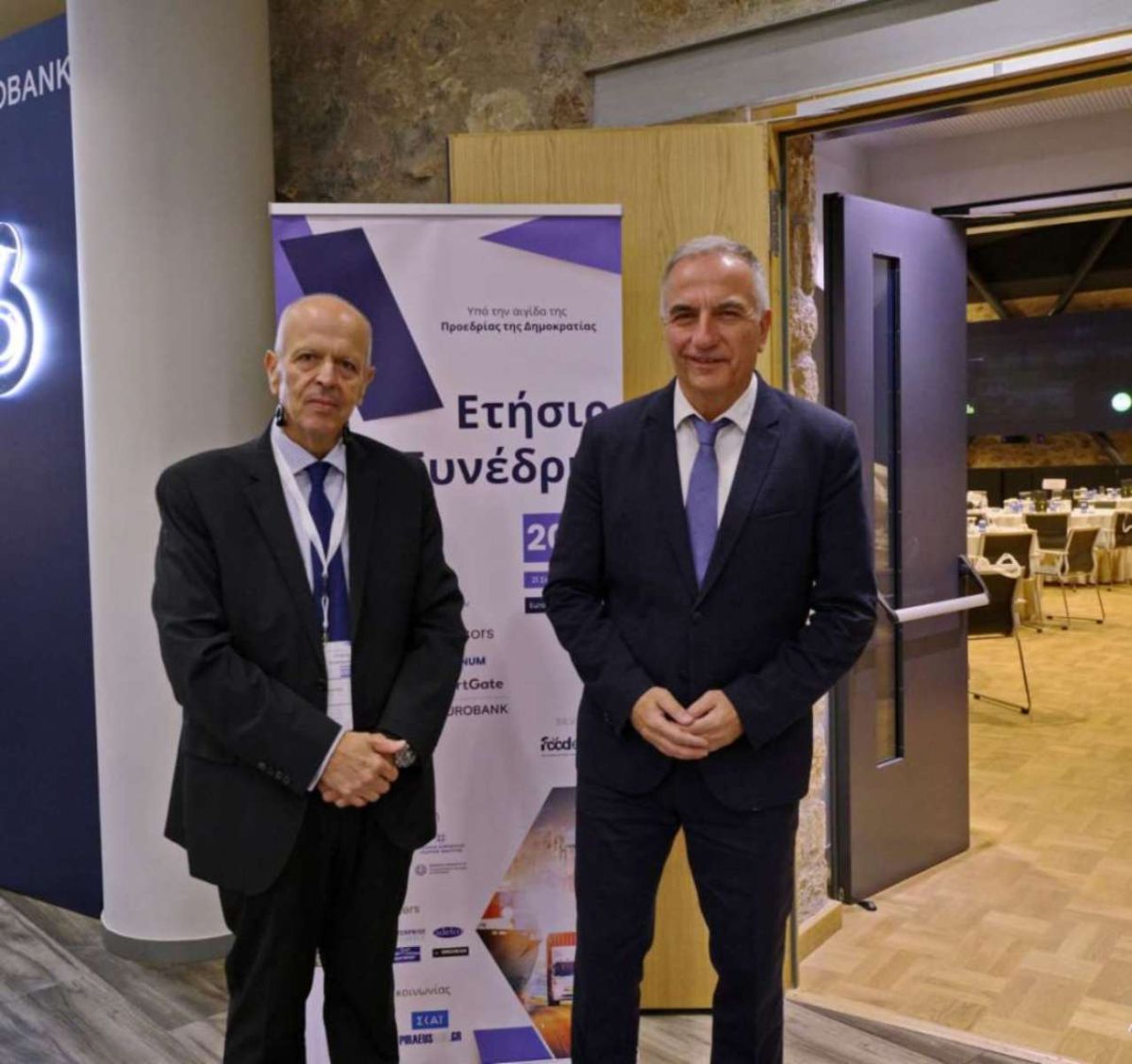
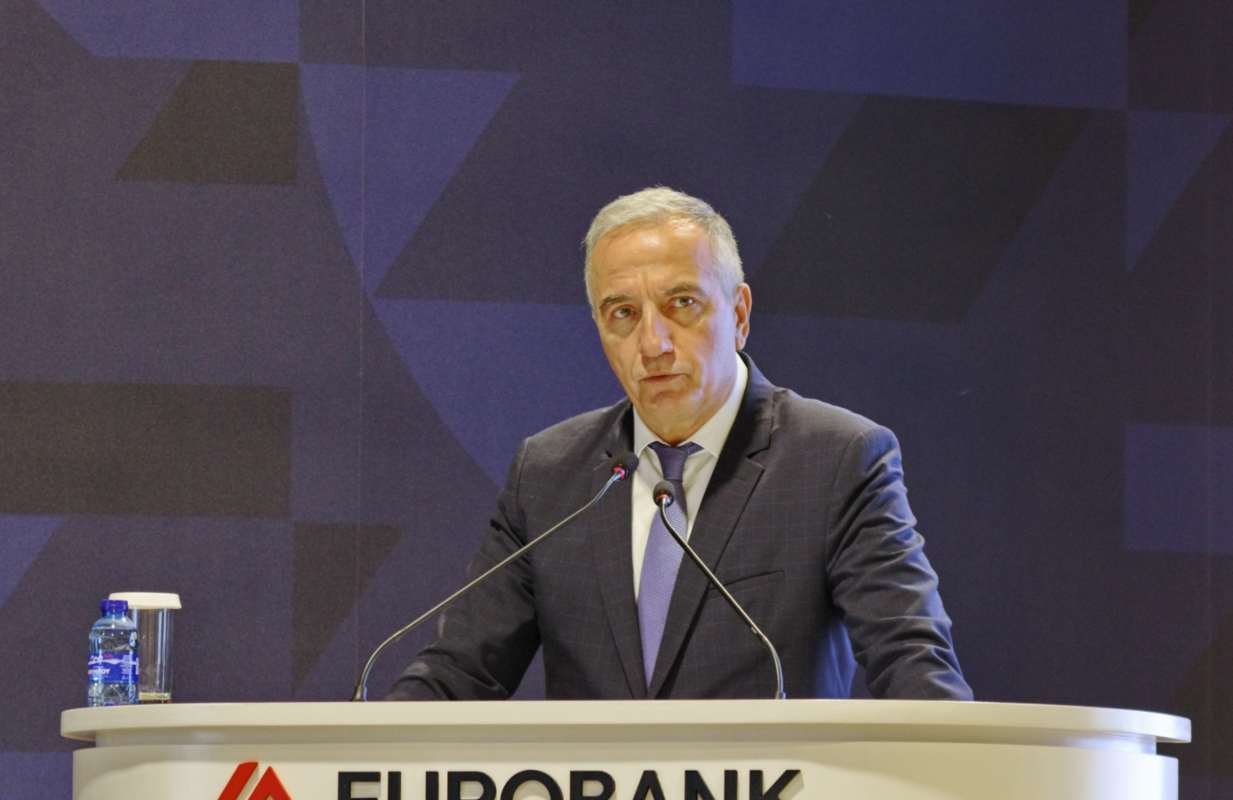
Speaking at the Annual Conference of the Panhellenic Exporters Association, Deputy Development Minister Stavros Kalafatis said the objective is to transform Greece into a more productive, competitive and internationally oriented economy by 2030.
“Greece in 2030 must be a country that produces more efficiently, innovates consistently and confidently claims a stronger position in international markets,” he said.
He added:
“A more productive, more competitive and stronger Greece, creating real opportunities in every part of the country and giving young people the chance to stay, work, create and build their lives here.”
“A New Era for Greek Exports”
Kalafatis said Greek businesses are operating in a radically different international environment, shaped by geopolitical realignments, tariffs, supply-chain disruptions, intense competition and rapid technological change.
“We are entering a new era for Greek outward-looking growth,” he said.
“We are operating in a world that is changing at very high speed, with geopolitical shifts, a new tariff environment, disruptions in supply chains, intense international competition and enormous technological changes — above all Artificial Intelligence.”
He argued that for a country such as Greece, outward-looking growth is no longer simply an export policy but a matter of economic resilience and competitiveness.
From 20% to 42% of GDP — Target: 60%
One of the most significant points in Kalafatis’ speech concerned the rising weight of exports in the Greek economy.
According to the figures he presented, exports accounted for around 20% of GDP before the financial crisis. Today, they stand at 42%, compared with an EU average of 51%.
“We have covered significant ground, but there is still a long road ahead,” he said.
“Our goal is to reach and exceed the European average and move toward 60% of GDP.”
The government’s strategy, he stressed, is based on the view that higher exports require a stronger domestic productive base.
“To export more, we first need to be able to produce more, produce better and produce more efficiently.”
Development Law: Shift From Tourism to Industry
Kalafatis also highlighted what he described as a major change in the philosophy of Greece’s Development Law.
In previous years, he said, around 90% of state support was directed toward tourism. Today, the focus has shifted toward industrial production, manufacturing, large productive investments, innovation, agrifood and regional development.
“We gave priority to manufacturing, major productive investments, innovation, agrifood and the Greek regions,” he said.
The objective is to redirect capital toward sectors that can create more domestic value added and strengthen Greece’s export capacity.
90-Day Investment Evaluations
The deputy minister also emphasized improvements in the speed of investment approvals.
“We committed to evaluating investment plans within 90 days — and we delivered,” Kalafatis said.
He described the timetable as an issue of institutional credibility.
“It is a matter of reliability and trust toward the investor and the market.”
930 Investment Projects Worth €3.1 Billion
Kalafatis said 930 investment projects are currently underway across Greece under the Development Law.
According to the figures presented:
- total investment value stands at €3.1 billion,
- state support amounts to €1.5 billion,
- the projects are expected to create 15,000 new jobs.
The figures underline the government’s effort to link investment incentives with production, employment and regional development.
“Made in Greece” as a Global Quality Brand
Kalafatis also placed particular emphasis on the international positioning of Greek products.
“We want ‘Made in Greece’ to be more than an indication of origin. We want it to become an international mark of reliability, quality and safety,” he said.
He pointed to the food industry as the largest branch of Greek manufacturing, with annual turnover exceeding €26 billion, exports of €7.4 billion and more than 160,000 direct jobs.
For Kalafatis, however, the strategic goal is not simply higher export volumes.
“The big challenge is to export more value,” he said.
That means greater processing and standardisation, stronger certification, higher quality standards and more internationally competitive Greek brands.
€300 Million for Research Infrastructure
Research and innovation form another pillar of the strategy.
Kalafatis argued that innovation only delivers its full economic value when it moves from laboratories into production.
“Research and innovation acquire real value when they pass into production,” he said.
He referred to projects worth more than €300 million aimed at upgrading research infrastructure across Greece, alongside stronger tax incentives for research and development spending.
The government’s objective is to bring universities, research centers and industry closer together so that scientific knowledge can be converted into products, investments, exports and better-paid jobs.
€150 Million Special Scheme for Artificial Intelligence
One of the most significant new announcements concerned Artificial Intelligence.
Kalafatis said the government is moving ahead with a dedicated development scheme worth €150 million for AI and new technologies, with a particular focus on small and medium-sized enterprises.
“We are moving forward with a special €150 million development scheme for Artificial Intelligence and new technologies, with emphasis on SMEs, so that these technologies move into the real economy — into manufacturing, logistics, quality and exports,” he said.
The aim is to prevent AI from remaining concentrated in large technology companies or research environments and instead support its adoption across traditional sectors of the economy.
The Core Bet: Production Before Exports
The broader message from Kalafatis is that Greece’s export strategy cannot rely only on trade promotion.
It requires a stronger industrial base, greater use of technology, more manufacturing capacity and products with higher value added.
The economic target for the coming years is therefore not simply for Greece to sell more abroad.
It is to produce more sophisticated, more competitive and more valuable goods and services that can sustain a stronger presence in international markets.
Source: pagenews.gr
Διαβάστε όλες τις τελευταίες Ειδήσεις από την Ελλάδα και τον Κόσμο