Mitsotakis–Montenegro: “Europe Cannot Do More With Less”
 ΧΡΟΝΟΣ ΑΝΑΓΝΩΣΗΣ 13 '
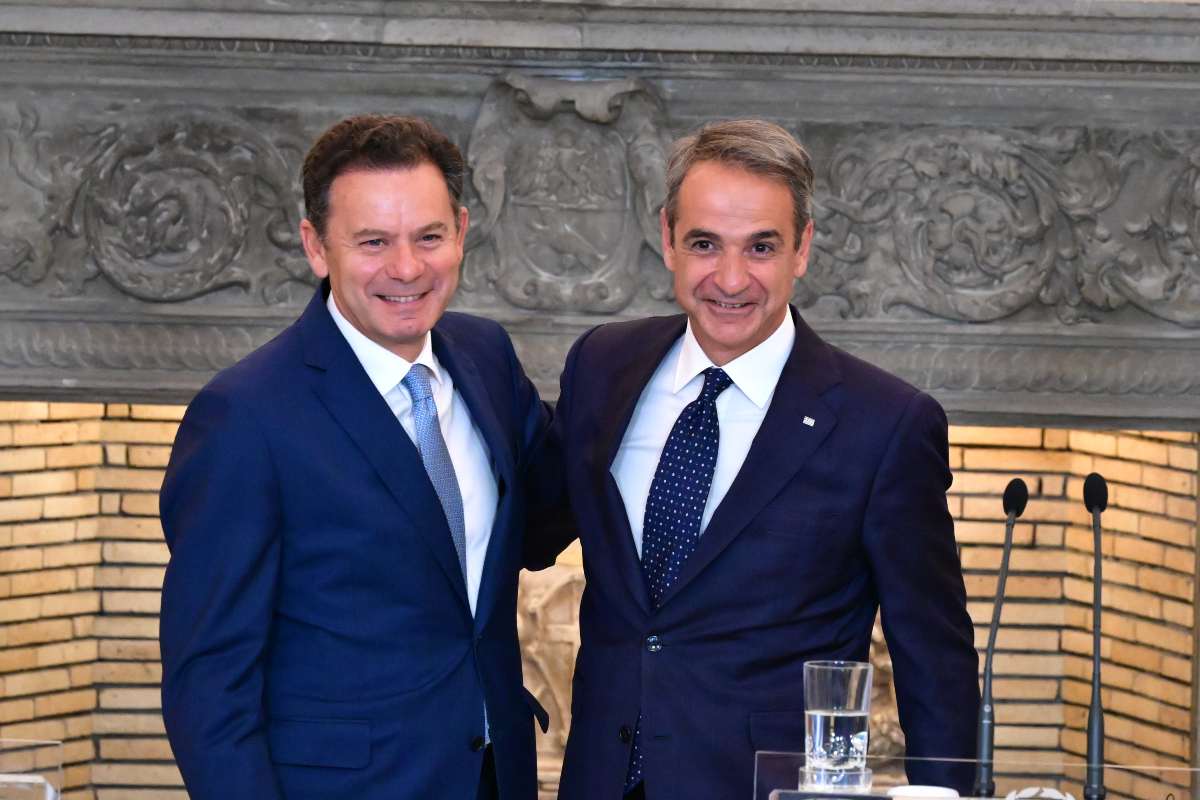
Πηγή Φωτογραφίας: eurokinissi// Mitsotakis–Montenegro: “Europe Cannot Do More With Less”



Athens and Lisbon Confront Europe’s New Reality
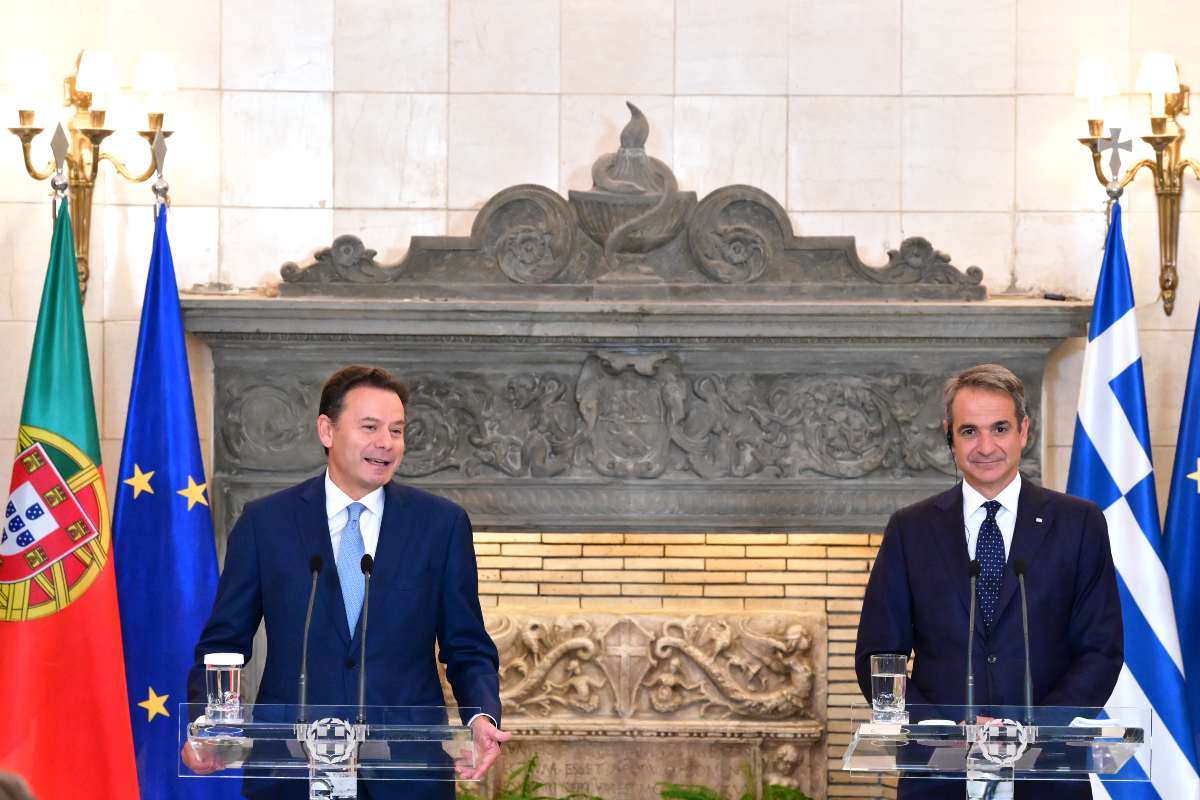
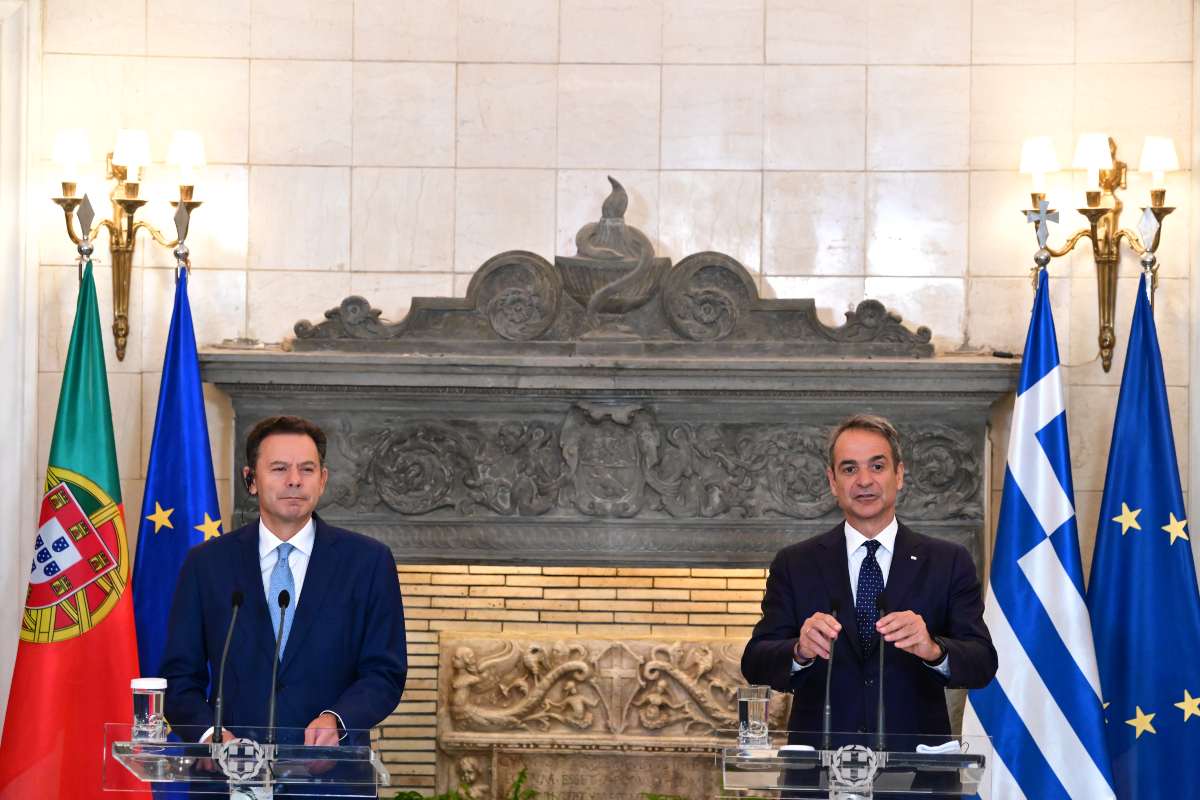
Greek Prime Minister Kyriakos Mitsotakis sent a clear message to Brussels that the European Union cannot finance tomorrow’s challenges with a budget designed for yesterday’s world, following his meeting in Athens with Portuguese Prime Minister Luís Montenegro.
During their joint statements at the Maximos Mansion, the Greek prime minister described a Europe that must simultaneously strengthen its defence, protect its external borders, accelerate the green and digital transitions, finance critical infrastructure and address its competitiveness gap with the United States and Asia.
“Europe cannot do more with less,” Mitsotakis said, summarising the political message behind his call for a bolder approach to the next Multiannual Financial Framework.
His intervention concerns much more than technical negotiations over EU funding. It goes to the heart of the wider debate over whether the European Union possesses the fiscal power required to support its increasingly ambitious geopolitical role.
“We Cannot Move Forward With a Budget Designed for Yesterday’s Needs”
Mitsotakis directly addressed the mismatch between Europe’s new responsibilities and the financial tools currently available to meet them.
The European Union is now expected to invest in:
- common defence and the European defence industry,
- energy security,
- critical infrastructure and networks,
- the digital and green transitions,
- external border protection,
- civil protection,
- technological and industrial competitiveness.
All of these priorities require funding that cannot be secured solely by redistributing existing resources or cutting traditional European policies.
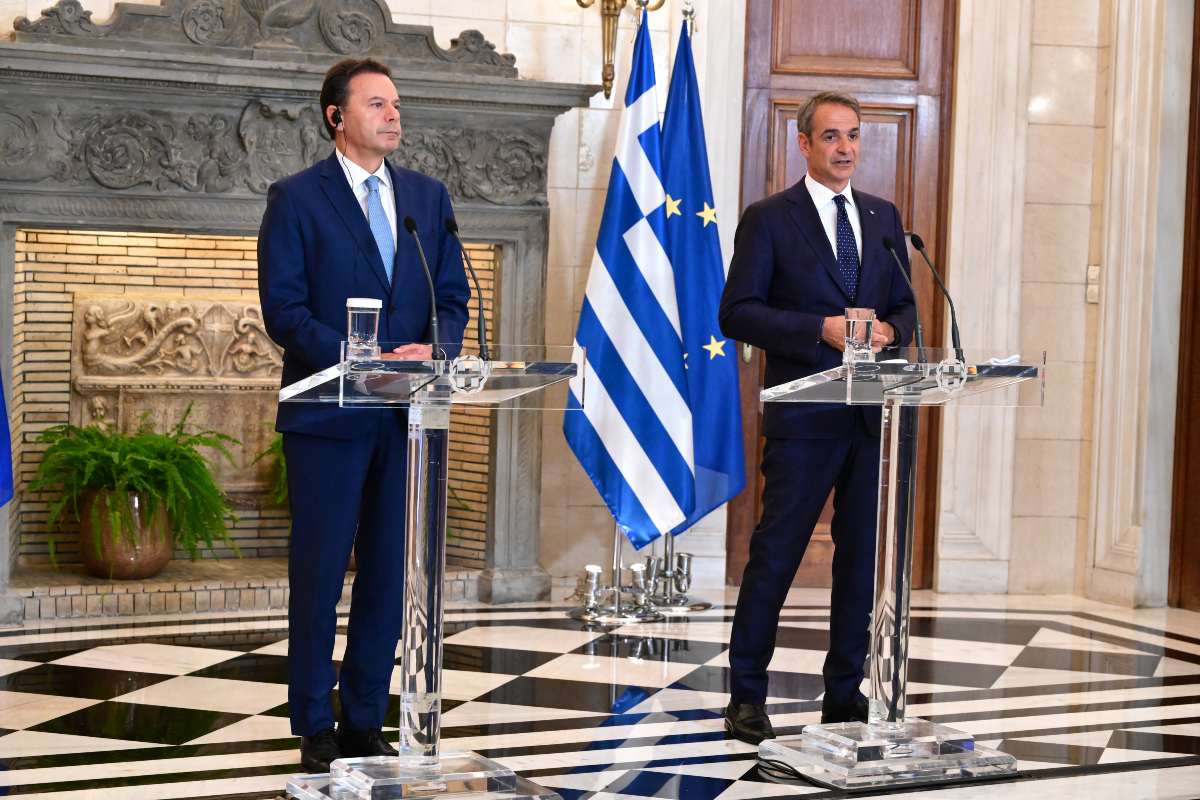
“We cannot move forward with a budget designed for yesterday’s needs. We need a bold approach worthy of our ambitions,” the Greek prime minister said.
Athens argues that the financing of Europe’s new strategic priorities must not come at the expense of Cohesion Policy or the Common Agricultural Policy.
This is a particularly important issue for Greece, Portugal and other southern European states. These programmes are not regarded merely as budgetary lines, but as instruments of convergence, regional development, social stability and support for rural communities.
New Own Resources Instead of Budget Cuts
Mitsotakis also called for progress in the debate over new EU own resources, which would give the European budget greater autonomy and predictability.
The current budgetary architecture depends heavily on national contributions, frequently turning negotiations into a confrontation between so-called net contributors and countries receiving proportionally larger amounts of European funding.
The Greek prime minister challenged this narrow accounting approach. He argued that the economies presented as the largest financial contributors are also among the greatest beneficiaries of the Single Market.
Exports, investment, supply chains and the free movement of capital and services generate major economic benefits that cannot be measured simply by comparing national contributions with grants received.
Athens is therefore promoting a more political understanding of the EU budget: not as a transfer mechanism between states, but as an investment in European public goods that benefit the Union as a whole.
Defence at the Centre of the Greek-Portuguese Agenda
The two prime ministers placed particular emphasis on defence and the potential for new cooperation between the Greek and Portuguese defence industries.
Despite the geographical distance between them, the two countries face common strategic questions. Greece is located on Europe’s and NATO’s eastern flank, while Portugal holds a crucial position in the Atlantic. Both, however, are maritime nations with extensive interests at sea and a growing need to protect ports, shipping routes, energy infrastructure and undersea cables.
Mitsotakis noted that Portugal has made significant progress in the defence industry and said the recent visit of the Greek Defence Minister to Lisbon confirmed the potential for deeper cooperation.
The discussion does not concern arms procurement alone. It also includes joint production, technological cooperation, unmanned systems, maritime surveillance and the strengthening of Europe’s industrial defence base.
Europe Must Assume a Greater Share of Responsibility Within NATO
The meeting took place as NATO continues pressing European allies to shoulder a larger share of the collective defence burden.
Mitsotakis argued that Europe must move towards:
greater investment, increased joint defence production and stronger operational readiness.
Athens maintains that European strategic autonomy is neither directed against NATO nor intended to replace the transatlantic alliance.
The objective is to give Europe a stronger capacity to act, allowing it to defend its interests and engage with the United States from a position of greater credibility and responsibility.
For Greece, which already spends heavily on defence because of its strategic position, the central question is how national investment can contribute to a broader European defence architecture rather than remaining fragmented across separate national programmes.
Article 42.7: From Treaty Language to Operational Reality
A central part of the Greek proposal remains the practical activation of the Mutual Assistance Clause under Article 42.7 of the Treaty on European Union.
The clause states that if an EU member state is the victim of armed aggression, the other member states are obliged to provide aid and assistance by all the means in their power.
Mitsotakis has repeatedly argued that the wording is exceptionally strong, but that the mechanism remains insufficiently developed at the operational level.
Athens wants the European Union to define clearly what solidarity means in practice when a member state comes under attack: how decisions are taken, how forces are coordinated and what military capabilities are made available.
The issue is particularly important for EU countries that are not members of NATO, including Cyprus.
The Greek government therefore seeks to transform Article 42.7 from a broad political declaration into a functioning security mechanism with clear procedures and concrete commitments.
The Middle East and the Red Line in the Strait of Hormuz
The discussion also turned to the crisis in the Middle East and the strategic importance of freedom of navigation.
Mitsotakis made clear that the imposition of any form of transit fee through the Strait of Hormuz would be unacceptable.
For Greece, this position carries major geopolitical and economic weight. The country controls one of the world’s largest merchant fleets and is therefore directly affected by any disruption to vital maritime routes.
The Strait of Hormuz is one of the most important passages for global energy trade. Any attempt by a regional power to impose charges or use the strait as an instrument of political pressure could create a dangerous precedent and undermine the international principle of free navigation.
For Athens, maritime security is not an abstract diplomatic principle. It is directly connected to the cost of energy, freight rates, shipping insurance and inflation across Europe.
Operation ASPIDES and Greece’s Role
The Greek prime minister also stressed that Greece remains actively involved in protecting commercial shipping through the European Union’s Operation ASPIDES in the Red Sea.
The mission has a defensive mandate and is tasked with protecting merchant vessels from attacks in the Red Sea and the surrounding region.
Greece has assumed a central role in the operation, which represents one of the clearest examples of joint European military action in defence of a strategic public good: freedom of navigation.
Athens views ASPIDES as proof that the European Union can act collectively when there is political agreement, a defined mission and the necessary operational capabilities.
The Greek approach links maritime security directly with Europe’s economic security. Any crisis affecting a major shipping corridor can increase transport costs, insurance premiums and energy prices, eventually feeding inflation and placing additional pressure on European households and businesses.
Greece and Portugal: Two Ends of Europe With a Shared Identity
At the beginning of his remarks, Mitsotakis referred to the historic and political ties linking Greece and Portugal.
The two countries stand at opposite ends of Europe—one in the Mediterranean and the other in the Atlantic—but share important characteristics.
They are both:
- countries with strong maritime traditions,
- nations with large diasporas,
- outward-looking economies and societies,
- states that experienced authoritarian rule,
- countries that used European integration to consolidate democracy.
Their participation in the European project helped strengthen the rule of law, political stability and economic convergence.
The accession of Greece, followed by Portugal and Spain, also reinforced the Mediterranean dimension of European integration and gave the European South a stronger role in shaping common policies.
More Scope for Trade and Investment
Although bilateral relations were described as excellent, the two leaders acknowledged that significant room remains for stronger economic and commercial cooperation.
Areas of particular interest include:
- shipping and port infrastructure,
- energy and renewable sources,
- digital technology,
- tourism,
- agri-food production,
- defence and security,
- transport and connectivity.
Greece and Portugal have followed broadly parallel paths in recent years, moving from fiscal adjustment and debt crises towards economic recovery, investment and improved financial stability.
Montenegro congratulated the Greek government and Mitsotakis on Greece’s economic stabilisation, describing the two countries as examples of how cooperation among people, businesses and institutions can produce tangible results.
The statement carried particular political weight because Portugal, like Greece, was at the centre of the European sovereign debt crisis and was forced to implement a difficult adjustment programme.
A Common Front for Cohesion and the Common Agricultural Policy
The meeting also highlighted the possibility of creating a broader alliance of southern European countries ahead of difficult negotiations over the next EU budget.
Athens and Lisbon agree that Europe requires more funding for defence and strategic investment, but should not weaken the policies designed to reduce economic and regional inequalities.
Cohesion Policy finances transport networks, digital infrastructure, environmental projects, education and local development. The Common Agricultural Policy supports agricultural production, food security and the viability of rural communities.
For southern member states, cutting these funds to finance defence would create a false and politically dangerous competition between security and social cohesion.
The Greek position is that Europe needs additional resources, not the transfer of funding from one essential priority to another.
Civil Protection in the Age of Climate Crisis
The two leaders also discussed cooperation in civil protection.
Greece and Portugal have repeatedly faced large-scale wildfires, prolonged heatwaves, drought and extreme weather events.
The climate crisis is no longer treated as a future threat, but as an immediate challenge requiring:
joint planning, aerial firefighting assets, interoperable emergency mechanisms, prevention technology and faster European financing.
Mitsotakis noted that the consequences of climate change are no longer limited to southern Europe, but now affect the entire continent.
This strengthens the argument that civil protection should be treated as a European public good rather than solely as a national responsibility.
The Political Message to Brussels
The Mitsotakis–Montenegro meeting can also be understood as an attempt to build alliances before the next round of difficult European negotiations.
Athens wants to present itself as a country that:
- supports stronger European defence,
- invests in its own deterrent capability,
- defends freedom of navigation,
- participates actively in European missions,
- while also protecting Cohesion Policy and the Common Agricultural Policy.
Portugal has similar interests in preserving development funding, while strengthening its role within the Atlantic pillar of European and NATO security.
The two countries could therefore serve as a bridge between the priorities of southern Europe and the new demands of European defence.
Europe Must Choose Between Ambition and Inertia
Mitsotakis’s central argument is that the European Union cannot continue setting ambitious goals without providing the resources required to achieve them.
Europe cannot simultaneously pursue:
- strategic autonomy,
- energy independence,
- technological sovereignty,
- stronger external borders,
- the green transition,
- support for Ukraine,
- a robust agricultural policy,
- and social convergence,
without increasing the size and capacity of its common budget.
The choice is fundamentally political. Europe must either acquire the tools demanded by its new responsibilities or remain an economic giant with limited strategic power.
The joint appearance of Mitsotakis and Montenegro sent a broader message: southern Europe is not merely seeking more funding for its traditional priorities. It wants a role in shaping a new European architecture in which defence, competitiveness, cohesion and social stability are treated not as competing goals, but as interconnected foundations of European power.
A budget designed for the stability of the previous era is no longer sufficient for a Europe confronting war, energy insecurity, climate disruption and a renewed global contest for power.
Διαβάστε όλες τις τελευταίες Ειδήσεις από την Ελλάδα και τον Κόσμο