Vatican Accuses EU of Double Standards on War, Calls for Rethink of ‘Just War’ Doctrine
 ΧΡΟΝΟΣ ΑΝΑΓΝΩΣΗΣ 5 '
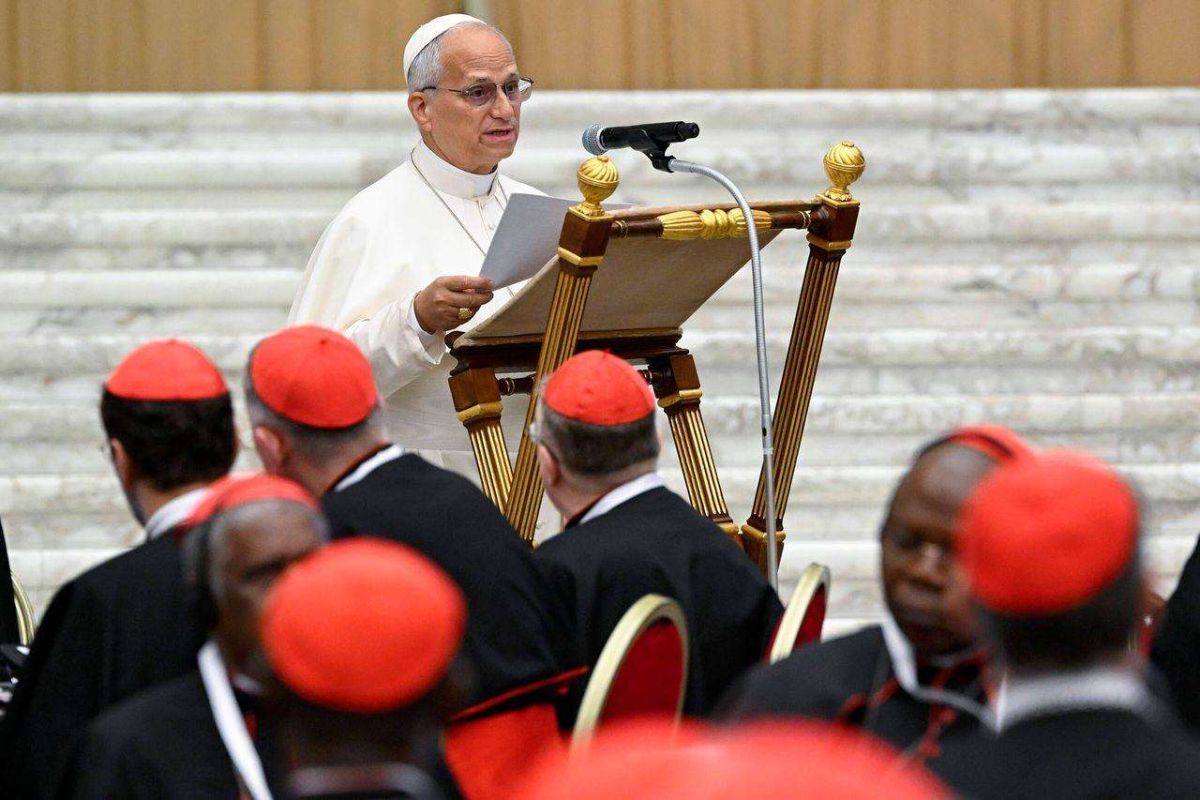
Πηγή Φωτογραφίας: Pope Leo XIV opens the Extraordinary Consistory at the Paul VI Hall in Vatican City on June 26, 2026. | Vatical pool photo by Simone Risoluti via Vatican Media/Getty Images



In one of its strongest critiques of Western foreign policy in recent years, the Vatican has accused the European Union of applying international law selectively, condemning some military interventions while overlooking others based on political convenience rather than universal principles.
The remarks came during a closed-door conference of the world’s cardinals convened by Pope Leo XIV to reassess the Catholic Church’s traditional doctrine of “just war” amid a rapidly changing global security landscape marked by conflicts in Ukraine, the Middle East and beyond.
A Direct Challenge to Europe’s Foreign Policy
Opening the discussions, Cardinal Víctor Manuel Fernández, Prefect of the Dicastery for the Doctrine of the Faith, argued that governments increasingly invoke legal and moral principles only when they align with strategic interests.
“If a country is considered an enemy, it is condemned as undemocratic and sanctioned. But if it is an ally, the lack of freedom of expression, human rights or democracy is often ignored.”
Although he did not name specific countries, the statement was widely interpreted as criticism of how Western governments respond differently to international conflicts depending on geopolitical alliances.
Fernández then delivered an unusually direct criticism of the European Union.
“The European Union imposes economic sanctions on one country while providing financial assistance and weapons to another, yet fails to respond similarly to other, even more devastating invasions with catastrophic consequences for entire populations.”
According to the Vatican’s doctrinal chief, these contradictions reveal that foreign policy decisions are increasingly driven by political and economic interests rather than by consistent legal or ethical standards.
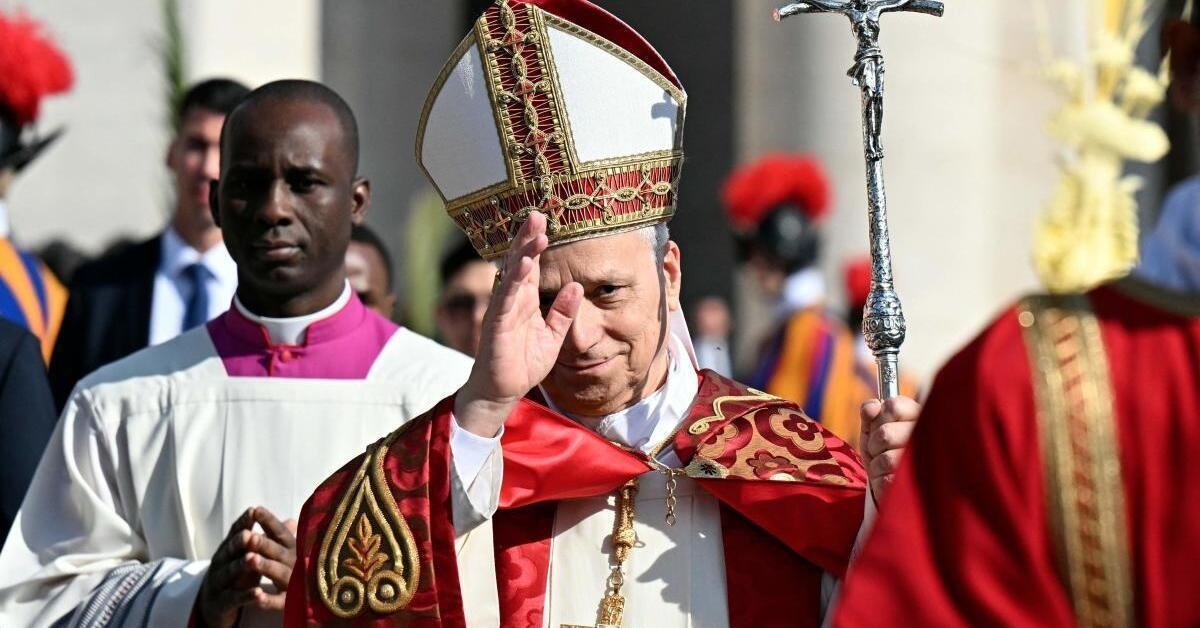
“There is no longer a real and stable framework of truth and values.”
Pope Leo XIV Reopens the Debate on ‘Just War’
The conference reflects Pope Leo XIV’s broader effort to revisit one of Catholicism’s oldest theological concepts—the doctrine of just war.
Developed by St. Augustine and later refined by St. Thomas Aquinas, the doctrine has historically sought to define the moral conditions under which military force could be considered legitimate.
However, Pope Leo argues that modern governments increasingly use the concept not to restrain warfare but to justify it.
For the Vatican, contemporary conflicts—characterized by hybrid warfare, drones, cyber operations and preemptive strikes—require a fresh theological and ethical assessment.
Growing Disagreement with Washington
The Pope’s position has already brought him into disagreement with U.S. Vice President JD Vance, who has defended a broader interpretation of legitimate self-defense, particularly following recent U.S. and Israeli military operations against Iran.
Pope Leo, by contrast, has questioned whether such operations can automatically satisfy the moral requirements established by Catholic teaching.
The disagreement highlights a wider philosophical divide between the Vatican’s emphasis on restraint and parts of the American conservative establishment’s more expansive view of defensive military action.
Legitimate Self-Defense Under Scrutiny
Cardinal Fernández warned that governments across the world are stretching the concept of self-defense beyond its original meaning.
He cited examples ranging from Russia’s invasion of Ukraine to military operations in the Middle East, arguing that multiple states now invoke self-defense to justify offensive actions.
“The doctrine of just war is itself manipulated by some to legitimize even the most unjust wars.”
He called for interpreting legitimate self-defense “in the strictest possible sense,” rejecting the increasingly common logic of preventive warfare.
Beyond Theology: A Geopolitical Statement
Although rooted in Catholic doctrine, the Vatican’s intervention carries significant geopolitical implications.
It raises broader questions about the credibility of the international rules-based order and whether major powers apply international law consistently or selectively.
The criticism resonates with growing debates over sanctions, military aid, humanitarian intervention and the perceived inconsistency of Western responses to conflicts across different regions.
By questioning Europe’s approach, the Vatican is positioning itself as an independent moral voice willing to challenge both allies and adversaries when universal principles are compromised.
The Church’s Expanding Global Role
Pope Leo XIV appears determined to restore the Holy See as a more active participant in global diplomacy.
Rather than limiting itself to spiritual guidance, the Vatican is increasingly engaging in debates over international law, conflict prevention and the ethical limits of military power.
The discussions in Rome suggest that the Church’s teaching on war and peace may soon undergo its most significant reassessment in decades.
In an era marked by geopolitical fragmentation and growing great-power competition, the Vatican is sending a clear message: the legitimacy of military action cannot depend solely on political alliances, but must be judged according to consistent moral and legal principles.
Source: pagenews.gr
Διαβάστε όλες τις τελευταίες Ειδήσεις από την Ελλάδα και τον Κόσμο