Rosatom under fire: Nuclear safety allegations in Egypt send shockwaves through Europe
 ΧΡΟΝΟΣ ΑΝΑΓΝΩΣΗΣ 9 '
Πηγή Φωτογραφίας: AP Photo//Rosatom under fire: Nuclear safety allegations in Egypt send shockwaves through Europe



A new controversy surrounding Russia’s state nuclear giant Rosatom is reverberating far beyond Egypt, reaching directly into the European Union and reopening one of Brussels’ most politically sensitive energy debates: how far can Europe continue cooperating with Moscow in the nuclear sector?
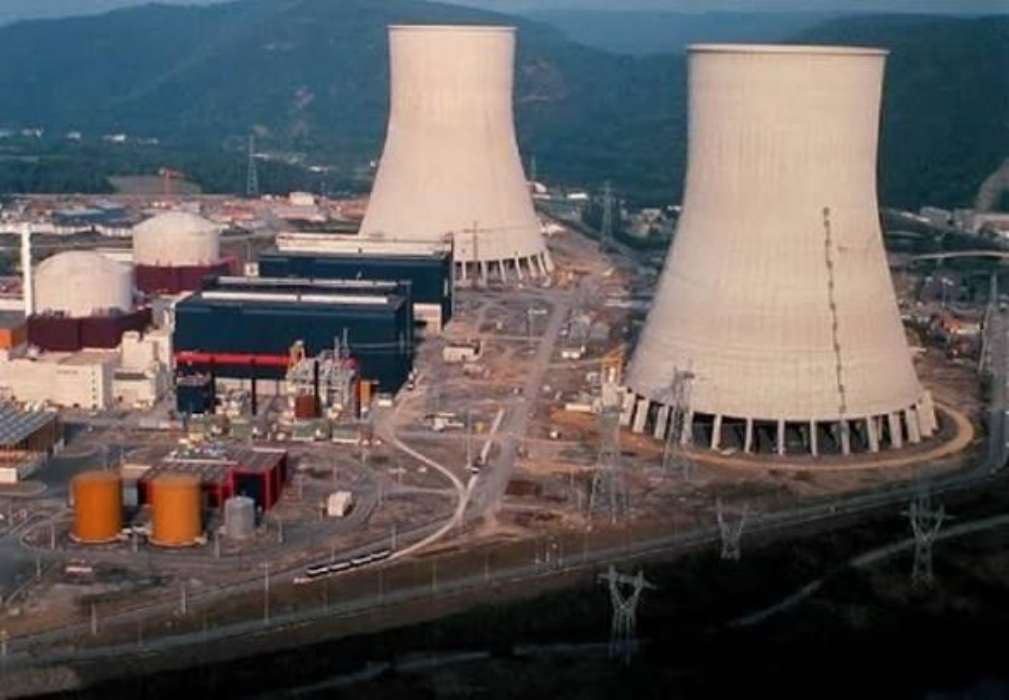
According to an investigation by POLITICO, internal documents concerning the construction of Egypt’s El Dabaa nuclear power plant contain allegations of construction defects, engineering shortcomings, delays and violations of nuclear-safety culture. The political significance for Europe is considerable because the Egyptian project uses the VVER-1200 reactor technology also planned for Hungary’s Paks II nuclear expansion.
The allegations have been strongly challenged by Egyptian nuclear authorities, which insist that El Dabaa is being built under rigorous national and international oversight and that no identified issue currently poses a threat to the plant’s safety.
The result is no longer merely a technical dispute over a construction site on Egypt’s Mediterranean coast. It has become a geopolitical argument over Rosatom, Russia’s remaining nuclear footprint in Europe and the strategic dependencies the EU has struggled to unwind since Moscow’s confrontation with the West intensified.
The confidential letter and the charge of “deliberate negligence”
At the heart of the controversy is reportedly a confidential letter dated June 4, sent by Egypt’s Nuclear Power Plants Authority to a Rosatom executive.
According to accounts of the documents reviewed by POLITICO, Egyptian officials identified “defects” affecting several reactor units and raised concerns about violations of “nuclear safety culture.” The documents also reportedly used the particularly serious expression “deliberate negligence” in reference to the conduct of an official involved in the project.
Reported problems included defects involving concrete works and reactor structures, while internal Rosatom material was also said to point to engineering and project-management difficulties.
One draft internal audit reportedly warned that the preliminary timetable for the first reactor could slip by around 18 months — from September 2028 to March 2030.
The allegations went beyond engineering.
Documents cited in subsequent reporting referred to alleged security and workplace violations, including unauthorized access and photography at the construction site.
These claims are particularly sensitive because nuclear safety depends not only on the final reactor design but on what the industry calls a “safety culture” — the procedures, supervision, documentation and institutional behavior governing every stage of construction and operation.
Egypt hits back: “Highest international safety standards”
Cairo has responded forcefully.
Egypt’s Nuclear and Radiological Regulatory Authority, ENRRA, said on August 18 that El Dabaa is being implemented according to the highest internationally recognized nuclear safety and security standards.
The regulator stressed that construction is subject to daily and periodic inspections, including a resident-inspector system, and said technical non-conformities are identified, monitored and corrected before work is approved.
Egypt’s Nuclear Power Plants Authority went further, rejecting the media allegations as inaccurate and lacking technical context.
According to the NPPA, engineering observations and concrete defects can arise during a project of this scale but are handled through formal non-conformance and corrective-action procedures, with subsequent testing before approval.
The authority says roughly 25,000 specialists are involved in El Dabaa, which it describes as the world’s largest nuclear construction project currently under way.
Cairo also points to international oversight. ENRRA said an International Atomic Energy Agency review conducted in June 2026 confirmed that Egypt has a comprehensive regulatory framework and strong professional capabilities.
That distinction is critical: the existence of construction defects is not itself proof that an operating nuclear reactor is unsafe, particularly when defects are discovered during construction and corrected under regulatory supervision.
And nuclear material has not yet been introduced at El Dabaa.
The numbers behind El Dabaa
The scale of the project explains why the controversy matters.
- 4 Russian-designed nuclear reactors
- VVER-1200 Generation III+ technology
- Approximately $30 billion estimated project value
- Around $25 billion financed through a Russian loan
- Approximately 25,000 specialists involved, according to Egypt
- 4 units currently under construction
- $2.25 billion contract awarded to South Korea’s KHNP for buildings and components
- Rosatom is expected to supply nuclear fuel throughout the plant’s operating life and provide operational and maintenance support during its first decade.
This is therefore much more than another Russian export contract.
El Dabaa represents one of Moscow’s largest strategic infrastructure projects in the Middle East and Africa.
Why Hungary suddenly enters the picture
The European dimension comes through Paks II.
Hungary is expanding its Paks nuclear facility with two new Russian-designed reactors, with Rosatom at the heart of the project.
And the technological connection is precisely what makes the Egyptian allegations politically explosive.
El Dabaa and Paks II are based on the same VVER-1200 reactor family.
That does not mean that an alleged construction problem in Egypt automatically exists in Hungary. Construction quality, contractors, regulatory supervision and site conditions differ.
But politically, the question is unavoidable:
If serious project-management or safety-culture deficiencies occurred at one flagship Rosatom construction site, should European regulators subject another Rosatom project to additional scrutiny?
That question is particularly uncomfortable for Budapest because nuclear cooperation remains one of the strongest surviving strategic links between Hungary and Russia.
Ukraine seizes the opportunity: Sanction Rosatom
Kyiv reacted quickly.
Ukrainian Foreign Minister Andrii Sybiha used the revelations to renew calls for European sanctions against Rosatom.
“Rosatom is not just another energy company — it is the instrument of Russia’s ambition to secure a global monopoly in nuclear energy,” Sybiha said.
He argued that the allegations provide additional evidence that the Russian company is “not a reliable partner” and called on EU governments to reopen the debate over sanctions.
“No state should be doing nuclear business with a company complicit in war crimes,” the Ukrainian foreign minister added.
Kyiv’s intervention turns an engineering controversy into a direct geopolitical challenge for Brussels.
Rosatom’s strategic power goes far beyond electricity
Rosatom occupies a peculiar position in Russia’s international influence architecture.
Unlike oil or gas, nuclear cooperation can create relationships lasting several decades.
Building a reactor is only the beginning.
The supplier can remain involved through fuel deliveries, maintenance, spare parts, technical expertise, training, waste management and future modernization.
El Dabaa illustrates this model particularly clearly: Rosatom is expected not only to build the plant but also to supply its fuel and assist with operation and maintenance.
That gives Moscow something oil exports cannot easily provide:
institutional influence embedded inside another country’s critical infrastructure.
The EU’s uncomfortable Russian nuclear dependency
This explains why nuclear energy remains one of the most difficult elements of Europe’s effort to reduce its dependence on Russia.
Oil and pipeline gas can — at substantial economic cost — be replaced by alternative suppliers.
Nuclear supply chains are harder to change.
Reactors have specific fuel requirements, licensing regimes are extremely demanding, and switching suppliers involves extensive technical and regulatory certification.
Hungary, meanwhile, has consistently defended its nuclear relationship with Russia as a matter of national energy security.
The El Dabaa controversy therefore lands directly in the middle of a much larger European dispute:
Should Russian nuclear cooperation be treated as ordinary energy commerce — or as a strategic-security vulnerability?
Rosatom vs. its critics: What we actually know
The evidence needs to be separated carefully from the political battle surrounding it.
The reporting points to internal warnings about defects, delays and alleged safety-culture failures.
Rosatom and Egyptian authorities reject the suggestion that these demonstrate that El Dabaa is unsafe.
Egypt’s regulator says corrective mechanisms are functioning precisely as nuclear regulation requires and that it has identified no threat to the safety of the plant.
The competing claims therefore create two very different interpretations.
Critics see the documents as evidence that Rosatom’s construction and management practices deserve much greater scrutiny.
Cairo and Rosatom argue that the reports take routine construction non-conformities out of their technical context and transform them into a political narrative.
What cannot easily be dismissed, however, is the European consequence.
From an Egyptian construction site to Brussels
The story began at El Dabaa.
But its political destination may ultimately be Brussels and Budapest.
For governments already demanding a harder European line toward Moscow, the allegations offer another argument for extending economic pressure into the nuclear sector.
For Hungary and other governments that insist nuclear energy must remain insulated from geopolitical confrontation, they create another reason to defend that position.
And for European nuclear regulators, there is a separate issue that should remain distinct from politics: whether information emerging from Egypt warrants closer technical scrutiny of Russian-built projects elsewhere.
That is where the controversy becomes particularly consequential.
The battle over Rosatom is no longer simply about who builds Europe’s reactors. It is about whether nuclear technology has become another front in the geopolitical separation between Russia and the West.
Source: POLITICO investigation, Egyptian Nuclear and Radiological Regulatory Authority,
Source: pagenews.gr
Διαβάστε όλες τις τελευταίες Ειδήσεις από την Ελλάδα και τον Κόσμο