Europe Divided Over Putin:Nordic Leaders Break the Diplomatic Silence as Moscow Refuses Compromise on Donbas
 ΧΡΟΝΟΣ ΑΝΑΓΝΩΣΗΣ 13 '
Πηγή Φωτογραφίας: AP Photo//Europe Divided Over Putin: Nordic Leaders Break the Diplomatic Silence as Moscow Refuses to Compromise on Donbas



A potentially significant diplomatic shift is emerging in Northern Europe, exposing deepening differences over how European governments should engage with Moscow as efforts to end the war in Ukraine intensify.
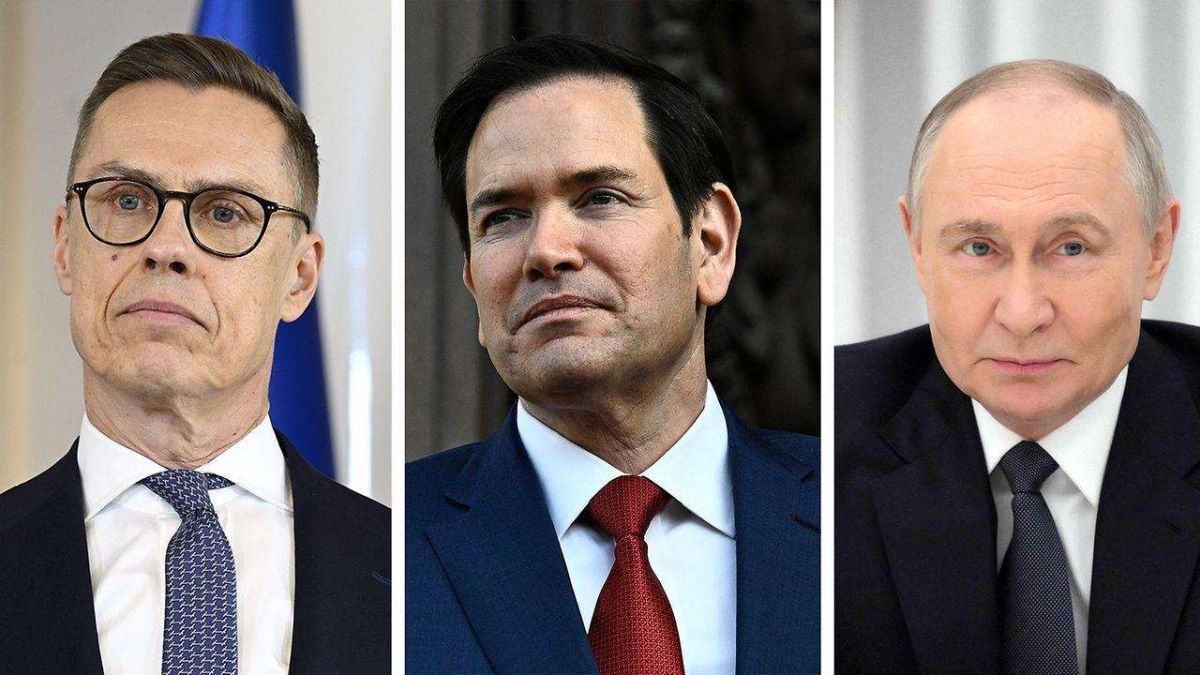
Finnish President Alexander Stubb and Norwegian Prime Minister Jonas Gahr Støre held direct telephone talks with Russian President Vladimir Putin on Tuesday, October 27, reopening a channel of communication that most European leaders have largely avoided since Russia launched its full-scale invasion of Ukraine in February 2022.
The conversation was confirmed by the Finnish presidency and Kremlin spokesman Dmitry Peskov, according to Russia’s TASS news agency.
The significance extends beyond the telephone call itself.
Two NATO member states, both directly exposed to the security consequences of Russia’s confrontation with the West, have chosen to engage Putin at a moment when European capitals increasingly fear being marginalized in negotiations led by Washington.
The initiative has also revealed disagreements within Europe, with Danish Prime Minister Mette Frederiksen publicly criticizing the move and warning against fragmented diplomatic efforts.
Meanwhile, the Kremlin has offered no indication that Moscow is prepared to abandon its fundamental demands over Ukrainian territory.
Stubb: “Ending the War Requires Direct Talks”
The Finnish president defended the decision to speak with Putin, arguing that countries geographically close to Russia have a direct interest in shaping the outcome of the conflict.
“The discussion was frank and substantive. We are neighboring countries of Russia. The outcome of this war will have a direct impact on us and on wider European security. Ending the war requires direct talks,” Stubb said in a statement.
His remarks reflect a growing strategic dilemma for European governments.
For more than four years, much of Europe has sought to isolate Moscow diplomatically while supporting Ukraine through military assistance, financial aid and economic sanctions.
Yet the continuation of the war, combined with renewed US-Russian diplomatic engagement, has raised questions about whether refusing direct contact with Putin risks diminishing Europe’s influence over any eventual settlement.
For Finland, which shares a lengthy land border with Russia, the outcome of the war has immediate national security implications.
Norway also has direct strategic interests in the High North, where regional security, military activity and relations with Russia remain closely intertwined.
Støre emphasized the devastating human consequences of the conflict.
“The war comes at an enormous cost in human lives and material destruction. The suffering and devastation will affect generations. During the telephone conversation, we stressed the importance of de-escalation,” the Norwegian prime minister said.
Both leaders emphasized that their countries’ longstanding support for Ukraine would continue.
Their initiative, they insisted, should not be interpreted as a weakening of their commitment to Kyiv.
Zelenskyy Briefed as Kyiv Seeks to Protect Its Position
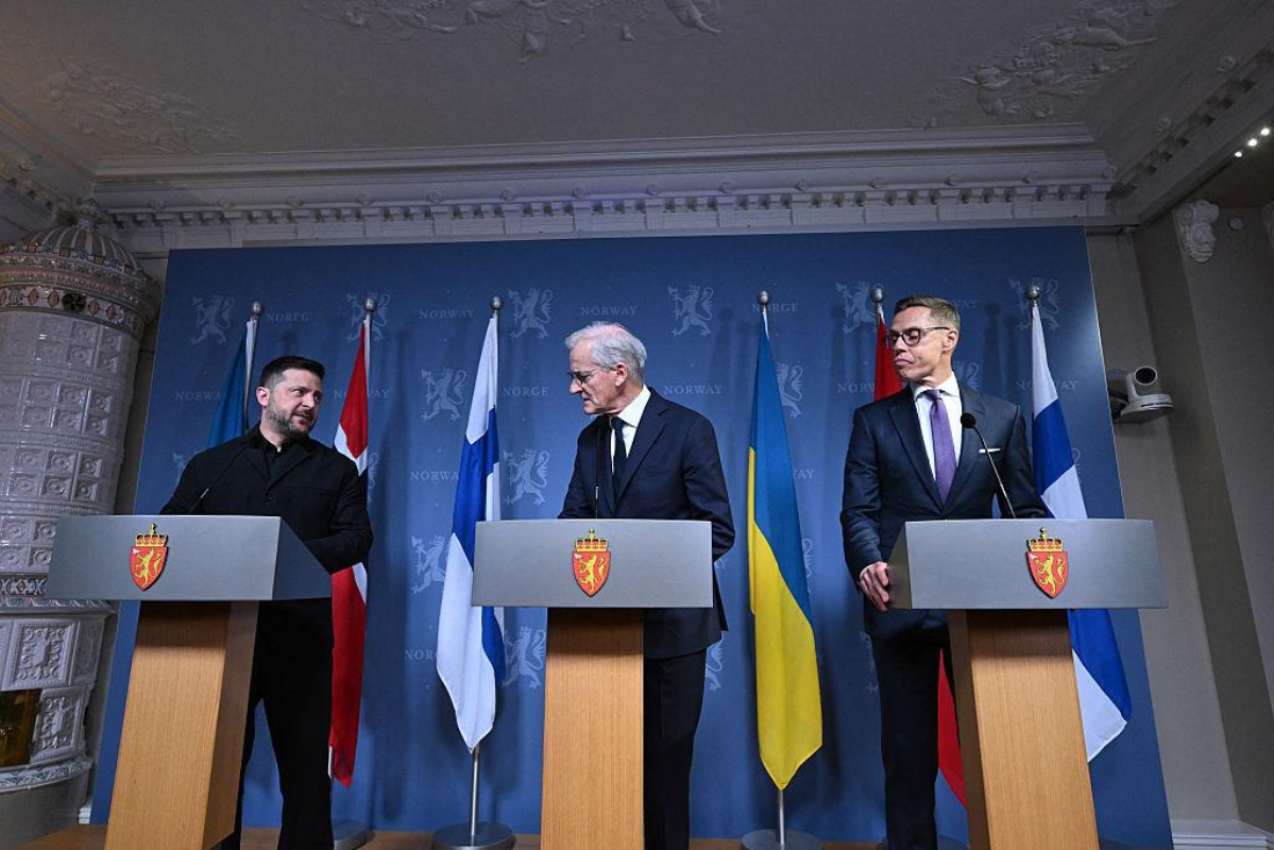
Ukrainian President Volodymyr Zelenskyy spoke with Stubb and Støre following their conversation with Putin, according to an adviser to the Ukrainian leader.
The communication is diplomatically significant.
Kyiv has consistently maintained that no agreement determining Ukraine’s future should be negotiated without Ukrainian participation.
The Finnish-Norwegian initiative therefore raises a delicate question: can European governments reopen direct dialogue with Moscow without undermining Ukraine’s negotiating position?
The subsequent briefing of Zelenskyy suggests an effort to maintain transparency and avoid creating the impression of a separate diplomatic track operating behind Kyiv’s back.
However, the fact that Zelenskyy was informed does not establish that Ukraine had previously approved the initiative or endorsed any specific negotiating framework.
For Kyiv, the central challenge remains ensuring that renewed diplomatic activity does not translate into pressure to accept territorial concessions.
Kremlin Refuses to Retreat From Its Demands
Despite the reopening of direct communication, the Kremlin’s initial response offered little evidence of movement toward compromise.
Moscow reiterated that any peace agreement must fully reflect what it describes as Russia’s legitimate security interests.
“A just and lasting peace is possible only if the legitimate interests of the Russian Federation are taken fully and unconditionally into account,” the Kremlin said.
The Russian statement also criticized Western governments for their continued support of Ukraine.
“Reference was made to the confrontational policies of EU and NATO countries, which contribute to prolonging hostilities,” it added.
These remarks underline the fundamental disagreement between Moscow and European governments over the causes of the war and the conditions required for a settlement.
Russia continues to frame the conflict within a broader confrontation with NATO and the Western security order.
European governments, meanwhile, overwhelmingly regard Russia’s invasion as a violation of Ukraine’s sovereignty and internationally recognized borders.
The difference is not merely rhetorical.
It directly affects negotiations over territorial control, security guarantees, sanctions and the future military alignment of Ukraine.

Donbas Remains Putin’s Red Line
The most significant obstacle to a negotiated settlement remains the territorial question.
According to a source close to the Kremlin cited by Reuters, Putin told the Finnish and Norwegian leaders that Russia would not compromise on its objective of controlling the entirety of Ukraine’s Donbas region.
The European leaders responded by emphasizing the need for a “just” peace, the source said.
The reported exchange illustrates the distance between the competing positions.
For Moscow, territorial control remains central to its strategic objectives.
For Ukraine, accepting the permanent loss of territory under military pressure would carry profound consequences for national sovereignty, domestic political stability and future security.
European governments have generally supported the principle that borders should not be changed through force.
Consequently, renewed dialogue does not necessarily indicate progress toward an agreement.
Indeed, the Kremlin’s reported insistence on its Donbas demands suggests that the most difficult issues remain unresolved.
Denmark Pushes Back: “Europe Should Remain United”
The Nordic diplomatic initiative immediately exposed divisions among European leaders.
Danish Prime Minister Mette Frederiksen criticized the decision by Finland and Norway to contact Putin, questioning whether individual diplomatic initiatives could weaken Europe’s collective position.
“I think Europe should remain united rather than acting individually,” Frederiksen told Danish broadcaster DR.
She added that she saw no evidence that Russia genuinely wanted peace.
Her intervention highlights two competing approaches to European diplomacy.
One argues that direct engagement with Moscow is necessary if Europe wants to influence the terms of an eventual settlement.
The other warns that separate national initiatives risk fragmenting the European position and providing the Kremlin with opportunities to exploit differences among Western governments.
Stubb and Støre stressed that they had spoken in their national capacities, not as representatives of Europe as a whole.
That distinction is important.
Neither leader was acting under a collective European negotiating mandate.
The episode therefore raises broader questions about who has the authority to represent European security interests in discussions with Moscow.
The Trump Factor: Is Europe Being Sidelined?
Behind the Nordic initiative lies an increasingly urgent strategic concern.
The United States, under President Donald Trump, has assumed a central role in diplomatic efforts involving Russia, while many European governments remain outside direct negotiations with Putin.
For years, limiting high-level contact with Moscow was part of a broader Western strategy intended to impose diplomatic and economic costs on Russia following its invasion of Ukraine.
But Washington’s willingness to engage the Kremlin has changed the diplomatic environment.
European leaders now face the possibility that decisions affecting the continent’s security architecture could emerge from US-Russian discussions in which European governments have limited influence.
Those concerns have intensified following reported agreements this month involving Russian diesel supplies to the United States and the easing of certain American sanctions on Russia.
Trump’s public comments about Ukraine’s political leadership have also fueled anxiety in European capitals over the direction of Washington’s approach.
The central question is whether Europe can develop a coherent diplomatic strategy of its own or whether it will ultimately be forced to respond to arrangements negotiated primarily between Washington and Moscow.
For countries such as Finland and Norway, direct communication with Putin may represent an attempt to avoid that outcome.
For Denmark and other skeptical governments, however, unilateral diplomacy could make Europe less influential rather than more.
The Oslo Connection and Steve Witkoff’s Diplomatic Role
The telephone conversation did not take place in isolation.
Last week, Stubb and Støre met US special envoy Steve Witkoff and Ukrainian President Volodymyr Zelenskyy in Oslo.
The meeting took place one day before Witkoff held talks with Putin in St. Petersburg.
The sequence points to an increasingly active diplomatic environment involving Washington, Kyiv, Moscow and several European capitals.
It also raises questions about whether the Nordic initiative forms part of a broader effort to explore possible negotiating arrangements.
However, the timing alone does not establish the existence of a coordinated peace proposal or an agreed negotiating framework.
What is clear is that multiple diplomatic channels are now operating around the conflict.
Their effectiveness will depend on whether they can produce meaningful movement on issues that have repeatedly prevented progress.
Macron’s Earlier Contact Highlights the Limits of Dialogue
According to a Kremlin-linked source cited by Reuters, French President Emmanuel Macron also held a telephone conversation with Putin in July.
The source said the contact had not been publicly disclosed and had produced no tangible results.
The account illustrates a fundamental limitation of direct diplomacy.
Opening a communication channel may reduce misunderstandings and provide opportunities to test intentions.
But dialogue alone cannot overcome incompatible strategic objectives.
Without changes in the positions of the parties involved, even high-level discussions may produce little beyond an exchange of established demands.
That appears to remain the central challenge facing the Finnish and Norwegian initiative.
Three Scenarios for Europe’s Next Diplomatic Move
The latest developments suggest three possible paths.
Scenario One: Europe Re-enters the Negotiations
The Finnish-Norwegian initiative could encourage a broader European discussion about establishing direct communication with Moscow.
If coordinated with Kyiv and other European governments, such engagement might help Europe articulate its security priorities more effectively and reduce its dependence on Washington’s diplomatic channels.
Scenario Two: European Divisions Deepen
If individual governments continue pursuing separate contacts with Putin without a common strategy, disagreements within Europe could become more pronounced.
Moscow might seek to exploit those differences, while Ukraine could face increasing uncertainty over the coherence of Western support.
Scenario Three: More Diplomacy, No Breakthrough
The Kremlin could continue engaging European leaders while maintaining its territorial demands.
Washington and European capitals might intensify diplomatic efforts without achieving meaningful progress toward a ceasefire or settlement.
Given the absence of any reported Russian flexibility over Donbas, this remains a significant possibility.
A Larger Struggle Over Europe’s Security Architecture
The conversation between Stubb, Støre and Putin ultimately raises a question far larger than the immediate prospects for a ceasefire.
Who will determine the security order that emerges in Europe after the war in Ukraine?
Ukraine seeks to preserve its sovereignty, territorial integrity and ability to determine its own future.
Russia continues to demand recognition of security interests and territorial claims that Kyiv rejects.
The United States is attempting to shape a negotiated outcome, while European governments are debating how to secure a meaningful role in the process.
Finland and Norway have chosen direct engagement, arguing that dialogue is necessary because the consequences of the war extend far beyond Ukraine.
Denmark has warned that European unity must not be sacrificed for separate diplomatic initiatives.
Both positions reflect genuine strategic concerns.
Direct communication may be necessary to explore possibilities for peace, but a fragmented European approach could weaken the collective negotiating position.
The challenge is to reconcile those objectives without compromising Ukraine’s sovereignty or rewarding territorial conquest.
The telephone call did not deliver peace. Nor did it produce any visible Russian concession. But it exposed a growing European dilemma: remain united while largely absent from direct talks with Moscow, or seek a place at the negotiating table at the risk of deeper internal divisions.
For now, Putin’s position on Donbas appears unchanged.
And despite the latest diplomatic activity, the distance between renewed communication and a credible, lasting peace settlement remains considerable.
Source: pagenews.gr
Διαβάστε όλες τις τελευταίες Ειδήσεις από την Ελλάδα και τον Κόσμο