Thessaloniki Fair: €1.6B Tax-Relief Package Takes Shape — Who Stands to Gain
 ΧΡΟΝΟΣ ΑΝΑΓΝΩΣΗΣ 7 '
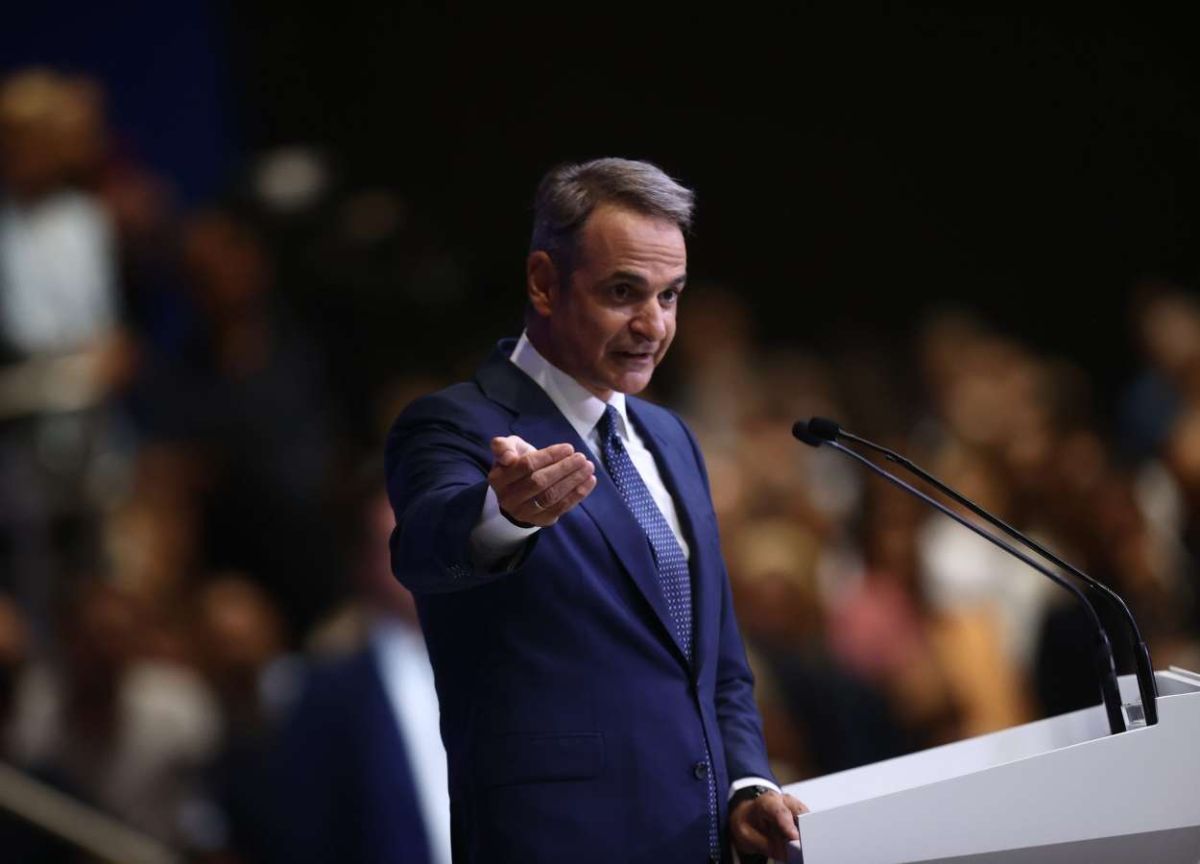
Πηγή Φωτογραφίας: eurokinissi//Thessaloniki Fair: €1.6B Tax-Relief Package Takes Shape — Who Stands to Gain



A broad package of tax cuts and fiscal interventions worth up to €1.6 billion is taking shape ahead of the Thessaloniki International Fair (TIF), as the Greek government looks to translate stronger public revenues and progress against tax evasion into tangible relief for households and businesses.
Freelancers, employees, pensioners, farmers, property owners, small and medium-sized enterprises and investors are among the groups at the center of the discussions.
The political message the government wants to send is increasingly clear: after years focused on fiscal discipline, digital tax enforcement and widening the tax base, part of the additional fiscal space should now return to compliant taxpayers and the real economy.
The numbers behind the package
According to figures presented by Kathimerini, several major revenue streams and potential interventions are being examined as the Finance Ministry calculates how far it can go without threatening fiscal targets.
The key figures include:
- €240 million estimated budgetary cost from abolishing the remaining business levy.
- €645 million currently generated by advance income-tax payments from individuals and self-employed professionals.
- €3.54 billion generated by advance corporate income-tax payments.
- €245 million estimated fiscal cost of cutting social-security contributions by 0.5 percentage points.
- €2.269 billion in projected ENFIA property-tax revenues.
- Around €600 million in additional revenue associated with the presumptive-income system.
These figures do not mean that all the respective taxes or revenues will disappear. Rather, they illustrate the fiscal pools within which the government can potentially make targeted interventions.

Freelancers: Changes to the presumptive-income regime
One of the most politically sensitive areas concerns Greece’s self-employed.
A wholesale abolition of the minimum presumptive-income system does not currently appear to be the central scenario. Instead, the government is examining targeted corrections and incentives that could reward taxpayers whose declared economic activity is fully visible through digital systems.
Tools such as myDATA, POS terminals and electronic invoicing could therefore gradually become more than enforcement mechanisms: they could help differentiate compliant professionals from taxpayers displaying higher-risk characteristics.
The objective is to make the system more accurately reflect actual economic activity while preserving the additional revenues generated by the fight against tax evasion.
Advance tax payments: A liquidity boost
Another potentially important intervention concerns advance income-tax payments.
For self-employed professionals, the rate currently stands at 55%, with scenarios reportedly under consideration for bringing it down to 50% or potentially lower.
For companies, where the advance payment reaches 80%, a more substantial reduction has also been discussed.
Such a measure would not simply be a conventional tax cut. Its immediate impact would be on liquidity.
Businesses and professionals would have to commit less cash today against future tax liabilities, leaving more resources available for wages, investment and day-to-day operations.
Business levy: Moving toward its final abolition
The remaining business levy is another item on the government’s TIF agenda.
According to the figures presented by Kathimerini, its abolition would carry an estimated fiscal cost of around €240 million.
Its removal would have considerable symbolic significance for the government’s pro-business agenda because the levy has long been criticized for imposing a fixed burden regardless of a company’s actual profitability.
Another cut in social-security contributions
The government is also considering further reducing the non-wage cost of employment.
A 0.5 percentage-point reduction in social-security contributions would cost the budget an estimated €245 million.
The economic rationale is twofold: employees could benefit from higher disposable income, while businesses would face a lower employment cost.
Politically, it would also allow Prime Minister Kyriakos Mitsotakis to present the measure as one benefiting both labor and entrepreneurship.
Property: ENFIA and rental income under review
Real estate represents another major part of the equation.
Projected annual revenue from ENFIA stands at €2.269 billion, meaning that even relatively limited changes to the property tax can have a substantial fiscal impact.
At the same time, policymakers are examining changes to the taxation of rental income.
The underlying objective is potentially to create a double dividend: lower or more rational tax rates for compliant landlords, combined with incentives to declare rental income fully, thereby bringing previously hidden income into the tax base.
That discussion also intersects with the government’s wider housing strategy, as Athens searches for ways to bring more properties back onto the long-term rental market.
SMEs and investment enter the equation
The TIF package is not expected to focus exclusively on households.
Small and medium-sized businesses are also central to the government’s planning, particularly measures aimed at strengthening liquidity and investment.
One proposal under discussion concerns extending the period during which businesses can carry forward and offset tax losses, potentially giving companies undertaking large investments more time to recover their costs.
Combined with a lower advance corporate tax payment, such a move could provide companies with additional breathing space without requiring a dramatic immediate reduction in the headline corporate tax rate.
Mitsotakis’ political bet at TIF
Behind the tax calculations lies a larger political objective.
The government wants this year’s Thessaloniki Fair to mark a transition from an agenda dominated by fiscal discipline and tougher enforcement toward one emphasizing the dividend produced by that strategy.
The argument is straightforward: digital transactions, myDATA, POS connectivity and increasingly sophisticated tax controls have strengthened the state’s ability to detect undeclared economic activity. If that produces sustainable additional revenue, Athens can use part of it to reduce the burden on taxpayers who comply with the rules.
That becomes particularly important as Greece moves closer to the 2027 election cycle.
The challenge for the government will be choosing measures that satisfy three conditions simultaneously: they must be fiscally sustainable, large enough to be felt by households and businesses, and broad enough to reach the middle class.
This explains why the potential beneficiary list is so extensive — workers, pensioners, freelancers, farmers, landlords, SMEs and investors.
The political significance of the €1.6 billion package therefore goes beyond its headline cost.
For Mitsotakis, the real objective is to turn higher tax compliance into a politically tangible dividend: lower burdens for those who pay, more liquidity for businesses and more disposable income for households.
And that could make taxation — rather than spending — the defining economic message of this year’s Thessaloniki International Fair.
Source: pagenews.gr
Διαβάστε όλες τις τελευταίες Ειδήσεις από την Ελλάδα και τον Κόσμο