Why Not Simply Cut the Tax on Petrol? The Answer Is Worth Hundreds of Millions
 ΧΡΟΝΟΣ ΑΝΑΓΝΩΣΗΣ 6 '

Πηγή Φωτογραφίας: eurokinissi//Why Not Simply Cut the Tax on Petrol? The Answer Is Worth Hundreds of Millions



The debate over fuel prices in Greece is shifting.
After months in which the government largely favored targeted subsidies over horizontal tax cuts, the possibility of a temporary reduction in the Special Consumption Tax (excise duty) on fuel is back on the table.
Prime Minister Kyriakos Mitsotakis has linked such a move to decisions at European level: Athens is seeking fiscal flexibility that would allow governments to introduce temporary measures against the energy shock without the resulting fiscal cost weighing on their expenditure limits.
And that is where the real story begins.
The Tax Cut That Could Be Felt Immediately at the Pump
Unlike an allowance or targeted subsidy, a reduction in excise duty would be visible almost immediately in the retail price of fuel.
Using the scenario examined by Capital.gr, if unleaded petrol is selling at around €2.10 per litre, a €0.15 reduction in excise duty — combined with the corresponding VAT effect — could bring the final price down to approximately €1.91 per litre.
For a driver consuming 100 litres a month, that would translate into savings of roughly €18.60 per month, or around €223 per year.
For households facing persistently elevated energy costs, that is a tangible difference.
But there is another side to the equation.
The €500 Million Question
Fuel taxation is also a major and highly predictable source of revenue for the Greek state.
According to the calculations cited by Capital.gr, a €0.15-per-litre excise-duty reduction on petrol could cost the budget more than €500 million annually.
That explains why the apparently simple question — “Why doesn’t the government just cut the fuel tax?” — has a much more complicated answer.
Every cent removed from taxation lowers the price paid by motorists, but it also reduces government revenue.
Under normal fiscal conditions, such a loss must be absorbed through available fiscal space, compensated by other revenues or spending adjustments.
Athens therefore wants to change the terms of that calculation at European level.
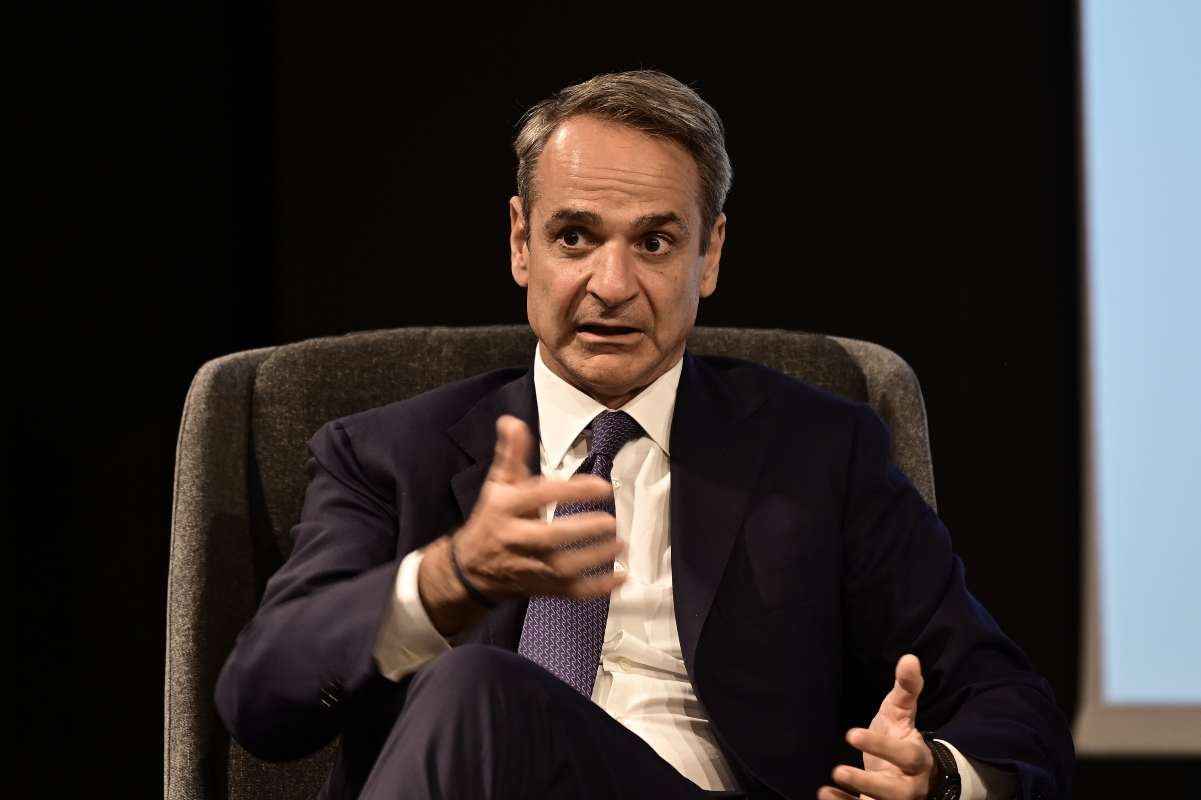
Mitsotakis Looks to Brussels
The Greek proposal is essentially about creating room for emergency intervention.
If EU governments are allowed to introduce temporary energy-related tax measures without the full fiscal impact counting against their expenditure ceilings, Athens would have considerably greater room to intervene directly in fuel prices.
That would turn Brussels into a critical part of the domestic fuel-price equation.
The government is therefore not simply asking whether Greece can afford to cut excise duties. It is asking whether Europe can create the fiscal conditions that make such a temporary cut possible without forcing an equivalent adjustment elsewhere in the budget.
Heating Oil Could Also Be Affected
The same logic applies to heating oil.
In the scenario examined by Capital.gr, with heating oil at €2 per litre, a €0.15 reduction in excise duty could bring the final price to approximately €1.81 per litre, including the VAT effect.
For a household purchasing 1,000 litres, the saving would be close to €186.
The estimated annual revenue loss for the state, however, would exceed €200 million.
Once again, the numbers reveal the trade-off: meaningful relief for consumers comes with a meaningful fiscal cost.
Why Athens Has Preferred Subsidies Until Now
The Greek government has generally favored targeted support rather than permanent horizontal reductions in fuel taxation.
There is a fiscal rationale behind that choice.
A subsidy can be directed toward specific groups, adjusted as international energy prices change and withdrawn when the emergency subsides. A broad tax reduction applies to every litre sold and can therefore become considerably more expensive.
The renewed energy shock, however, has changed the discussion.
If high fuel prices persist, reducing the tax component of the pump price becomes a more powerful — although considerably more costly — policy option.
The Budget’s Fuel “Gold Mine”
This is the uncomfortable reality behind Greece’s fuel prices.
When international oil prices rise, motorists and businesses face higher costs. But taxation on fuel also represents an important revenue stream for the state.
That makes excise duty simultaneously one of the most obvious places to provide immediate consumer relief and one of the hardest revenue sources for the government to sacrifice.
A large-scale reduction would therefore be far more than another cost-of-living measure. It would alter a significant part of the budget’s revenue equation.
Could Petrol Fall Below €2?
The arithmetic suggests that it could, depending on the starting retail price and the size of any tax intervention.
But there is no automatic tax cut at this stage.
The significance of Mitsotakis’ proposal is that Athens is trying to establish the European fiscal conditions under which such an intervention could become feasible.
That means the next major development may not come from the petrol stations or even from the Greek Finance Ministry.
It could come from Brussels.
Because behind the price displayed on every fuel pump lies a much larger question: how much revenue is the state prepared to sacrifice to bring energy prices down — and how much fiscal freedom will Europe give governments to do it?
Source: pagenews.gr
Διαβάστε όλες τις τελευταίες Ειδήσεις από την Ελλάδα και τον Κόσμο