Erdoğan Takes Aim at Mitsotakis: “Greek-Turkish Relations Are Too Sensitive to Become Campaign Material”
 ΧΡΟΝΟΣ ΑΝΑΓΝΩΣΗΣ 6 '
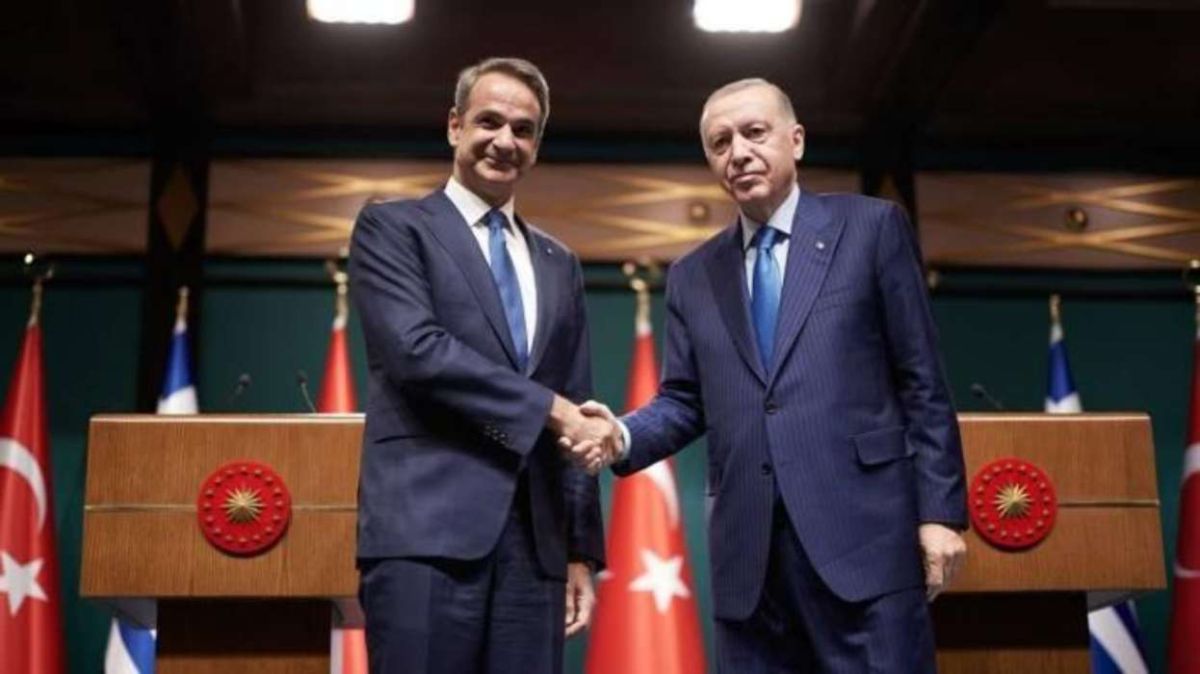
Πηγή Φωτογραφίας: eurokinissi//Erdoğan Takes Aim at Mitsotakis: “Greek-Turkish Relations Are Too Sensitive to Become Campaign Material”



A new layer has been added to the delicate balance between Athens and Ankara following remarks by Turkish President Recep Tayyip Erdoğan after his participation in the 81st United Nations General Assembly in New York.
Erdoğan explicitly linked Greek-Turkish relations to Greece’s domestic political climate, sending a pointed message to Athens.
His argument had two parts: Türkiye, he said, does not regard Greece as an enemy, but at the same time does not want bilateral disputes to be used for domestic political purposes.
“Türkiye is not Greece’s enemy, but its neighbor and NATO ally,” Erdoğan said, according to Anadolu Agency.
Then came the politically charged line:
“Bilateral relations are too sensitive and too important to be used as campaign fodder.”
The remarks come at a time when tensions surrounding the Aegean and the Eastern Mediterranean have again moved higher on the bilateral agenda.
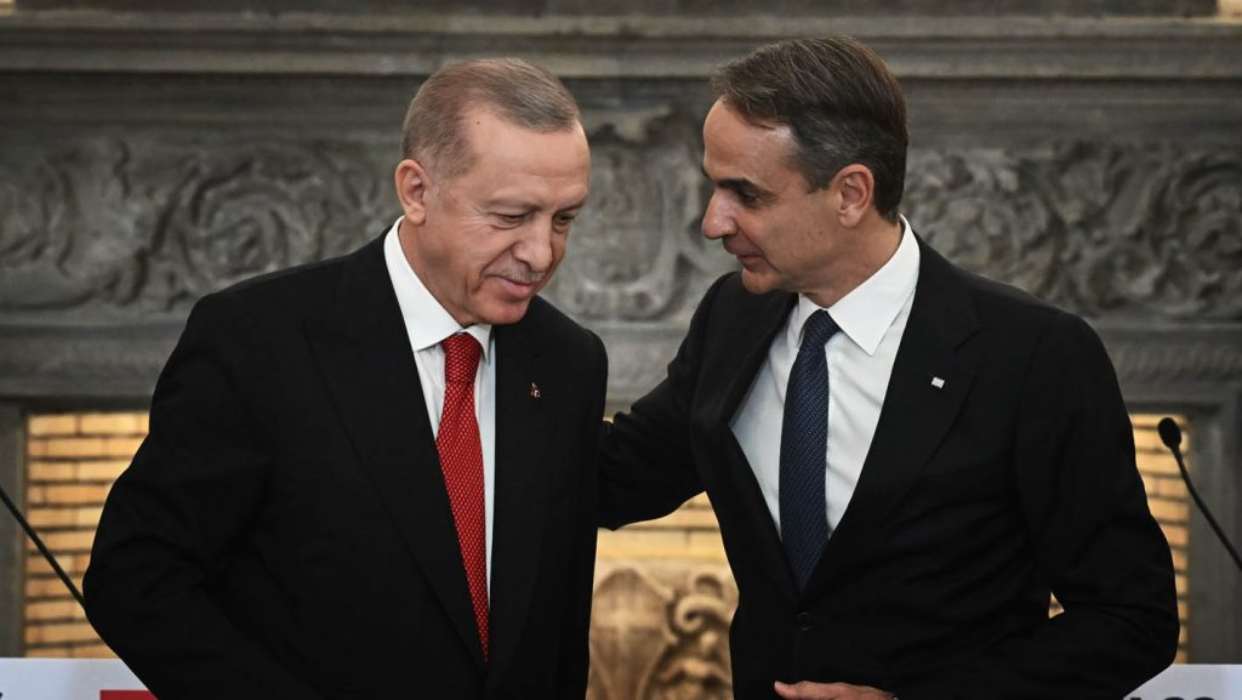
“Elections Are Held in Greece — That Is None of Our Business”
Erdoğan went further, seeking to portray Ankara as detached from Greece’s domestic political contest.
“Elections are held in Greece, governments change, the opposition changes. These are none of our concern,” he said.
According to the Turkish president, Ankara’s priority is Türkiye’s own security and national agenda.
Still, the wording is difficult to separate from Greek domestic politics. Erdoğan is effectively arguing that Greek-Turkish relations should not become part of Greece’s electoral competition.
That is Ankara’s political interpretation of the current environment, rather than an established fact about the motives behind the Greek government’s policy.
Hours After Mitsotakis: “Greece Will Not Accept Threats”
The timing is particularly significant.
On Wednesday evening, also in New York, Kyriakos Mitsotakis referred directly to Türkiye while addressing an event attended by members of the Greek diaspora.
The Greek prime minister said Athens seeks good relations with its neighbors, “especially Türkiye,” while reiterating:
“Greece threatens no one, but neither will we accept threats from anyone.”
He also referred to Greece’s defense modernization and the importance of maintaining credible deterrence.
The result is two carefully calibrated messages emerging from New York within a matter of hours.
Athens says: dialogue, but no acceptance of threats.
Ankara responds: we are not enemies, but do not turn Greek-Turkish relations into an electoral instrument.
The “Election” Factor Enters Ankara’s Rhetoric
This is not the first time electoral politics have entered Turkish messaging on relations with Greece.
Turkish officials have previously suggested that some of Athens’ rhetoric should be viewed through the prism of Greece’s domestic political environment.
Erdoğan’s latest intervention gives that argument additional political weight because it comes directly from the Turkish president.
The emerging Turkish narrative is clear: Ankara is attempting to distinguish bilateral disputes from what it sees as Greece’s internal political calculations.
Again, that remains the Turkish side’s interpretation, not an independently established explanation of Greek policy.
“NATO Allies” — While the Difficult Issues Remain
Erdoğan’s reference to NATO also carries significance.
By saying that Türkiye and Greece are not enemies, he is placing the relationship within the framework of two neighboring countries that remain members of the same military alliance despite their longstanding disagreements.
But NATO membership has never eliminated the fundamental disputes between Athens and Ankara.
Questions surrounding the Aegean, the Eastern Mediterranean and regional security remain unresolved, while the two governments continue to differ sharply over the scope and legal character of several bilateral issues.
That is why Erdoğan’s description of the relationship as “sensitive” may ultimately be more revealing than the conciliatory reference to NATO solidarity.
New York Turns Into a Stage for Parallel Messages
Both leaders have been in New York for the UN General Assembly, using the gathering for a wider round of diplomatic contacts.
Yet before the diplomatic program has even concluded, Greek-Turkish relations have again moved to the foreground.
There is no direct rupture in the rhetoric.
Neither leader is publicly abandoning dialogue.
Instead, both sides are defining the limits within which they believe that dialogue can continue.
For Mitsotakis, the red line is that engagement cannot mean accepting threats or weakening Greece’s deterrence.
For Erdoğan, the public message is that strategic disagreements should not become material for Greece’s electoral campaign.
Erdoğan’s Message Has Two Readings
At first glance, Erdoğan’s statement is conciliatory:
“Türkiye is not Greece’s enemy.”
But it is immediately followed by a political warning: Greek-Turkish relations, he argues, are too important to be used for electoral purposes.
That combination matters.
Ankara is no longer commenting only on Greek positions concerning the Aegean, defense or sovereignty-related disputes. Erdoğan is also commenting on the domestic political context in which those positions are being articulated in Athens.
Mitsotakis, meanwhile, continues to present a two-track policy: dialogue and better relations with Türkiye on one side, deterrence and rejection of threats on the other.
So behind Erdoğan’s “we are not enemies” and Mitsotakis’ “we will not accept threats,” the underlying disagreements remain.
The new element is that Greece’s approaching electoral cycle has now explicitly entered Erdoğan’s public rhetoric on Greek-Turkish relations.
Source: pagenews.gr
Διαβάστε όλες τις τελευταίες Ειδήσεις από την Ελλάδα και τον Κόσμο