Trump and Putin: When Does Their Backing Become an Electoral Kiss of Death?
 ΧΡΟΝΟΣ ΑΝΑΓΝΩΣΗΣ 5 '
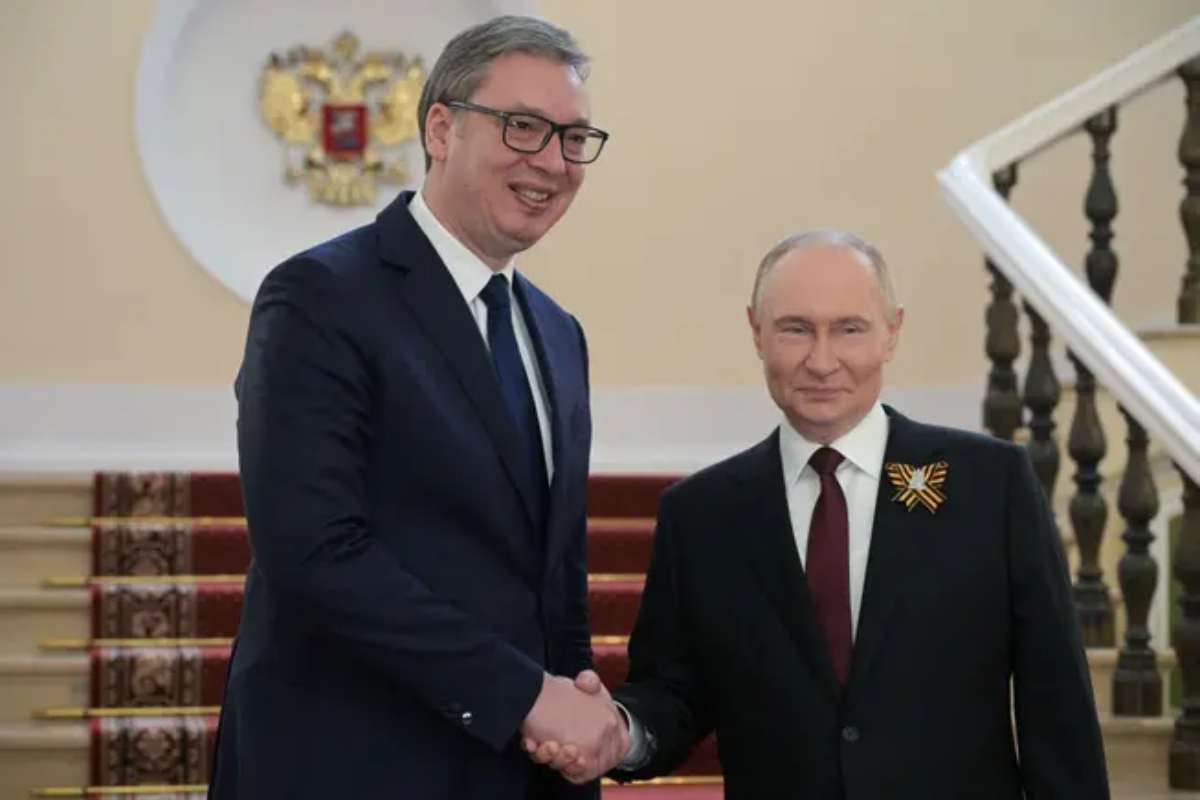
Πηγή Φωτογραφίας: Russian President Vladimir Putin meets with Serbian President Aleksandar Vucic at Diaoyutai State Guesthouse in Beijing, China, September 2, 2025. REUTERS/Maxim Shemetov/Pool/File Photo



Can a great power’s endorsement weaken the candidate it is meant to help? Electoral upheavals in Brazil and Serbia revive that question without offering a simple, universal answer.
On October 25, Flávio Bolsonaro lost to Luiz Inácio Lula da Silva, despite his family’s political ties to Donald Trump. That same day, Aleksandar Vučić, who had received Vladimir Putin’s support, acknowledged defeat against Serbia’s student-backed opposition.
The easy conclusion is that foreign endorsements have become politically toxic. A more careful interpretation is that voters judge what the foreign power is doing to their own country—and who can manage that relationship.
Promises of protection or financing can carry a different political meaning from tariffs, threats and pressure on national institutions.
Brazil and the Sovereignty Argument
Brazil offers a useful case for examining this mechanism.
The Trump administration’s trade pressure and its stance towards the Bolsonaro family allowed Lula to frame the contest partly around national independence.
That can change the terrain of an election campaign. A president defending his record on prices and government performance gains an opportunity to present himself as the country’s defender against external pressure.
This does not establish that Trump’s intervention caused Bolsonaro’s defeat. Living costs, campaign promises, party organisation and turnout also influenced the contest.
The narrower—and more defensible—argument is that American pressure gave Lula a powerful mobilisation message.
The Effect May Lie at the Margins
Foreign intervention does not need to persuade committed supporters to influence a close election.
It can mobilise people who might otherwise abstain, strengthen turnout on one side or change the priorities of less committed voters.
That is the possible mechanism behind a “patron penalty”: a candidate becomes vulnerable when ties to a foreign leader are associated with costs imposed on the candidate’s own country.
Measuring that effect requires evidence about voter movements and motivations. The coincidence of foreign pressure and electoral defeat is not, by itself, proof of causation.
Serbia: Defeating Vučić Does Not Mean Rejecting Russia
Serbia illustrates why the interpretation needs restraint.
The student movement grew around corruption, institutional accountability and demands for answers after the railway-station canopy collapse in Novi Sad.
The protests and subsequent electoral change had strong domestic foundations. Putin’s backing did not protect Vučić from political exhaustion, but that does not prove it caused his defeat.
Removing a politician with close ties to Moscow does not automatically change a country’s strategic orientation.
Serbia’s next government will still need to manage relations with the European Union, Russia and China. State relationships and dependencies do not disappear after a single election.
Canada and Australia: When the External Factor Changes the Debate
The 2025 elections in Canada and Australia add to the debate about the political costs of association with Trump.
In Canada, the trade war and rhetoric about a “51st state” pushed national sovereignty to the centre of the campaign. In Australia, comparisons between Peter Dutton and the American president became part of the political contest.
The cases differ. They neither establish a universal rule nor justify attributing the defeats exclusively to American influence.
They nevertheless reveal a risk: when a foreign government pressures a country, ideological proximity to that government can become a liability.
Why Poland and Argentina Look Different
The victories of politicians who received American backing in Poland and Argentina undermine any sweeping claim that Trump’s favour inevitably produces defeat.
When voters associate the United States with protection against a nearby threat or with financial assistance, external support can be interpreted positively.
The question changes: can this candidate secure safety, capital or favourable treatment?
The same public endorsement can therefore carry opposite meanings in different electorates.
Three Conditions That Can Turn Support Into a Burden
As an analytical hypothesis, the risk of an electoral penalty increases when three conditions coincide:
- The foreign power visibly pressures the country’s economy or institutions.
- Its preferred candidate struggles to appear capable of negotiating independently.
- A rival can credibly claim to defend national sovereignty.
This is an interpretive framework, not a statistically validated forecasting model.
Government fatigue, economic conditions, candidate credibility and campaign organisation remain important in their own right.
How Might Great Powers Adapt?
One possible adjustment is less public political backing, delivered through networks, contacts and economic initiatives rather than explicit personal endorsements.
A second path is post-election escalation: challenging results, imposing tariffs or introducing sanctions. A failed political investment can then become an interstate dispute.
The third option is accepting the outcome and working with the winner, despite earlier preferences.
These paths carry different consequences. The first reduces political exposure, the second increases confrontation and the third prioritises relations between states.
The central lesson is that influence has limits. A great power can support a candidate. It cannot assume that voters will also accept the costs attached to that relationship.
Source: pagenews.gr
Διαβάστε όλες τις τελευταίες Ειδήσεις από την Ελλάδα και τον Κόσμο