Athens Enters the Hedge Fund Map: Millennium and Rokos Put Greece on Global Finance’s Radar
 ΧΡΟΝΟΣ ΑΝΑΓΝΩΣΗΣ 9 '
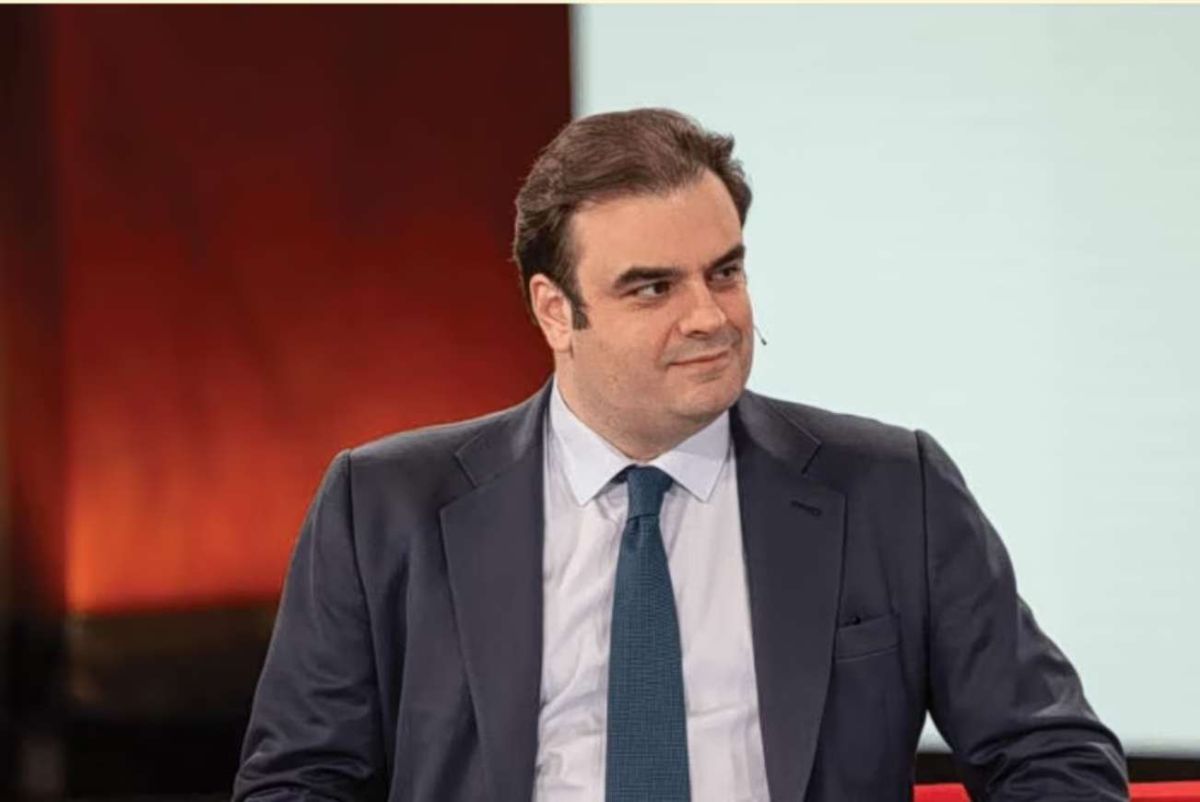
Πηγή Φωτογραφίας: eurokinissi//Athens Enters the Hedge Fund Map: Millennium and Rokos Put Greece on Global Finance’s Radar



Athens is attempting something that would have sounded almost implausible only a few years ago: transforming itself from the capital of Europe’s most dramatic sovereign debt crisis into an emerging destination for some of the world’s most sophisticated asset managers.
And this is no longer simply about wealthy individuals transferring their tax residency to Greece.
The bigger ambition is to bring actual hedge fund offices, portfolio-management teams, high-end professional services and highly paid financial jobs to Athens — creating an ecosystem that could eventually sustain itself.
Millennium Management is moving toward an Athens presence, while billionaire investor Chris Rokos, founder of Rokos Capital Management, has chosen Greece as his new tax base and is also expected to establish a local presence.
The plan was almost a year in the making
According to the Bloomberg reporting behind the initiative, the arrival of major hedge funds was not accidental.
Greek officials had been working for nearly a year on a targeted strategy designed to put Athens on the radar of international money managers.
The Ministry of Finance reportedly began discussions with Millennium last November, exploring what one of the world’s largest and most closely regulated multi-strategy hedge funds would need in order to establish an office in Greece.
The logic was straightforward: secure one globally recognised institution first, and others may follow.
That first-mover effect is now beginning to emerge.
Greece’s key selling point: predictability
Athens is not trying to compete only on headline tax rates.
Its central argument is tax and macroeconomic predictability.
Greece has maintained the €100,000 annual flat-tax regime for qualifying foreign-source income introduced in late 2019, while Italy — one of its main European competitors for wealthy international residents — has repeatedly increased its equivalent levy.
For global fund managers considering relocation, certainty matters almost as much as the rate itself.
They want to know that the rules under which they move will still exist several years later.
The 5% carried-interest regime
The government went further this year by creating a specific framework aimed at investment professionals.
Under the new rules, qualifying fund managers who transfer their tax residence to Greece can benefit from a 5% tax rate on carried interest and certain performance-linked remuneration, subject to the conditions of the regime.
That is potentially transformative for a sector in which bonuses and carried interest can represent a substantial part of total compensation.
But the government is also trying to avoid creating a system based purely on letterbox structures.
The objective is to encourage firms to build real operations in Greece, bringing people, payroll, infrastructure and professional activity with them.
“Greece does not want to become a tax haven”
That distinction is politically important.
Officials have pushed back against criticism that Athens is simply creating a low-tax enclave for the ultra-wealthy.
Vassilis Karatzas, an adviser to Finance Minister Kyriakos Pierrakakis and one of the officials involved in the effort, put the argument explicitly:
“To be clear, Greece does not want to become a tax haven.”
The government’s case is that companies operating from Athens will pay corporate taxes, employees will contribute to the economy and the country will gain high-value employment, expertise and returning Greek professionals.
The target is not merely tax residency.
It is an ecosystem.
Millennium could be the breakthrough name
Millennium is critical to that strategy.
This is not simply an individual billionaire relocating for lifestyle reasons.
It is one of the world’s major hedge fund platforms, and an Athens office would represent actual institutional activity.
That matters because finance operates heavily on signalling.
If Millennium can establish teams and operate effectively from Athens, the perceived risk for every smaller firm considering the same move falls.
The question then changes from “Why Athens?” to “Why not Athens?”
Rokos sends an uncomfortable message to London
Chris Rokos’ decision may be even more politically resonant.
Rokos has been one of Britain’s most prominent hedge fund billionaires and among the UK’s major taxpayers.
His move toward Greece comes as London grapples with higher taxation, changes to the non-dom system and growing concerns among globally mobile financial professionals about long-term fiscal policy.
That gives Athens an opportunity.
It is not competing with London on the depth of its capital markets or the size of its financial workforce.
It is competing on lifestyle, tax stability, EU membership and the possibility of building operations in a lower-cost environment.
Brexit and the Middle East create a rare opening
Timing is working in Greece’s favour.
London is dealing with the long-term consequences of Brexit and growing tax uncertainty.
At the same time, Dubai and Abu Dhabi — two of the biggest winners from the migration of international finance over the past several years — now face a more complicated regional security environment because of the Middle East war.
That does not mean the Gulf financial hubs are losing their importance.
Far from it.
They retain major advantages, including access to sovereign capital, sophisticated infrastructure and highly competitive tax systems.
But for executives and families looking for an EU base with a Mediterranean lifestyle and lower perceived geopolitical risk, Athens is becoming more credible.
Greece is turning the debt crisis into part of its pitch
There is an extraordinary reversal at the heart of the story.
The very debt crisis that once made Greece virtually uninvestable is now being used as evidence of why the country has changed.
Athens argues that the lessons of the crisis produced stronger fiscal discipline and a much deeper awareness of the costs of instability.
The economy has been expanding faster than many of its European peers, Greece has regained investment-grade status and its borrowing profile bears little resemblance to the crisis years.
For global investors, country risk has been dramatically repriced.
The real prize is not billionaires — it is the ecosystem around them
The success of the strategy should not ultimately be measured by how many wealthy individuals change their tax residence.
The larger prize is the economic activity that follows institutional finance.
A hedge fund office requires:
lawyers, auditors, tax specialists, compliance officers, risk managers, quantitative analysts, software engineers, data specialists, recruiters, brokers and sophisticated real-estate services.
If those capabilities begin to cluster in Athens, the impact moves well beyond personal taxation.
That is how a financial centre starts becoming self-reinforcing.
Brain gain may be Greece’s biggest opportunity
There is also a particularly important Greek dimension.
During the crisis years, thousands of highly educated Greeks left for London, New York, Zurich, Frankfurt and Dubai.
Many work precisely in the sectors Athens is now trying to attract: asset management, banking, technology, risk, compliance and quantitative finance.
If international firms establish meaningful operations in Greece, some of that talent may have a reason to return.
The significance is not that everyone will come back.
It is that, for the first time, Athens could begin to offer a domestic labour market with jobs approaching the complexity, professional exposure and compensation available in larger financial centres.
That would turn the hedge fund strategy into a genuine brain-gain policy.
But Athens still has a serious infrastructure problem
The opportunity is real, but so are the constraints.
Athens cannot become London, Geneva or Dubai overnight.
Senior international finance professionals expect premium housing, strong international schools, excellent office stock, reliable digital infrastructure, airport connectivity and a deep pool of specialised employees.
Those requirements could become the limiting factor if arrivals accelerate.
The housing question is particularly important.
An influx of extremely high-income professionals into already expensive neighbourhoods could intensify pressure at the top end of the Athens real-estate market, while international schools and suitable office developments would need to expand quickly.
From Grexit to global funds
The symbolism is difficult to miss.
A little more than a decade ago, investors were debating capital controls, sovereign default and whether Greece would remain in the euro.
Today, Athens is trying to convince some of the world’s most demanding money managers to build businesses there.
Millennium and Rokos do not yet make Athens a global financial hub.
But they do establish something that matters enormously in finance:
credibility.
If those early movers bring employees, capital and genuine operating functions — and if other managers begin to follow — Greece could move beyond being simply an attractive tax residence.
It could start building a genuine asset-management cluster.
And at that point, as Karatzas put it:
“We are here to help the first movers. After that, the market will do its work.”
Source: pagenews.gr
Διαβάστε όλες τις τελευταίες Ειδήσεις από την Ελλάδα και τον Κόσμο